

Why in news?
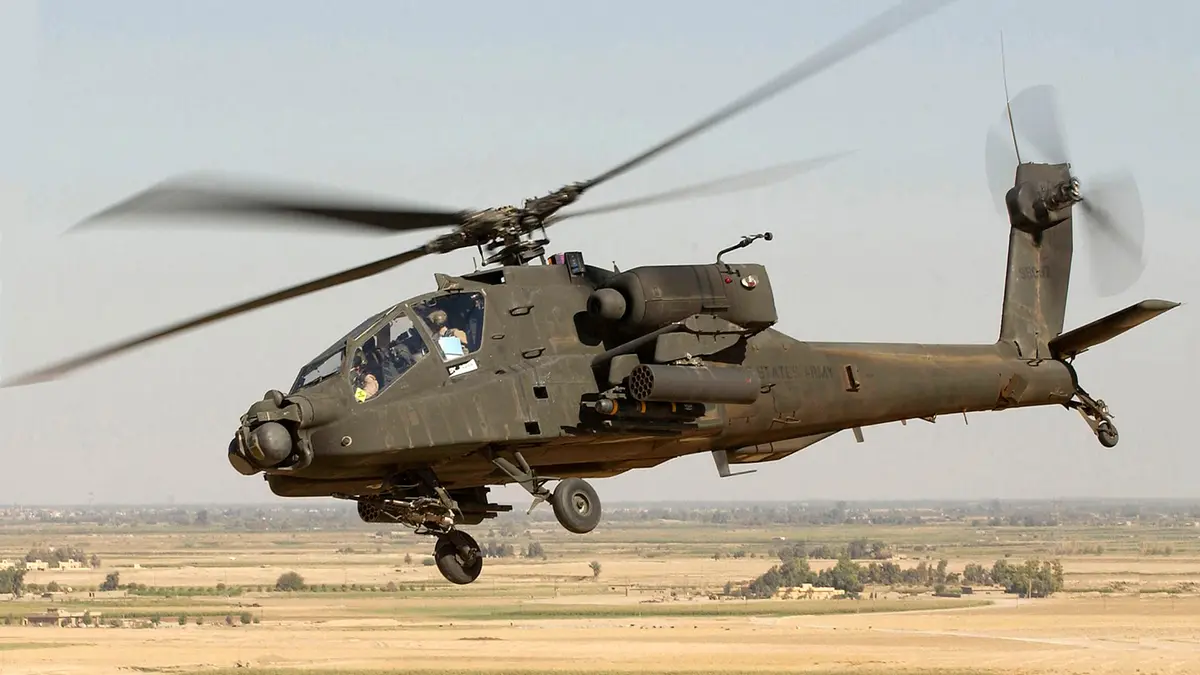
The Indian Army has received the final batch of Boeing AH‑64E Apache Guardian helicopters under a multi‑billion‑rupee deal. These state‑of‑the‑art aircraft will enhance the Army Aviation Corps’ ability to conduct precision strikes and provide close air support in challenging terrains.
Background
The AH‑64E is the latest variant of the Apache series, which first flew in the United States in the 1970s. India signed a contract for 22 Apaches for the Air Force and later ordered six more for the Army. The helicopters are assembled in the United States, while some components are produced in a joint venture between Boeing and Tata in Hyderabad.
Features of the AH‑64E
- Armament: The helicopter carries a 30 mm M230 chain gun mounted under the nose, up to 16 AGM‑114 Hellfire anti‑tank missiles and pods of 70 mm Hydra rockets. This combination allows it to destroy armoured vehicles, bunkers and troop concentrations.
- Sensors and targeting: The AN/APG‑78 Longbow radar mounted above the rotor can track dozens of targets simultaneously and guide missiles even in poor visibility. The Target Acquisition Designation Sight/Pilot Night Vision Sensor (TADS/PNVS) provides high‑resolution infrared and optical imagery for day‑night operations.
- Avionics: Modern avionics include digital flight controls, global navigation systems (GPS/INS), secure communications and a datalink that shares tactical information with ground and air units.
- Survivability: Composite rotor blades, armoured crew seats, an infrared‑suppressing exhaust and electronic countermeasures protect the aircraft against enemy fire. The cockpit canopy is bullet‑resistant and separated by a bulkhead to improve crew survivability.
- Performance: Powered by two General Electric T700‑701D turboshaft engines, the AH‑64E can reach speeds of about 280 km/h and operate at high altitudes. Advanced rotors and transmission improve lift and fuel efficiency.
Operational role in India
- Close air support: Apaches will support Army formations during offensive and defensive operations, neutralising enemy armour and fortifications.
- High‑altitude capability: Their powerful engines and rotor design allow them to operate in mountainous regions such as Ladakh and the eastern Himalayas, complementing India’s indigenous Light Combat Helicopter.
- Networked warfare: Integrated communication and sensor suites enable Apaches to share real‑time data with drones, ground troops and command centres, enhancing situational awareness.
Conclusion
The induction of AH‑64E Apache Guardians marks a leap in the Indian Army’s rotary‑wing capabilities. Their sophisticated weapons, sensors and protective features make them formidable platforms for modern warfare and deterrence.
Sources: TH