

Why in news?
Australia announced an AIM-260 Joint Advanced Tactical Missile acquisition on 6 August 2026. The weapon is made in the United States; it is intended for the Royal Australian Air Force. The Australian Government valued the acquisition at almost A$736 million.
Australia would become the first recipient outside the United States; initial integration is planned for the F/A-18F Super Hornet.
The F-35A Lightning II and EA-18G Growler would follow; each platform requires a separate integration process.
What is publicly established
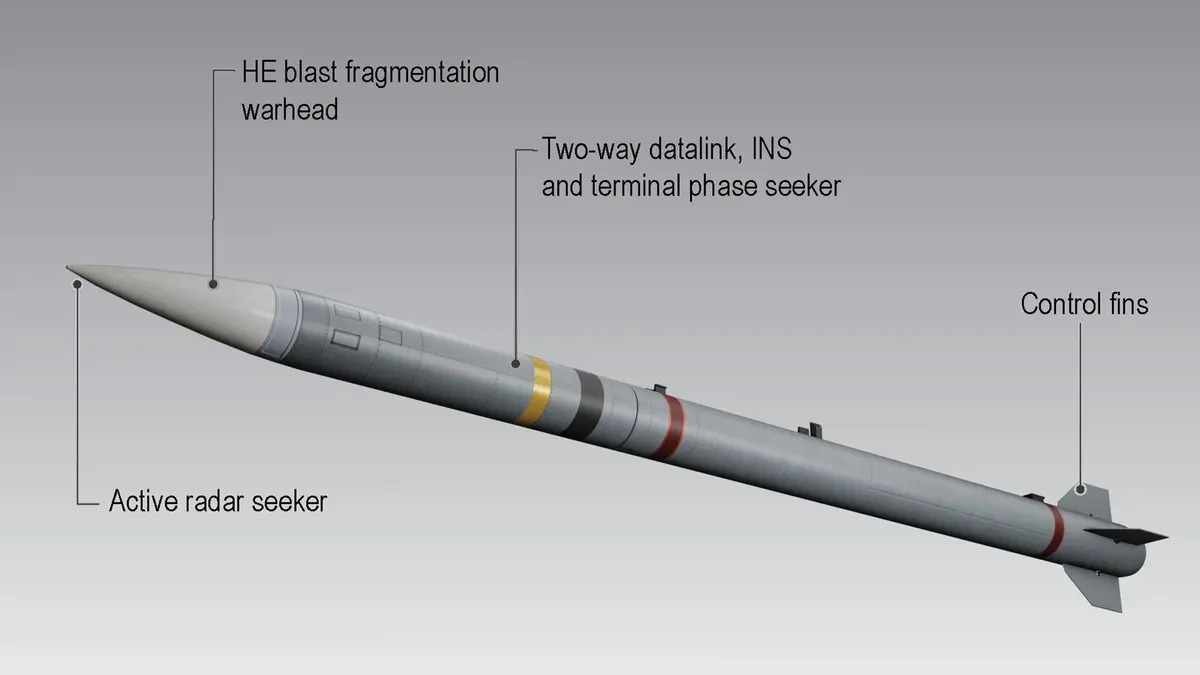
The AIM-260 is an air-to-air missile for air-superiority missions. Official United States material describes a Global Positioning System-aided weapon. The documents say it offers greater range and effectiveness than existing air-to-air missiles. They also mention secure navigation and anti-tamper features.
Much of the programme remains classified; public official documents provide no reliable operational range or speed.
Precise figures circulating online are therefore unconfirmed; they should not be repeated as established specifications.
The announcement came during Exercise Pitch Black in Darwin; this is a large multinational air-combat exercise. The setting highlights that a missile is not a stand-alone object. Aircraft software and sensors must support it.
Mission planning, identification rules and secure data are also necessary; maintenance, test equipment and trained crews complete the system.
A common weapon across three aircraft can improve interoperability with United States forces. It may also simplify some training and logistics.
Why two official price figures differ
A January 2026 congressional notification covered a possible package of up to 450 missiles. It also included five integration test vehicles; the package listed 30 guided test vehicles and supporting equipment. Its estimated ceiling was US$3.16 billion.
The notification authorises a possible Foreign Military Sale; it does not prove that Australia will buy every listed item.
Australia’s later figure of almost A$736 million covers its announced acquisition decision; the figures concern different stages and scopes.
Currency conversion cannot make the two directly comparable. Presenting them as a contradiction would be misleading.
From approval to usable capability
The United States notification shows the possible scale and support package; it does not create an operational squadron capability. Contracts must be completed before production and delivery; each aircraft also needs integration, software and safety clearance.
Personnel require training, while sustainment arrangements need testing; the three aircraft types will not complete this work simultaneously.
Test vehicles and guided trials are therefore important; the missile must work safely with each platform’s flight computer and radar.
Electronic-warfare systems must also function with it. Engagement rules and identification processes need validation.
| Platform | Relevant role | Integration significance |
|---|---|---|
| F/A-18F Super Hornet | Two-seat multirole combat aircraft | Named as the first Australian platform for the AIM-260, making it the initial pathway to service. |
| F-35A Lightning II | Low-observable multirole combat aircraft | Integration must account for software, sensors and carriage arrangements while preserving platform advantages. |
| EA-18G Growler | Airborne electronic attack aircraft | A common missile could give a specialised support aircraft a stronger self-protection and air-combat option. |
Strategic implications
A longer-reach weapon can threaten an adversary earlier; it may complicate hostile operations and protect surveillance or refuelling aircraft. Advertised range never decides an engagement alone. Detection quality and target behaviour strongly influence the outcome.
Electronic countermeasures, launch conditions and mid-course updates also matter. Identification confidence and remaining missile energy affect the final engagement.
Secure networks and realistic training may be as important as the missile body. Hardware cannot compensate for weak targeting information.
First-recipient status signals Australia’s close technology and security ties with the United States. Washington gains early allied integration. This can improve coalition interoperability across the Indo-Pacific. Canberra gains a response to evolving long-range threats.
The decision can also deepen dependence on foreign production. Software releases and controlled technical data may remain overseas.
Australia therefore needs careful stockpile planning and sovereign maintenance arrangements; delivery reliability matters during prolonged crises.
The development does not justify an invented India-specific threat narrative. India’s useful policy questions are broader; they include combining indigenous weapons with imported platforms. Electronic warfare and airborne sensors must support beyond-visual-range combat.
War reserves must remain sufficient, while classified programmes still need financial oversight. Parliamentary accountability can protect public resources.
Acquisition headlines are meaningful only beside integration timelines and sustainment capacity. Announced weapons are not immediately usable weapons.
Conclusion
The AIM-260 decision places Australia inside a tightly controlled United States programme. It also connects the missile with three aircraft fleets. Practical capability will emerge through delivery, integration, training and support; an unverified range figure cannot demonstrate it.
Australia has announced a substantial capability pathway; it has not shown that every part is already operational.