

Why in news?
Conservationists continue to highlight the Aldabra giant tortoise as one of the world’s largest and longest‑lived land animals. Around World Environment Day 2026, many international outlets renewed attention on this remarkable species and its vulnerability due to climate change and habitat loss.
Background
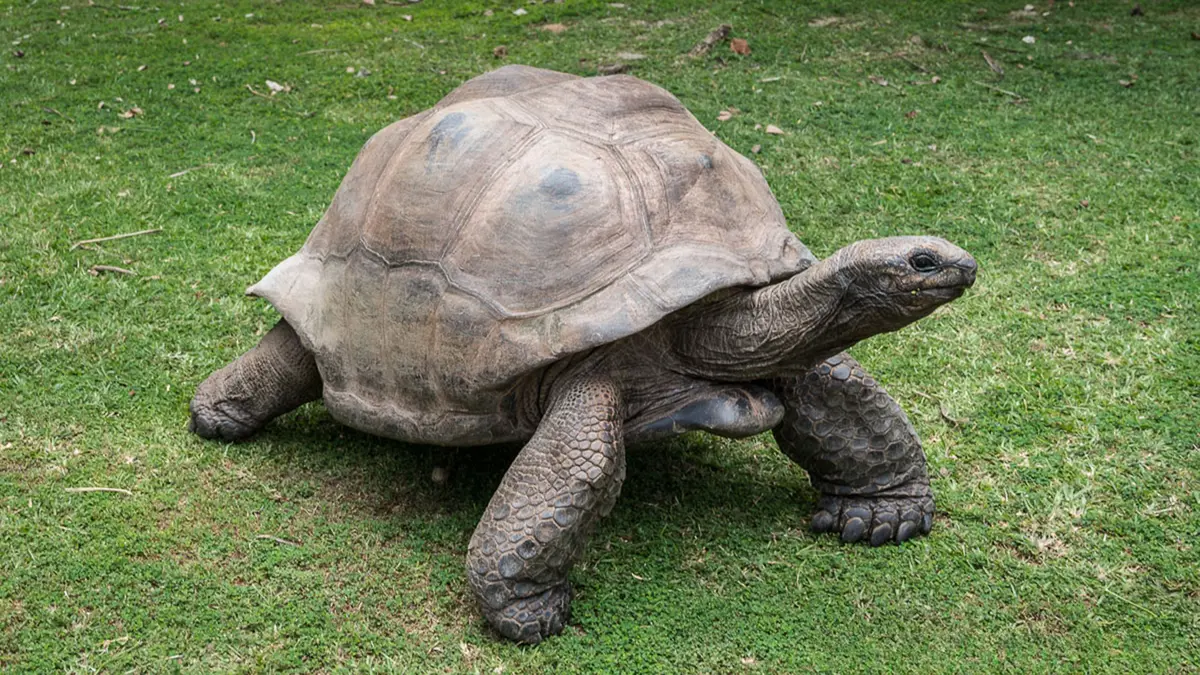
The Aldabra giant tortoise (Aldabrachelys gigantea) is one of two surviving giant tortoise species on Earth, the other being the Galápagos tortoises. Fossils suggest that giant tortoises once roamed many islands in the western Indian Ocean. Human hunting led to the extinction of most populations, leaving only the tortoises on Aldabra Atoll in the Seychelles. The species was formally named in the 19th century and taxonomists debated its scientific name until 2013, when the International Commission on Zoological Nomenclature fixed Aldabrachelys gigantea as the correct name. Conservation measures in the late 1800s and early 1900s, advocated by naturalists like Charles Darwin, saved the tortoise from extinction.
Physical characteristics
- Size: Males can measure about 1.22 m (4 ft) in carapace length and weigh up to 250 kg. Females are smaller, reaching around 91 cm and weighing about 160 kg.
- Shell and limbs: The carapace is dark grey to black and highly domed with a small neck plate. Males have a concave plastron that facilitates mating. Thick, column‑like hind legs and long necks help them browse vegetation.
- Lifespan: Aldabra tortoises routinely live more than 100 years; some individuals are believed to be around 150 years old. Jonathan, an Aldabra tortoise living on St Helena, is reputedly the world’s oldest living land animal.
- Habitat: In the wild they inhabit scrub forest, mangrove swamps, coastal dunes and grasslands on Aldabra Atoll. The largest concentrations occur in open grasslands known as platins, where densities can exceed 80 tortoises per hectare.
Ecology and conservation
- Role in ecosystem: As the largest herbivore on the atoll, the tortoise acts like an ecological engineer. It grazes on grasses and shrubs, disperses seeds through its droppings and helps maintain open grassland habitat.
- Population and distribution: About 100,000 tortoises live on Aldabra Atoll. Free‑roaming herds have been introduced to other islands such as Fregate Island, Mauritius and Rodrigues to restore ecological functions where native tortoises went extinct.
- Threats: Rising sea levels, increasingly severe storms and changes in vegetation pose risks to their limited habitat. The species is listed as ‘Vulnerable’ on the IUCN Red List. Illegal collection for the pet trade also threatens wild populations.
- Conservation actions: The Seychelles government and international partners protect Aldabra Atoll and run breeding and rewilding programmes. Captive breeding in zoos worldwide helps maintain genetic diversity.
Conclusion
The Aldabra giant tortoise is a symbol of island gigantism and resilience. Its large size and extraordinary lifespan captivate people, while its survival depends on continued conservation of the fragile atoll ecosystem. Protecting its habitat and expanding rewilding efforts can ensure that these gentle giants thrive for centuries to come.
Sources: TG