Why in news?
India and Algeria recently held their seventh round of Foreign Office Consultations in Algiers. The meeting highlights growing cooperation between the two countries in areas such as energy, defence and cultural exchange, and provides an opportunity to revisit Algeria’s geography and strategic significance.
Background
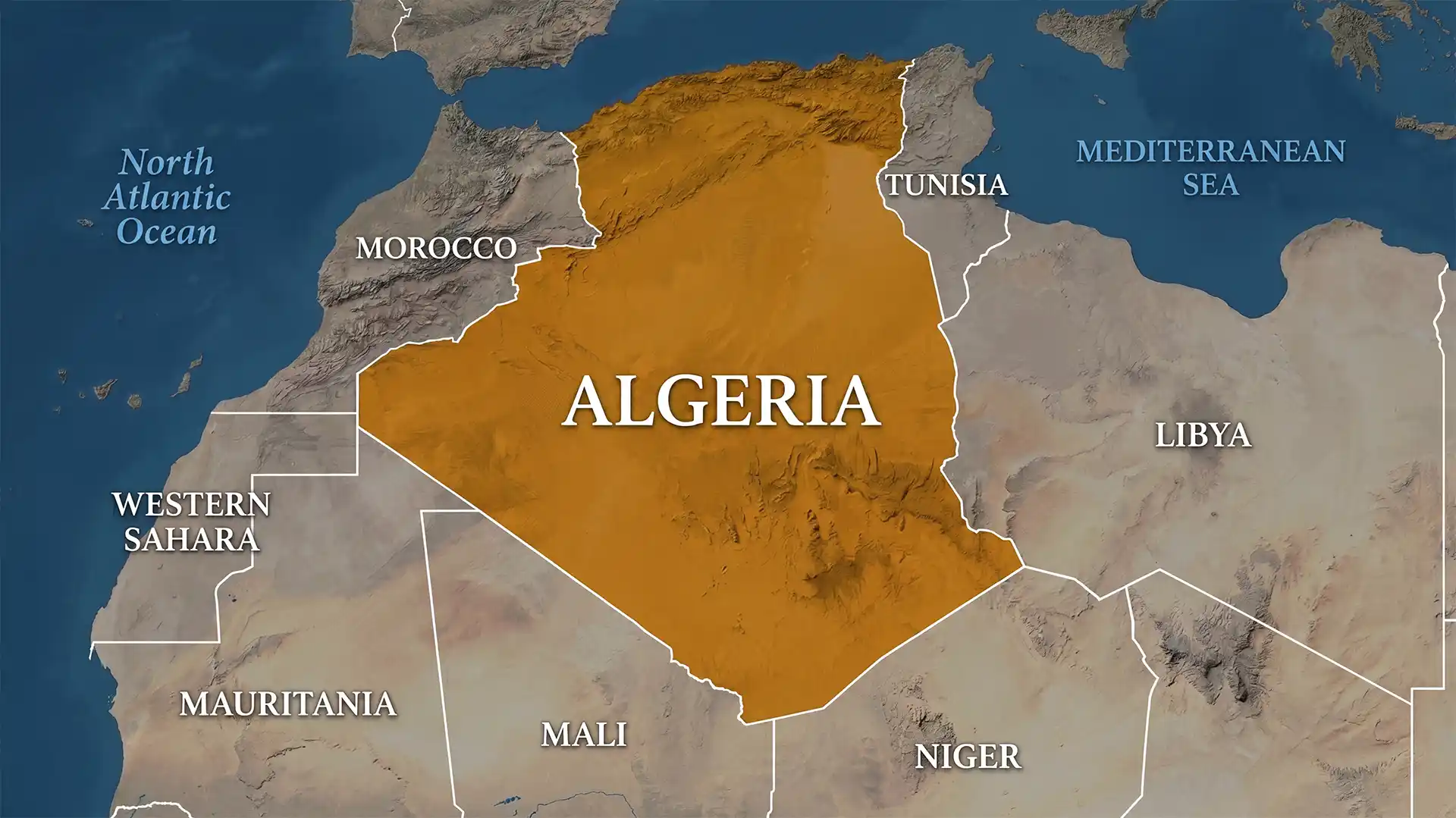
Algeria is the largest country on the African continent by land area. It lies in the Maghreb region of North Africa and is bordered by seven countries. To the northeast it touches Tunisia, to the east Libya, to the southeast Niger, to the southwest Mali and Mauritania, to the west Western Sahara and Morocco, and it has a coastline along the Mediterranean Sea to the north. Its capital and largest city is Algiers.
Geographical features
- Climate zones: The coastal strip enjoys a Mediterranean climate with warm, dry summers and mild, rainy winters. Inland, the High Plateaus and the Sahara Desert experience arid and semi‑arid conditions.
- Rivers: Major rivers include the Chelif (the longest river entirely within Algeria) and the Djedi. Many rivers are seasonal, flowing only during winter rains.
- Highest peak: Mount Tahat (3,003 m) in the Hoggar Mountains is Algeria’s highest point.
- Mountain ranges: The country is crossed by the Tell Atlas and Saharan Atlas ranges in the north and the Hoggar and Tassili n’Ajjer massifs in the south.
- Natural resources: Algeria possesses abundant reserves of oil, natural gas, iron, zinc, lead and helium. Solar energy potential is immense due to vast expanses of desert.
Socio‑economic context
Algeria gained independence from France in 1962 after a long struggle. It is a member of the African Union, Arab League and OPEC. Arabic and Amazigh are official languages, and the vast majority of Algerians follow Islam. Hydrocarbons dominate the economy, accounting for more than 90 percent of export revenue. The government is investing in renewable energy and diversifying into tourism, mining and manufacturing.
Significance for India
- Energy security: Algeria is a major supplier of liquefied natural gas (LNG) and crude oil. Strengthening ties helps India secure stable energy supplies.
- Strategic partnership: Cooperation includes defence training, counter‑terrorism and maritime security in the Mediterranean and North Africa.
- Cultural exchange: Both countries share a common history of anti‑colonial struggle. Cultural and educational exchanges promote understanding between the peoples.
Conclusion
Algeria’s unique geography – from Mediterranean coastlines to the vast Sahara – combined with its rich natural resources and strategic location, make it an important partner for India. Enhanced collaboration can deepen energy security, diversify trade and strengthen cultural ties.
Source: News on Air