
Why in news?
Genetics research and discussions about inherited diseases often use the term “allele.” UPSC aspirants are expected to understand the meaning of allele and its role in heredity. Recent breakthroughs in personalised medicine have further highlighted the importance of genetic variations.
Background
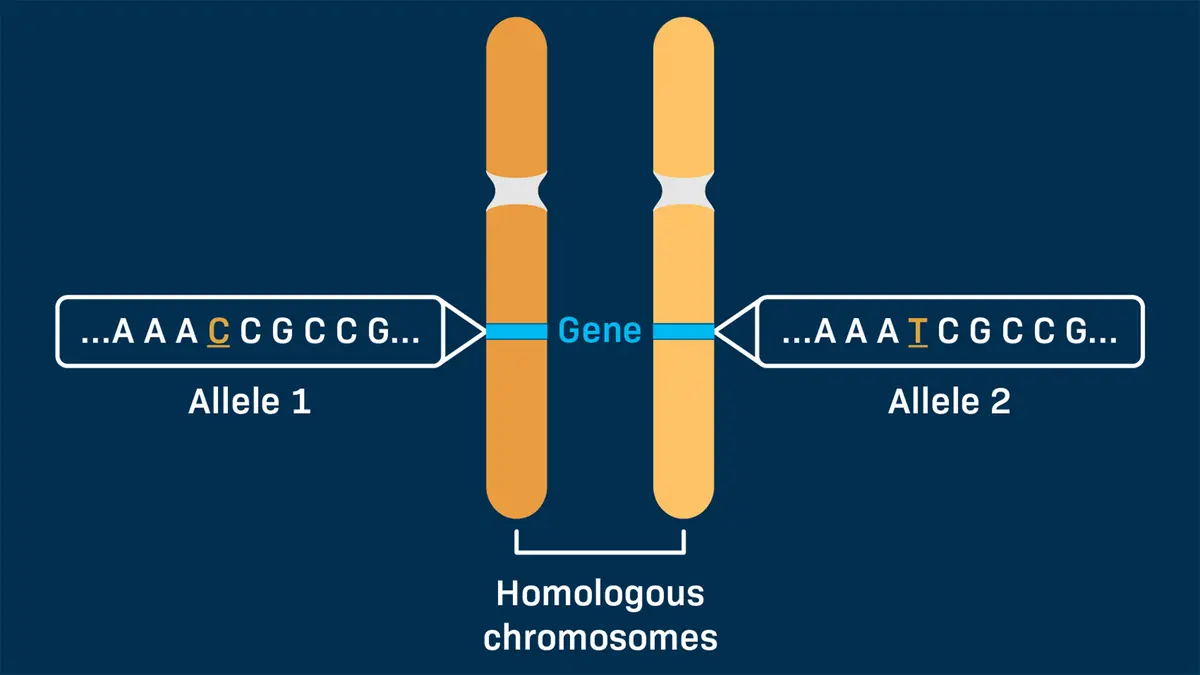
A gene is a specific sequence of DNA that codes for a functional product, usually a protein. Genes reside on chromosomes and influence traits such as eye colour, blood type and susceptibility to disease. An allele is one of several alternative forms of a gene found at the same position (locus) on a chromosome.
Humans are diploid organisms, meaning we inherit two sets of chromosomes—one from each parent. Thus, each person has two alleles for most genes. If both alleles at a locus are identical, the individual is homozygous for that gene; if they differ, the individual is heterozygous.
Key concepts
- Wild‑type and mutant alleles: The most common form of a gene in a population is called the wild‑type. A mutation creates a new allele that may alter the function of the gene product. Mutant alleles can be harmless, beneficial or cause disease.
- Dominant and recessive: Some alleles are dominant, meaning they determine the trait even when only one copy is present. Recessive alleles require two copies (one from each parent) to express the trait. For example, in pea plants, the allele for tall stems is dominant over the allele for short stems.
- Genotype and phenotype: The combination of alleles an individual carries is the genotype. The observable characteristics produced by these alleles form the phenotype. A single gene can have multiple alleles, contributing to genetic diversity.
- Major and minor alleles: Genetic studies often describe major alleles (more common variants) and minor alleles (less frequent variants) within a population. These variations influence how individuals respond to medicines or environmental factors.
Importance
Understanding alleles is fundamental to studying inheritance patterns, genetic disorders and evolution. In medical genetics, identifying harmful alleles helps in diagnosing hereditary diseases and developing gene‑based therapies. In agriculture, selecting beneficial alleles can improve crop yields and disease resistance.

