

Why in news?
A systematic review and meta-analysis appeared online on 4 August 2026. Occupational and Environmental Medicine published the study; it found higher odds of amyotrophic lateral sclerosis among workers exposed to pesticides. Six studies formed the main pooled estimate.
Workers classed as “ever exposed” had an odds ratio of 1.6; the comparison group had no occupational pesticide exposure.
Understanding the disease
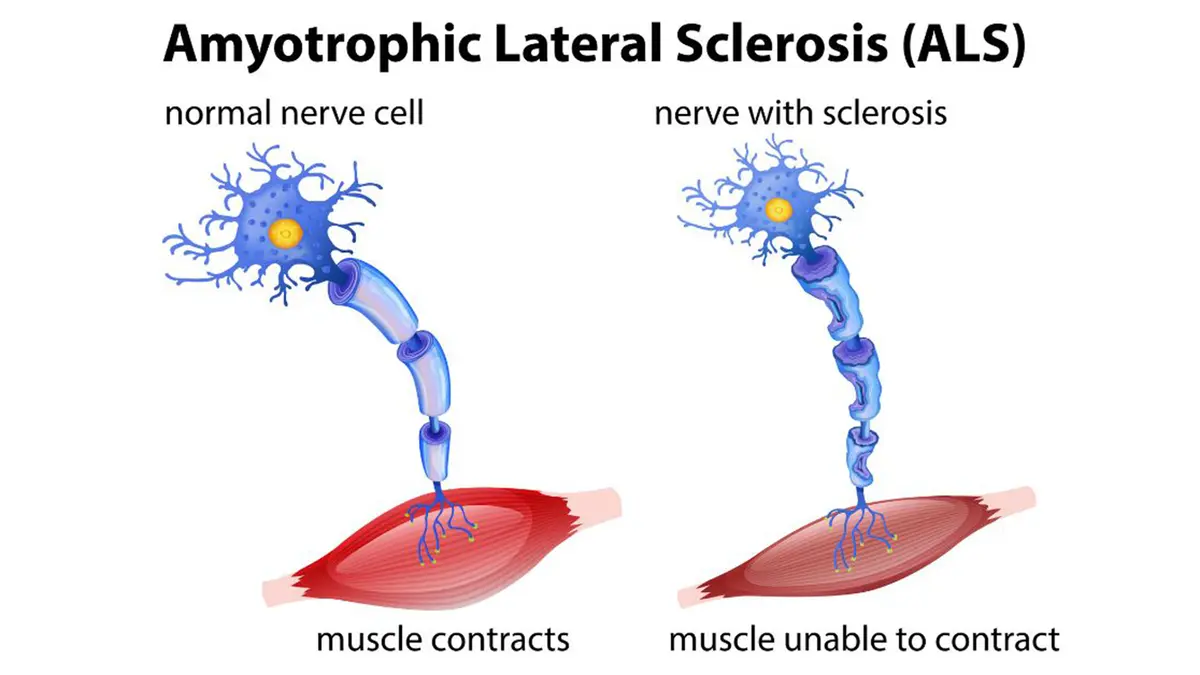
Amyotrophic lateral sclerosis, or ALS, is a progressive neurodegenerative disease; it damages motor neurons, which control voluntary muscles. “Amyotrophic” describes loss of muscle nourishment and wasting. “Lateral” refers to affected areas of the spinal cord.
“Sclerosis” describes scarring or hardening. The correct spelling is amyotrophic, not “amylotropic”.
Damage to upper and lower motor neurons produces varied symptoms. These can include weakness, cramps, twitching, slurred speech and swallowing difficulty.
The disease can eventually impair movement and breathing. Sensation is often relatively preserved, but symptoms and their order vary. No cure reverses motor-neuron loss. Multidisciplinary care can support breathing, nutrition, communication, mobility and quality of life.
Riluzole and edaravone are used for appropriate patients. Gene-targeted tofersen is intended for ALS associated with superoxide dismutase 1 (SOD1) mutations.
Most ALS is sporadic, with no simple inherited explanation. About 5–10 per cent of cases are familial, according to United States authorities.
Researchers study genes, ageing and environmental or occupational factors as interacting contributors. Association does not mean every exposed person will develop ALS. It also cannot show that one exposure caused an individual case. Personal causation requires far more than a population-level link.
What the 2026 review found
The researchers searched eight databases for observational studies published between 1990 and 2025. Eight case-control studies met the criteria. Together, these studies covered 1,734 ALS cases. Six studies contributed to the main pooled analysis.
Occupational pesticide exposure was associated with 1.6 times the odds of ALS. The 95 per cent confidence interval was 1.1–2.2.
The estimate for herbicides was 1.7. Separate estimates for insecticides and fungicides were 1.6.
Three studies reported exposure levels in enough detail to examine a gradient; they suggested larger estimates at higher reported exposure.
| Finding | Careful interpretation |
|---|---|
| Pooled odds ratio of 1.6 | The exposed group had 60 per cent higher odds in the included observational studies. This is a relative comparison, not a 60 per cent probability of disease. |
| Confidence interval of 1.1–2.2 | The interval allows effects from a modest to larger increase. The exact effect remains uncertain. |
| Eight case-control studies | The evidence base is small. Recall, selection and differing exposure classifications may affect it. |
| Higher estimates at higher exposure | A dose pattern is important, but it came from only three studies and does not on its own establish causation. |
The authors emphasised the small number of studies and their differences. Self-reported exposure predicted larger effect sizes. Studies published before 2015 also produced larger estimates; this pattern raises questions about methods and changing workplace conditions.
Workers may encounter mixtures of pesticides, solvents, fuels and dusts; a job title is an imperfect substitute for measured dose.
Recall after diagnosis can also affect case-control studies. Meta-analysis improves statistical power but cannot remove shared underlying bias.
Public-health implications
The appropriate response is workplace precaution, not consumer alarm; the study cannot justify automatically attributing an illness to pesticide exposure. Employers and regulators should prefer safer substitutes where feasible. Closed mixing and application systems can further reduce exposure.
Workers need suitable protective equipment, washing facilities and safe changing areas. Training should be available in familiar local languages.
Safe storage, disposal, exposure records and health surveillance are also important. Informal and small agricultural workers need particular attention.
They may have limited access to labels, protective gear or medical care. Prevention programmes must reflect these practical constraints. Future research should follow workers prospectively and record individual exposure histories. Scientifically valid biomonitoring could strengthen these studies.
Researchers also need information on active ingredients and mixtures. Studies should include women and workers in lower-income countries.
Better pesticide-use records can connect occupational health with environmental monitoring. Safeguards must prevent stigma or loss of livelihood.
Medical caution
Muscle twitching or weakness has many possible causes; this population-level review cannot diagnose ALS. It also cannot identify the cause of illness in one person. Persistent or progressive symptoms require assessment by a qualified clinician.
That assessment usually includes a neurological examination. Tests may also be needed to exclude other conditions.
Conclusion
The review strengthens a signal that occupational pesticide exposure may raise ALS risk. The association may be greater at higher exposure; it proves no single causal chemical and predicts no individual future. Policy should combine exposure prevention, better research and precise risk communication.