
Why in news?
The Uttar Pradesh Forest Department extended the eco‑tourism season at Amangarh Tiger Reserve until 30 June 2026. The extension follows strong visitor turnout during the fourth tourism season, which opened in November 2025. Over 3,000 tourists visited the reserve this season, generating valuable revenue for conservation.
Background
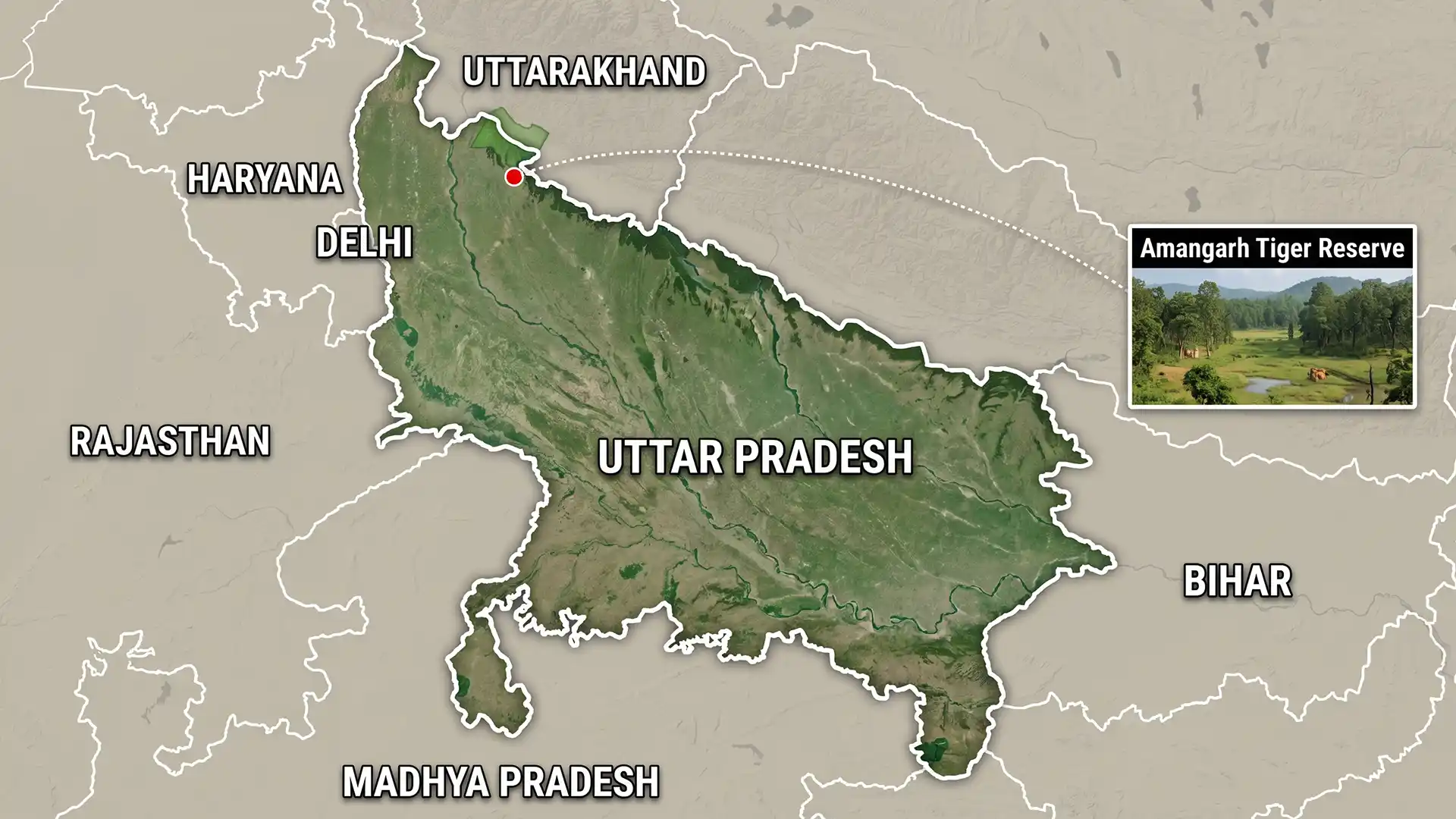
Amangarh Tiger Reserve lies in Bijnor district near the northern boundary of Uttar Pradesh. The area was originally part of Jim Corbett National Park in Uttarakhand but was carved out as a separate reserve in 2012 to strengthen tiger conservation on the Uttar Pradesh side. Spanning about 95 square kilometres, the reserve comprises dense sal forests, open grasslands, hills and seasonal rivers. It forms an important corridor for wildlife movement between Corbett and the western forests of Uttar Pradesh.
Wildlife and tourism highlights
- Fauna: The reserve is home to Bengal tigers, leopards, elephants, sambar, chital, nilgai, wild boar and over 300 species of birds.
- Eco‑tourism model: Tourism is managed through pre‑booked jeep safaris with trained guides. Visitors can experience dense forests and watch wildlife in natural habitats.
- Visitor statistics: The first tourism season (2022‑23) attracted 3,068 visitors; the second saw over 6,500; the current season has already surpassed 3,000.
- Revenue use: Funds earned from ticket sales are reinvested in habitat management, anti‑poaching patrols and community development.
- Seasonal closure: The reserve closes during the monsoon months to allow forest regeneration and ensure visitor safety.
Conclusion
Extending the tourism season at Amangarh helps generate resources for conservation while raising awareness about tiger protection. The reserve’s proximity to Corbett and its rich biodiversity make it a promising destination for responsible wildlife tourism. Authorities must ensure that tourism remains low‑impact and benefits local communities.