

Why in news?
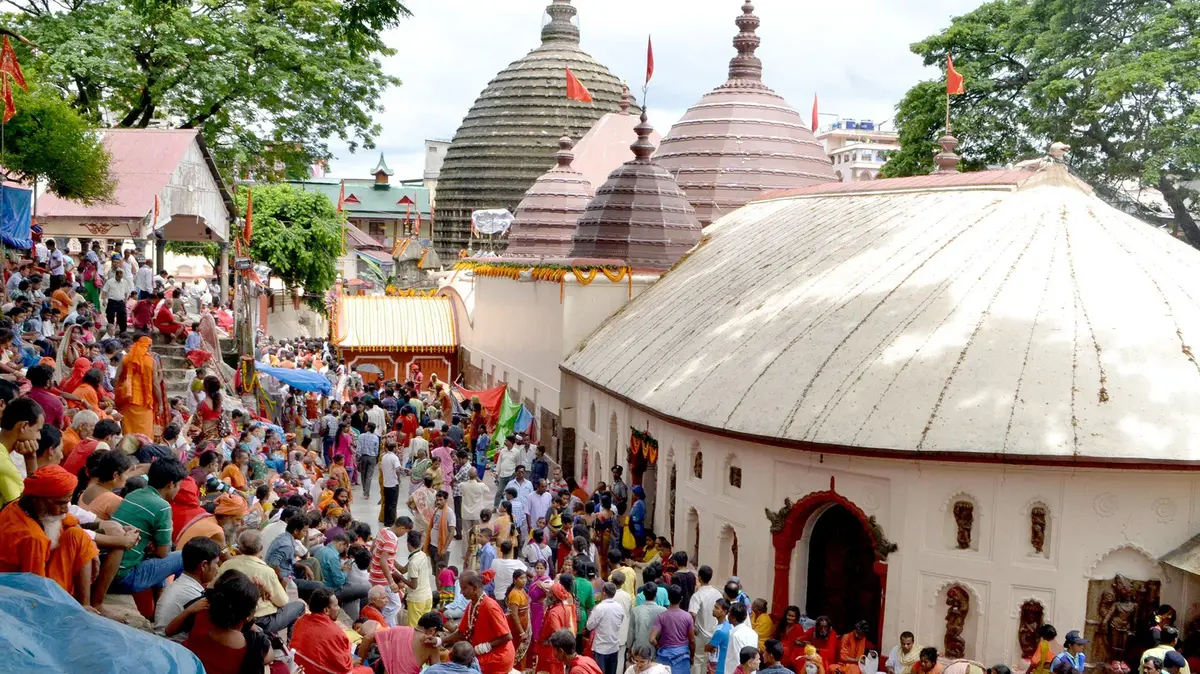
The annual Ambubachi Mela took place at the Kamakhya Temple in Guwahati from 22 to 26 June 2026. The festival celebrates the menstruation of Goddess Kamakhya and draws pilgrims from across India.
Background
Kamakhya Temple is one of the most important Shakti Peethas, dedicated to the Mother Goddess. According to tantric belief, Goddess Kamakhya experiences her yearly menstruation during the Assamese month of Ahaar (June). During this time the temple is closed for three days to honour the goddess’s seclusion. The fourth day marks her purification and the reopening of the shrine. Many devotees believe that the river Brahmaputra turns reddish during the festival, symbolising fertility.
Rituals and celebrations
- Temple closure: The sanctum remains closed for three days, from 23 to 25 June, and reopens on 26 June. Priests perform rituals inside while devotees wait outside and engage in prayers and meditation.
- Prasad and offerings: On the fourth day (called Nivritti), devotees receive a special red cloth known as rakta vastra along with sacred water. They offer red cloth, vermilion, fruits and flowers to the goddess.
- Gathering of sadhus: Tantric practitioners, sadhus and aghoris from across India participate in the mela, performing rituals and giving discourses. Folk performances and spiritual discussions add to the atmosphere.
- Travel and conduct: Visitors are advised to respect local customs, avoid taking photographs inside the temple and stay hydrated. Authorities provide drinking water, first‑aid and security to manage the large crowds.
Conclusion
The Ambubachi Mela celebrates the cyclical nature of life and the creative power of the feminine. By honouring the goddess’s menstruation, devotees acknowledge fertility, renewal and the sanctity of the natural world.