
Why in news?
Scottish authorities confirmed an outbreak of American Foulbrood (AFB) in an apiary in Kincardineshire in June 2026. The disease is fatal to honeybee colonies and there is no treatment, so infected hives must be destroyed. Officials have warned beekeepers within a three‑kilometre radius to be vigilant and increase biosecurity measures.
Background
American Foulbrood is caused by the spore‑forming bacterium Paenibacillus larvae. It affects the larvae of honeybees, killing them before they pupate. Because the bacterium forms hardy spores that can survive for decades, outbreaks can spread quickly and are difficult to eradicate.
Symptoms and transmission
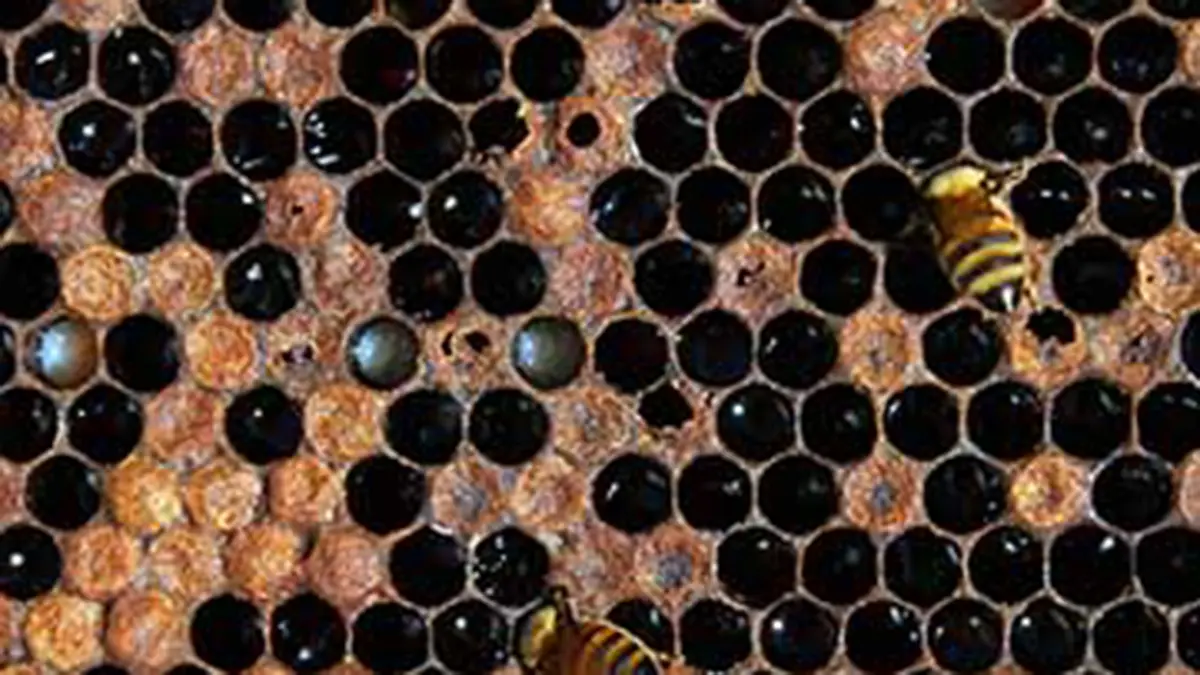
- Visual signs: Affected brood cells develop a sunken, darkened cap as the larva inside dies. When a beekeeper inserts a matchstick into the cell, the remains form a ropy brown thread, indicating AFB. Eventually the dead larva dries into a hard scale that sticks to the cell wall and is difficult to remove.
- Spread through spores: Nurse bees unwittingly feed spores to young larvae when cleaning cells or robbing contaminated honey from infected hives. Beekeepers can also spread the disease by moving contaminated equipment or honey between colonies.
- No cure: There is no effective treatment for AFB. Once detected, affected hives are destroyed or burned to prevent further spread. Infected apiaries are placed under movement restrictions.
Recent developments
- Outbreak in Scotland: The Scottish Government’s science agency (SASA) confirmed the presence of AFB on 4 June 2026. It is the first recorded case in Scotland this year. Local beekeepers have been alerted through the BeeBase database, and hives within three kilometres are being inspected.
- First vaccine: In 2023 the US Department of Agriculture granted a conditional licence for the world’s first honeybee vaccine against AFB. The vaccine contains dead P. larvae cells mixed into feed; worker bees transfer it to the queen, and her offspring acquire immunity through royal jelly. Although not yet widely available, this innovation offers hope for preventing future outbreaks.
- Awareness and biosecurity: Beekeepers are urged to learn the symptoms of AFB, monitor their colonies regularly and avoid sharing equipment between hives. Keeping records and registering apiaries with government databases helps trace and control disease spread.
Conclusion
American Foulbrood remains one of the most serious threats to honeybee health. Rapid detection, destruction of infected colonies and strict hygiene are the only effective control measures. New technologies such as vaccines may reduce future outbreaks, but until then, vigilance by beekeepers and authorities is essential to protect pollinators that underpin global food production.