
Why in news?
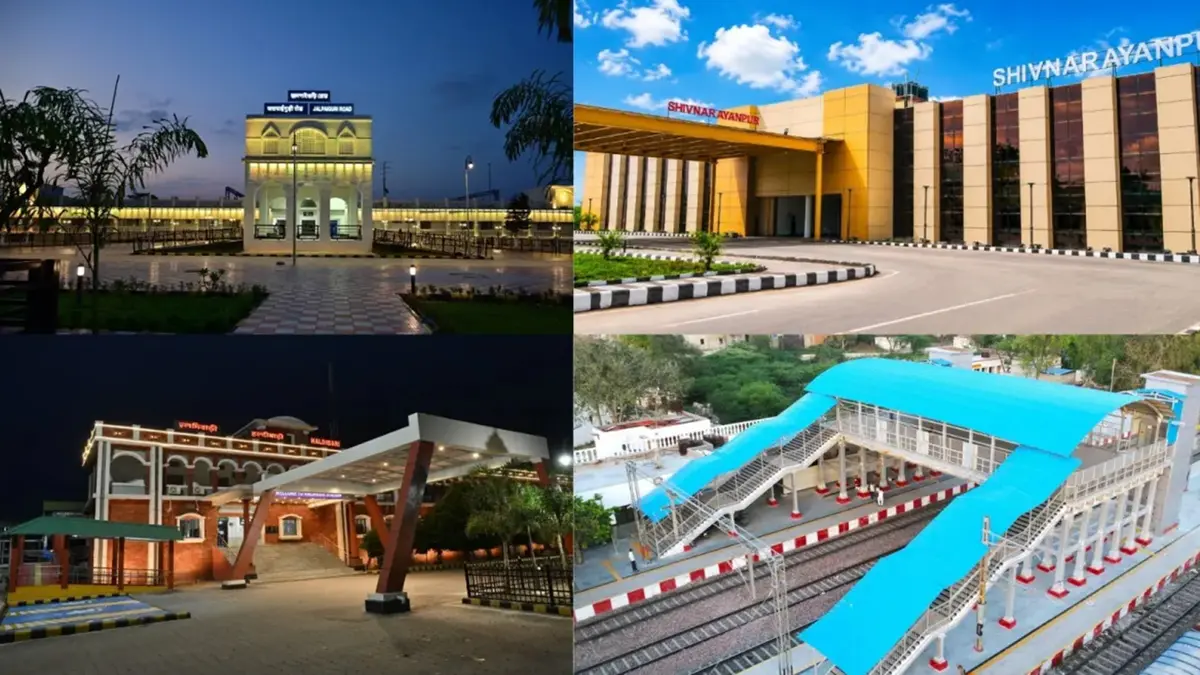
The Prime Minister inaugurated 75 redeveloped railway stations on 17 July 2026. These stations are spread across 20 states. Their combined redevelopment cost was about ₹1,570 crore. The work was completed under the Amrit Bharat Station Scheme.
Background
Railway stations are more than boarding points; they connect homes, workplaces, markets, schools and tourist destinations.
Many older Indian stations developed in stages without a complete long-term plan.
Passenger growth later placed pressure upon entrances, platforms, toilets and waiting spaces.
The Ministry of Railways created a nationwide redevelopment framework to address these needs.
What is the Amrit Bharat Station Scheme?
The Amrit Bharat Station Scheme is shortened to ABSS.
The Ministry of Railways launched ABSS in December 2022 for long-term improvement through individual master plans.
Work proceeds in phases according to local need, traffic and available resources.
The scheme covers more than 1,300 stations nationwide; official totals have changed as the programme expanded.
Number caution: Recent reports use 1,338 or 1,340 stations; “more than 1,300” avoids mixing different updates.
An official 2023 release had listed 1,309 stations at that stage.
The changing totals reflect programme updates, not necessarily a factual contradiction.
How did the programme develop?
- The Ministry launched ABSS in December 2022 and selected stations for need-based, phased redevelopment.
- The Prime Minister laid foundations for 508 stations in August 2023; further batches later entered construction.
- Redeveloped stations began opening in groups, including 75 inaugurated on 17 July 2026.
The latest inauguration was conducted virtually from Jalandhar; Jalandhar Cantonment was among the redeveloped stations.
What exactly happened in July 2026?
- Seventy-five completed stations across 20 Indian states were opened for public use.
- The batch cost approximately ₹1,570 crore; the Prime Minister joined the ceremony virtually.
- Local events were held at the respective station locations.
These figures apply only to this batch; they do not represent the complete national scheme.
What improvements can a station receive?
- Approach and circulation: Roads, gates and signs can improve, while layout changes reduce crowding and confusion.
- Waiting and sanitation: Halls, seating, shelters, toilets and drinking-water facilities can become cleaner and more comfortable.
- Platforms: Surfaces, covers and passenger information systems can be improved.
- Inclusive movement: Lifts, escalators, bridges, ramps and tactile paths can help different passengers.
- Digital access: Wireless internet and clearer information displays may be provided.
- Interchange: Station planning can connect railways with buses, taxis and private vehicles.
- Environment: Designs may improve lighting, energy use, drainage and waste handling.
Every station does not receive every feature at the same time.
Actual work depends upon the master plan and approved project scope.
What does “station as a city centre” mean?
A railway line can divide a town into two parts.
Traditional station layouts sometimes provide good access from only one side.
The scheme seeks better integration between the station and its surrounding city.
Planning may connect both sides through bridges, entrances and public spaces.
Bus stops, parking and pedestrian routes can be organised around the station.
The goal is smoother movement, not merely a decorative building front.
How does heritage enter the design?
The programme uses “Virasat Bhi, Vikas Bhi”, a theme joining heritage with development.
Station architecture can reflect local history, crafts, landmarks and building traditions.
A coastal station and a mountain station need not look identical.
Local design can strengthen identity while modern facilities improve passenger use.
Heritage treatment should preserve genuine features rather than add superficial decoration.
How can the scheme support local economies?
Better stations can improve access for workers, traders and tourists; construction and maintenance also generate local demand.
One Station One Product kiosks provide space for selected local goods.
These goods may include handicrafts, textiles, foods or traditional products.
The initiative can help travellers discover the region’s distinctive output.
Fair selection and stable market access remain important for small producers.
Is ABSS the same as Amrit Bharat Express?
The similar names describe different initiatives; ABSS is a programme for station redevelopment.
Amrit Bharat Express is a category of passenger train service.
One concerns fixed station infrastructure; the other concerns railway operations and rolling stock.
Prelims distinction: Amrit Bharat Station Scheme redevelops stations; Amrit Bharat Express is a train service.
What are the main implementation challenges?
- Construction must continue without stopping daily train operations.
- Old stations may have limited land for expansion.
- Several agencies control roads, utilities and surrounding public spaces.
- Heritage protection can require specialised design and materials.
- New facilities need regular upkeep, and accessibility features must remain usable after construction.
- Passenger growth may outpace earlier design assumptions.
Successful redevelopment requires more than a building contract; operations, maintenance and city coordination determine the passenger’s final experience.
Why is the scheme significant?
- It modernises stations in large cities and smaller towns.
- Its phased model permits improvements according to local priorities.
- Better accessibility can make rail travel more inclusive.
- Local architecture can preserve identity during modernisation.
- Integrated planning can improve connections with other transport modes.
Official statements call it one of the world’s largest station redevelopment programmes.
The phrase is “one of the largest”, not an independently established global first.
Conclusion
ABSS combines station modernisation with local identity and better access; continued maintenance will decide whether passengers receive lasting benefits.