

Why in news?
Wildlife officials in Manipur have reported that three Amur falcons tagged with satellite transmitters are currently wintering in Africa. The birds, named Ahu, Alang and Apapang, were tagged in November 2025 and have taken an extraordinary journey from India to Somalia, Zimbabwe and Botswana.
Background
The Amur Falcon (Falco amurensis) is a small migratory raptor known for one of the longest over‑water journeys of any bird of prey. It breeds in southeastern Siberia and northern China and migrates in massive flocks through the Indian subcontinent to wintering grounds in southern and eastern Africa. Large numbers roost in Nagaland and Manipur during the autumn migration, where community conservation efforts have protected these birds.
Recent tracking details
- Tagging: The Manipur Forest Department and the Wildlife Institute of India fitted three birds with satellite transmitters at the Chiuluan roosting site in Tamenglong district in November 2025.
- Rapid migration: After release, the falcons flew to Africa in nine to ten days, covering thousands of kilometres. They are now in Somalia (Ahu), Zimbabwe (Apapang) and Botswana (Alang).
- Health monitoring: Latest satellite data show that all three birds are active and healthy. Researchers monitor their movements to understand migration routes, stopover sites and threats along the way.
About the species
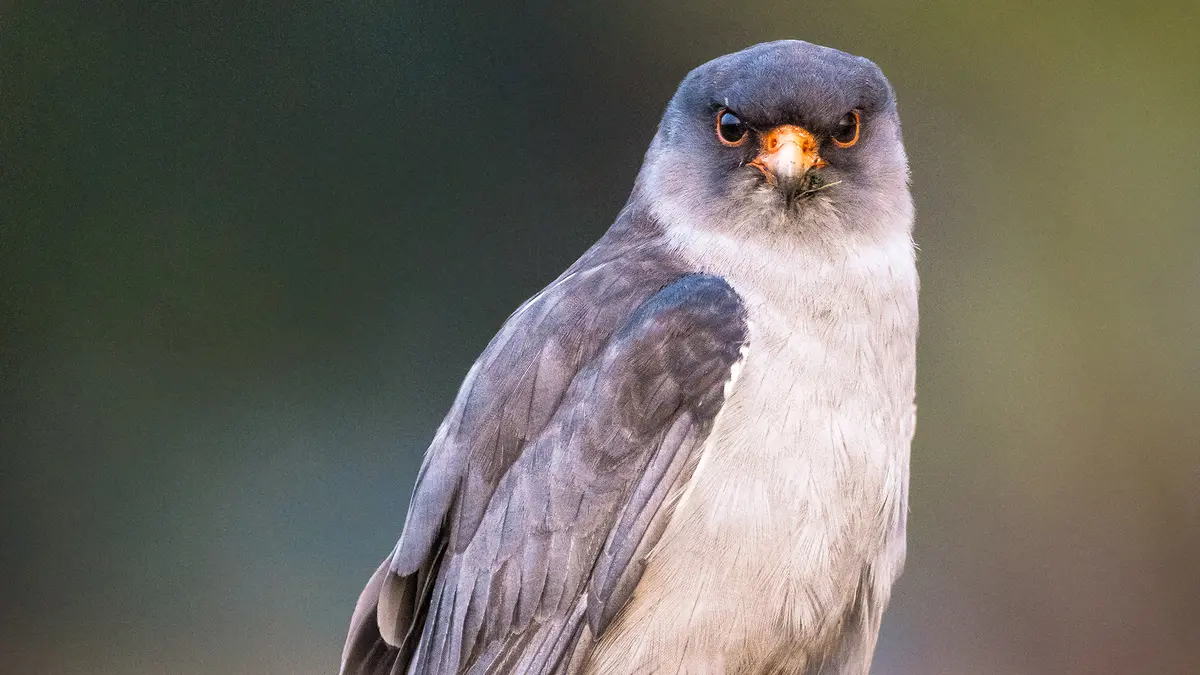
- Appearance: Amur falcons have a wingspan of about 63–71 cm and weigh around 120 g. Males are dark grey with reddish thighs and vent, while females have a patterned chest and a grey back. Both sexes have an orange eye‑ring, cere and feet.
- Migration route: After breeding in Asia, they fly over the Himalayas and across the Indian Ocean to Africa, often completing the over‑sea part without stopping. India lies along their migration route, making it an important location for conservation.
- Conservation status: The species is listed as “Least Concern” on the IUCN Red List, but it faces threats from hunting, habitat loss and collisions with infrastructure. Community‑based protection in north‑east India has significantly reduced hunting.
Significance
Satellite tracking of Amur falcons helps scientists understand one of the world’s most remarkable avian migrations. Identifying stopover sites and threats enables international cooperation for conservation. The successful journey of Ahu, Alang and Apapang underscores the effectiveness of local conservation efforts in Manipur and highlights the need to protect migration corridors across continents.
Source: India Today NE