
Why in news?
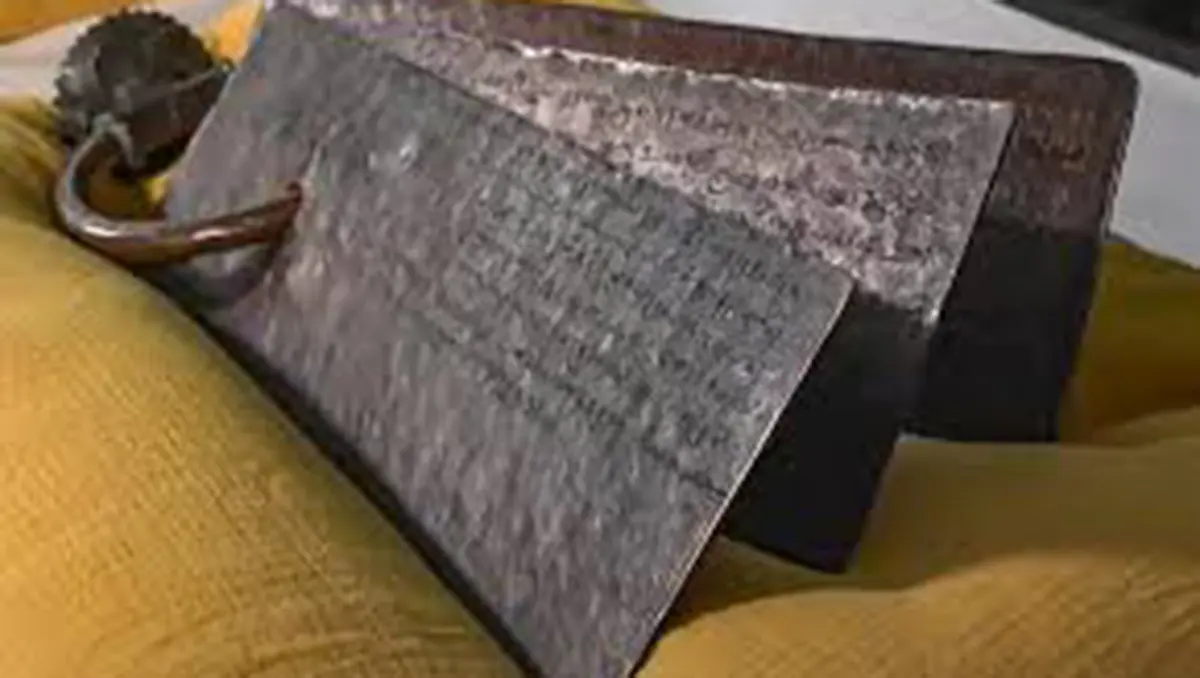
During Prime Minister Narendra Modi’s visit to the Netherlands, the Dutch Government returned a set of large copper plates to India. These 11th‑century plates, known as the Anaimangalam copper plates, had been in a museum in Leiden for more than three centuries. They record a land grant by Chola king Rajendra Chola I to a Buddhist monastery and are regarded as important evidence of India’s cultural heritage.
Background
The Anaimangalam plates were created around 1005 CE during the reigns of Rajaraja Chola I and his son Rajendra Chola I. They consist of twenty‑one large plates and three smaller plates, together weighing about 30 kilograms. Each plate is perforated and bound by a bronze ring topped with a seal bearing the figure of the goddess Sri Lakshmi. The inscriptions have two parts: an introductory section in Sanskrit written in Grantha script and a longer record in Tamil.
The Sanskrit portion praises the Chola rulers and their ancestors. The Tamil section details a donation of revenue and tax‑exempt land near Nagapattinam to the Chudamani Vihara, a Buddhist monastery built by King Sri Mara Vijayottunga Varma of Sri Vijaya. The plates specify the boundaries of the gifted villages and list officials responsible for enforcing the grant. They also mention that Rajendra Chola I confirmed his father’s grant by having a second set of plates made.
Journey to the Netherlands
- The plates were taken out of India around 1700 by Florentius Camper, an official of the Dutch East India Company. They eventually reached Leiden University Library in the Netherlands.
- Scholars first studied and published translations of the inscriptions in the late 19th century.
- In 2012, the Indian Government formally requested their repatriation. After lengthy negotiations, the Dutch Government agreed to return them as a gesture of cultural cooperation.
Significance
- The plates provide valuable information on Chola administration, land‑grant procedures and the relationship between the Chola kingdom and the maritime Buddhist polity of Sri Vijaya.
- They show that the Cholas patronised Buddhist institutions even though they were devout Saivites. The grant to Chudamani Vihara highlights Nagapattinam’s role as a major Buddhist centre.
- The repatriation underscores global recognition of India’s heritage and the growing practice of returning artefacts taken during colonial times.
Conclusion
The return of the Anaimangalam copper plates is a symbolic triumph for heritage conservation. By bringing these plates home, India gains direct access to a rare source of early medieval history. The episode also strengthens cultural ties between India and the Netherlands and sets a precedent for future restitution of artefacts.

