
Why in news?
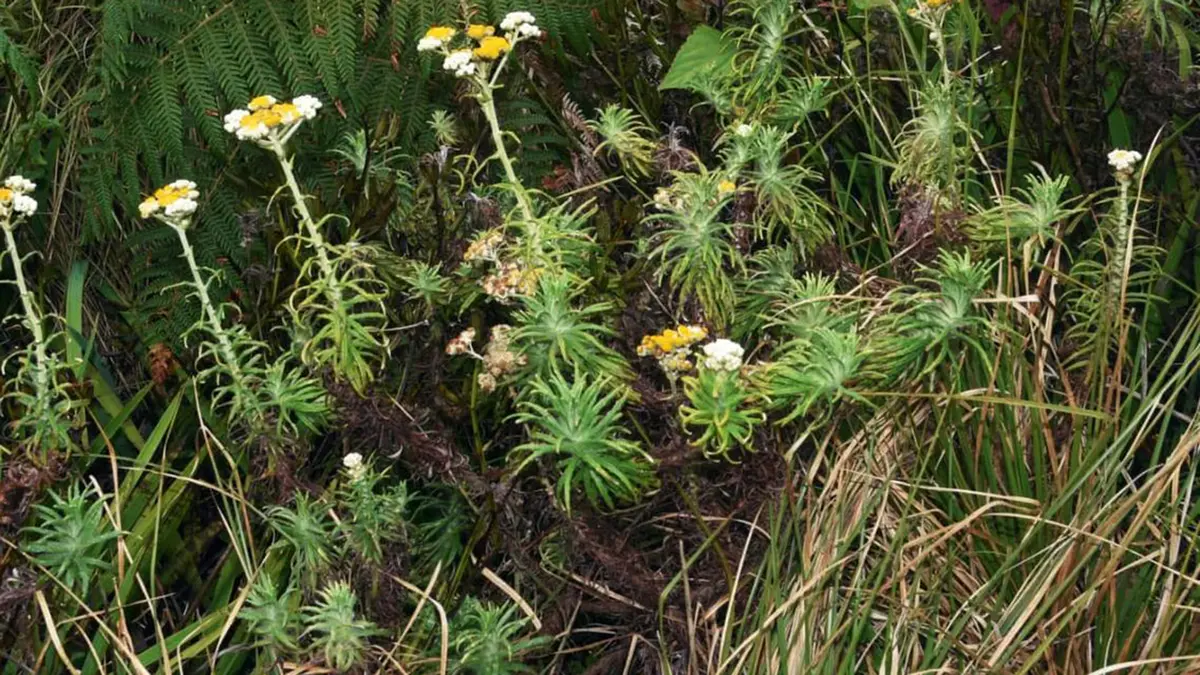
Botanists have described a new flowering plant species named Anaphalis sahyadrica from the high‑altitude grasslands of Kerala’s Western Ghats. The species was discovered during doctoral research and the formal description was published in 2026.
Background
The genus Anaphalis belongs to the sunflower family (Asteraceae) and comprises herbaceous plants often found in montane regions. The Western Ghats, also known as the Sahyadris, are recognised as a global biodiversity hotspot with many endemic species. Intense rainfall and altitudinal gradients have created unique grassland–shola mosaics that harbour specialised flora.
Characteristics of the new species
- Habitat: Anaphalis sahyadrica grows in montane grasslands and along the margins of shola forests at elevations above 2,200 metres on peaks such as Anamudi and Meesapulimala in Kerala. These high‑altitude meadows are cool, windy and moist for much of the year.
- Plant form: It is a subshrub reaching about one metre in height with smooth, hairless leaves. Each plant produces clusters of 90–120 small white flower heads (capitula). The species is named sahyadrica in honour of the Sahyadri mountains.
- Distinguishing features: While it shares certain traits with the Himalayan species Anaphalis marcescens—such as the overall habit and disc‑shaped flower heads—it differs in habitat preference, leaf shape and the number of capitula per cluster. Detailed morphological comparisons and scanning electron microscopy images were used to distinguish it from related species.
Importance
The discovery of Anaphalis sahyadrica adds to the floral diversity of the Western Ghats and highlights the need to conserve high‑altitude grasslands, which are often threatened by climate change, tourism and invasive species. Documenting new species helps scientists understand evolutionary relationships and informs conservation planning.
Conclusion
The identification of a new plant from the Sahyadris underscores the Western Ghats’ status as a treasure trove of biodiversity. Protecting these fragile ecosystems will ensure that many more unknown species survive and continue to support ecological balance.