
Why in news?
Palaeontologists in Australia unearthed fossils of a toothed platypus species called Obdurodon insignis from a site near Lake Pinpa in South Australia. The fossils, dated to about 25 million years ago, extend the known existence of the species by eight million years and reveal new insights into monotreme evolution.
Background
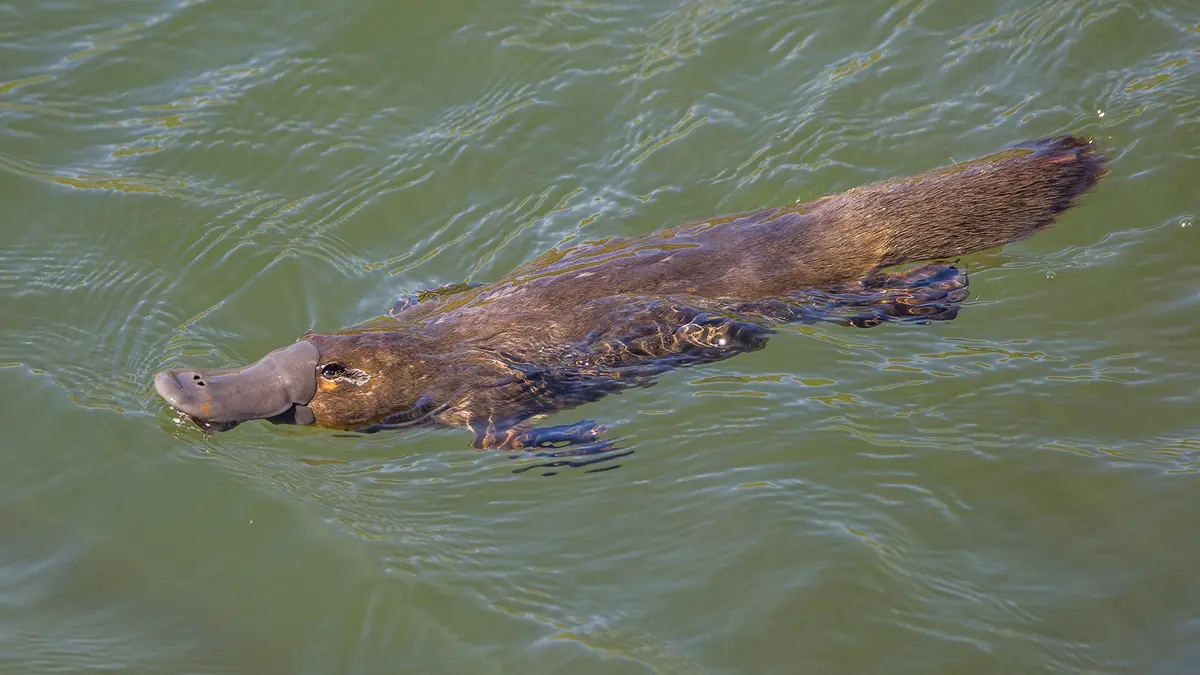
The modern platypus is a monotreme, an egg‑laying mammal found only in eastern Australia and Tasmania. It has a duck‑like bill, webbed feet and electrosensitive snout but lacks teeth as an adult. Fossils of its ancestors show that ancient platypuses once had functional molars. The new find includes a well‑preserved premolar and parts of the shoulder girdle, indicating that O. insignis retained its teeth into adulthood and had strong swimming abilities.
Key discoveries
- Dental evidence: The fossilised premolar shows clear cusps for crushing hard prey such as crayfish, snails and small vertebrates. This suggests that the ancient platypus had a more varied diet than its modern descendant.
- Shoulder bones: Fragments of the scapulocoracoid reveal muscle attachment sites similar to those of modern platypuses. These indicate powerful forelimbs used for swimming and digging.
- Lush ancient environment: Twenty‑five million years ago, the area around Lake Pinpa was a freshwater wetland with lungfish, crocodilians, early dolphins and flamingos. Today, the region is arid, demonstrating how Australia’s climate has changed.
- Rarity of finds: Despite thousands of fossils recovered from the site, only a few belong to Obdurodon, highlighting its scarcity and the importance of each new specimen.
Significance
- Evolutionary insight: The find confirms that early platypuses retained teeth and were slightly larger than modern platypuses. It underscores the diversity of monotremes in Australia’s past.
- Understanding climate change: Comparing the ancient wetland to today’s desert landscape shows how continental drift and climate shifts have transformed habitats over millions of years.
- Public interest: Unusual mammals like the platypus capture the imagination and can inspire wider interest in fossil studies and conservation.
Source: Earth

