

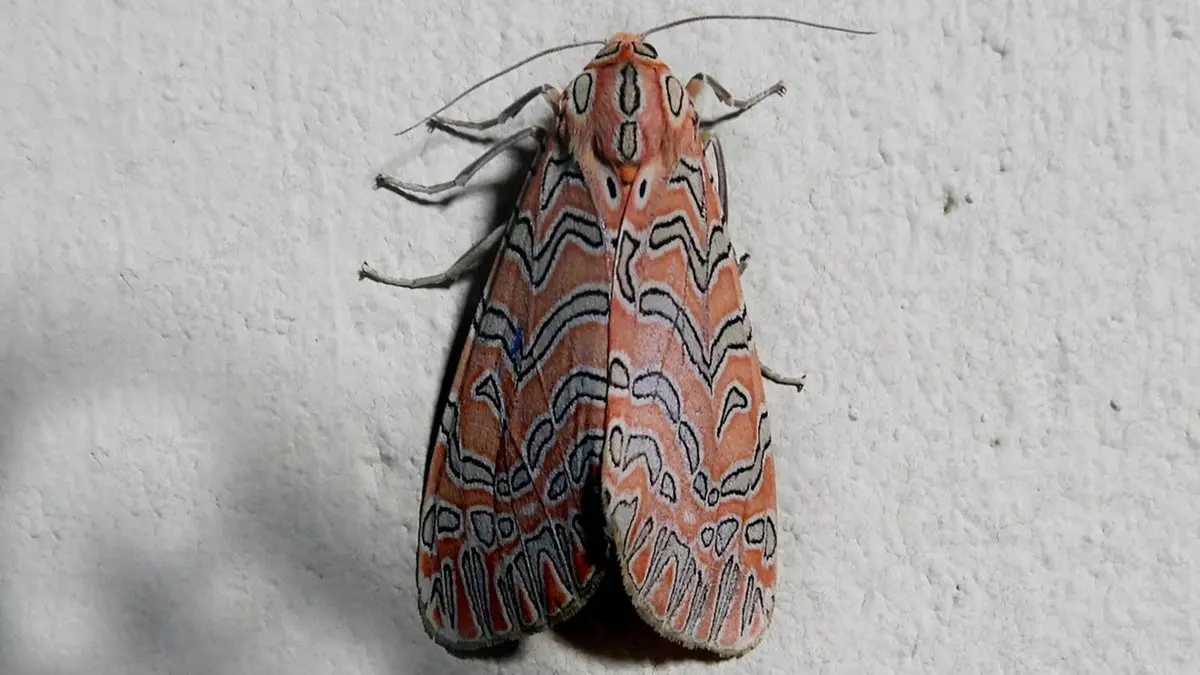
Why in news?
A team of entomologists recently described a new genus and species of tiger moth from Kerala’s Idukki district. The moth, named Antaram idukki, is the first of its kind and has been found only in this mountainous part of the Western Ghats. Its discovery draws attention to the region’s rich but fragile insect diversity and the importance of conserving habitats where such unique species live.
Background
Moths belong to the order Lepidoptera, the same group as butterflies. They are found in most habitats and play a vital role as pollinators and as a food source for birds and bats. In early 2026 researchers from the Zoological Survey of India and an international team collected specimens of an unusual tiger moth in Idukki. Detailed study of its wing patterns, genital structures and DNA showed that it did not fit into any known genus. The team created the genus Antaram and named the species Antaram idukki after the district where it was found. The findings were published in the Journal of the Lepidopterists’ Society.
Key features and significance
- Restricted range: So far the moth is known only from Idukki district. Such narrow distribution makes it vulnerable to habitat loss.
- Unique morphology: Antaram idukki has a distinctive wing pattern and body structure that set it apart from other tiger moths. These features justified the creation of a new genus.
- Ecological role: Tiger moths are important pollinators, especially for night‑blooming plants. Their larvae and adults provide food for birds, bats and other animals. They also serve as indicators of environmental change.
- Conservation message: The discovery highlights the biodiversity of the Western Ghats, a UNESCO World Heritage Site. Protecting forested hills like those in Idukki is vital to safeguarding species that science has only just begun to document.
Conclusion
Antaram idukki is more than a scientific curiosity. It is a reminder that India’s mountains harbour species still unknown to science. Conserving these habitats will ensure that such discoveries can continue and that the ecological services provided by insects remain intact.