

Why in news?
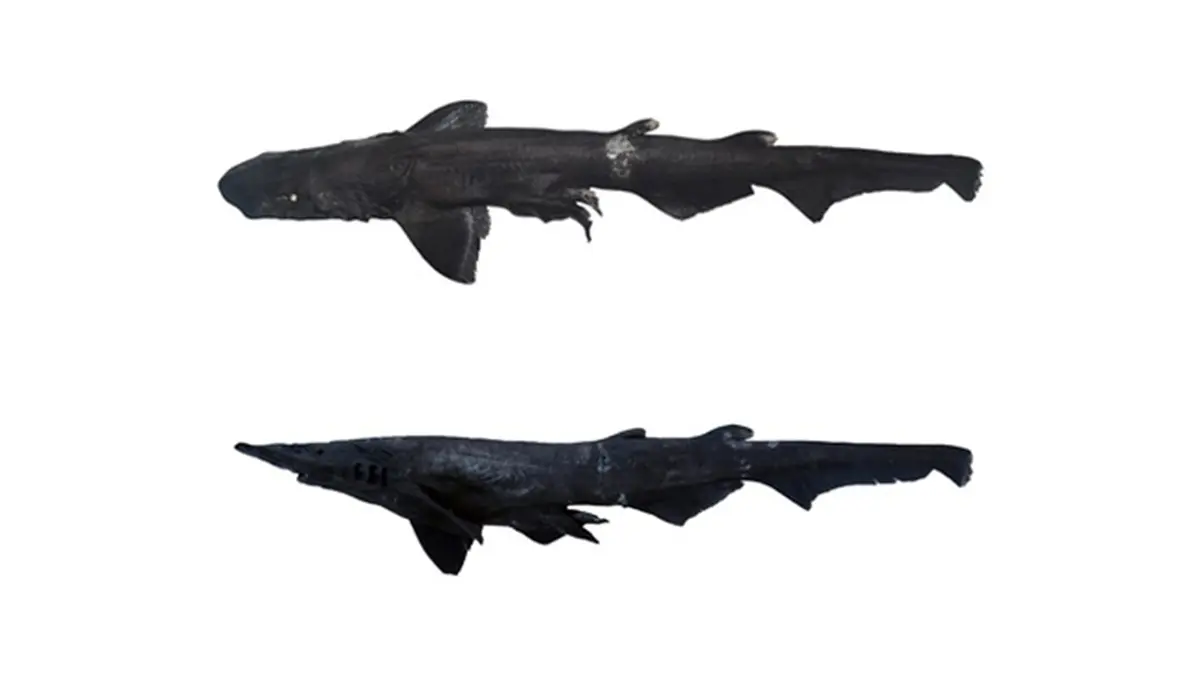
Scientists from the Zoological Survey of India announced the discovery of a new deep‑sea catshark species, named Apristurus drona, in June 2026. The species was described in the journal Zootaxa and adds to our understanding of India’s deep‑sea biodiversity.
Background
The genus Apristurus includes numerous species of deep‑sea catsharks found worldwide. They have slender bodies, long tails and soft skin and often inhabit depths beyond 500 metres. Because these sharks live far from shore, they are seldom seen and rarely targeted by fisheries. Discoveries of new species highlight the vast unexplored life in the deep ocean.
Key points
- Collection site: Four specimens (two males and two females) were collected as bycatch from deep‑sea shrimp trawlers operating off the Kollam coast of Kerala. The sharks were found at depths between 400 and 650 metres on the Kollam slope of the Arabian Sea.
- Morphology: The sharks measured 439–473 mm long and possessed slender bodies, a small nostril relative to internarial width and fins positioned forward on the body. They had specific counts of spiral valves and vertebrae that differ from related species. DNA barcoding showed a 5.5–5.7 percent divergence from their nearest relatives.
- Evolutionary relationships: The new species belongs to the Apristurus brunneus subgroup. Genetic analyses show it forms a distinct evolutionary lineage close to A. nakayai from the southwestern Pacific, A. macrorhynchus from the northwest Pacific and A. exsanguis from New Zealand.
- Name and significance: The species is named after Drona, the legendary teacher from the Indian epic Mahabharata, reflecting the knowledge gained from the deep sea. The discovery underscores the need for further exploration and conservation of India’s deep‑water habitats.
Conclusion
Apristurus drona is a reminder that the depths of the Indian Ocean still harbour unknown species. Continued research will expand our understanding of marine biodiversity and inform sustainable management of deep‑sea resources.