

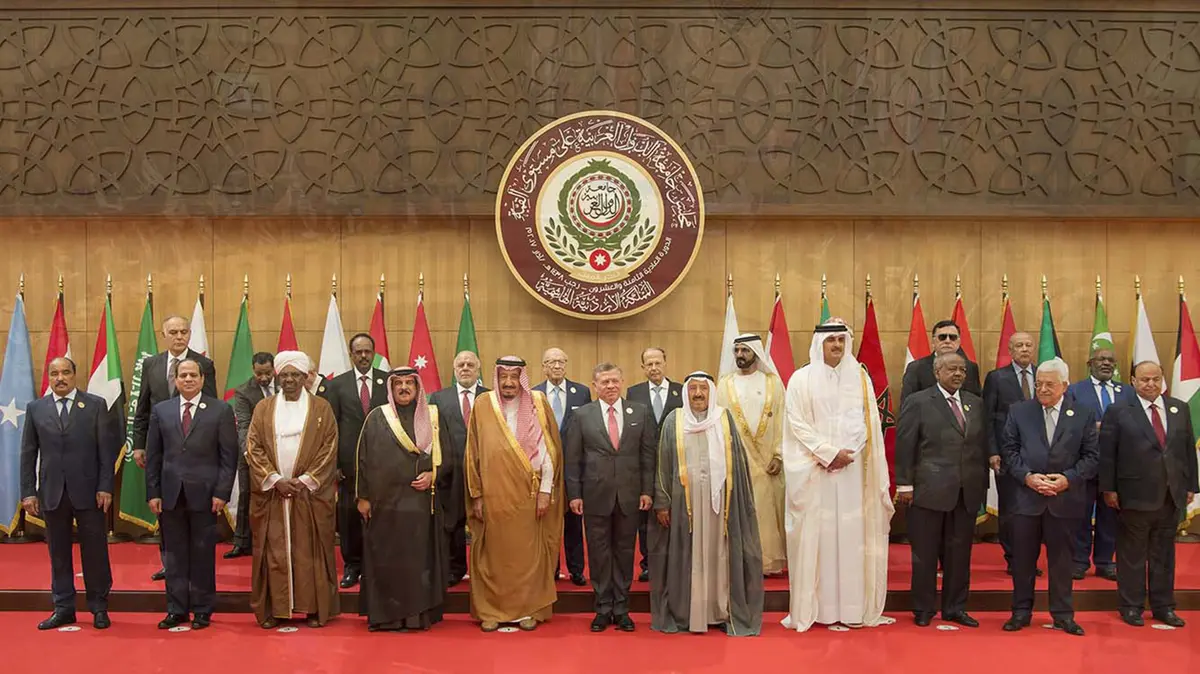
Why in news?
External Affairs Minister S. Jaishankar hosted foreign ministers from five Arab League countries in New Delhi ahead of the second India–Arab League ministerial meeting. Discussions covered trade, energy cooperation, the Gaza crisis and preparation for a wider meeting to strengthen India’s ties with West Asia. The event highlighted the importance of understanding the Arab League’s origins and objectives.
Background
The League of Arab States, commonly called the Arab League, was established in Cairo on 22 March 1945 by Egypt, Iraq, Transjordan (now Jordan), Lebanon, Saudi Arabia, Syria and Yemen. Its founding charter aims to strengthen cooperation among Arab countries in political, economic, cultural and social affairs. Over time membership has grown to 22 states, though the organisation has faced internal divisions (for example, Egypt was suspended after signing a peace treaty with Israel in 1979 and reinstated in 1989).
Objectives and structure
- Coordination: The league seeks to coordinate policy on matters of common interest, including foreign affairs, economic development, health, education and communications.
- Mediation: It provides a forum for member states to resolve disputes and has brokered agreements on issues ranging from border conflicts to refugee assistance.
- Joint projects: The league has established specialised agencies, such as the Arab League Educational, Cultural and Scientific Organization (ALECSO) and joint economic councils, to promote cooperation.
- Decision‑making: Each member state has one vote. Resolutions are binding only on those states that vote in favour, allowing flexibility while recognising diverse national interests.
Recent relevance
- Peace and security: The league has been involved in efforts to mediate conflicts in Libya, Syria and Yemen, though its effectiveness is often constrained by divergent national agendas.
- Economic cooperation: Member countries are working to integrate electricity grids, invest in green hydrogen and expand trade with partners like India. India’s engagement with the league includes oil and gas imports, infrastructure projects and diaspora connections.
- Gaza crisis: In meetings with India the ministers discussed ways to achieve a lasting cease‑fire in Gaza and provide humanitarian aid.
Source: HT