

Why in news?
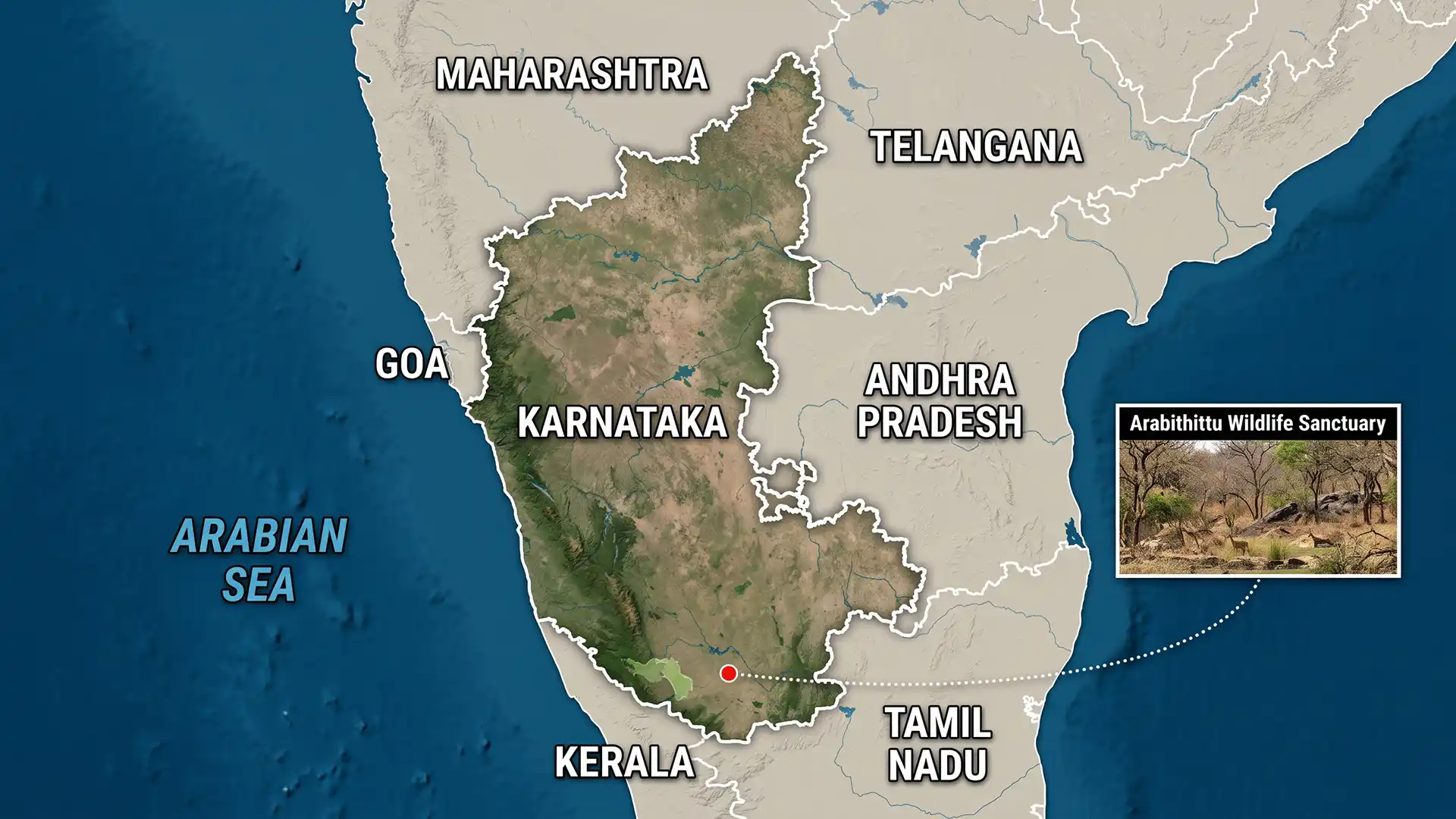
Arabithittu Wildlife Sanctuary in Mysuru district came into focus after a leopard was killed by a speeding vehicle on a road near the sanctuary, drawing attention to wildlife roadkill and human-wildlife conflict around the area. The sanctuary, notified in 1985, lies close to Mysuru city and is valued for its biodiversity.
Background
Located about 20 kilometres from Mysuru, Arabithittu was formerly a reserve forest and was declared a wildlife sanctuary in 1985. Covering roughly 13½ square kilometres, it forms part of the undulating plains at the base of the Chamundi Hills. Large plantations of eucalyptus and sandalwood were established here in the 1960s and have since matured into thick groves.
Ecology and wildlife
- The sanctuary consists of dry deciduous forests and scrubland interspersed with rocky outcrops. It has some moist pockets around small tanks.
- Mammals commonly seen include spotted deer, wild pigs, jackals, porcupines, hares and occasional leopards.
- Birdwatchers can spot peafowl, partridges, quails, owls, parrots, bee‑eaters and mynas. Over 230 bird species have been recorded.
- The area also harbours a variety of butterflies and reptiles such as monitor lizards and cobras.
- Being small and close to the city, the sanctuary faces pressures from grazing and illegal wood collection. Forest officials carry out regular patrols and afforestation programmes.
Conclusion
Arabithittu Wildlife Sanctuary shows how even small protected areas can support diverse species when managed well. It offers opportunities for environmental education and recreation while reminding visitors of the importance of conserving remnant habitats on India’s agricultural plains.
Source: TOI