

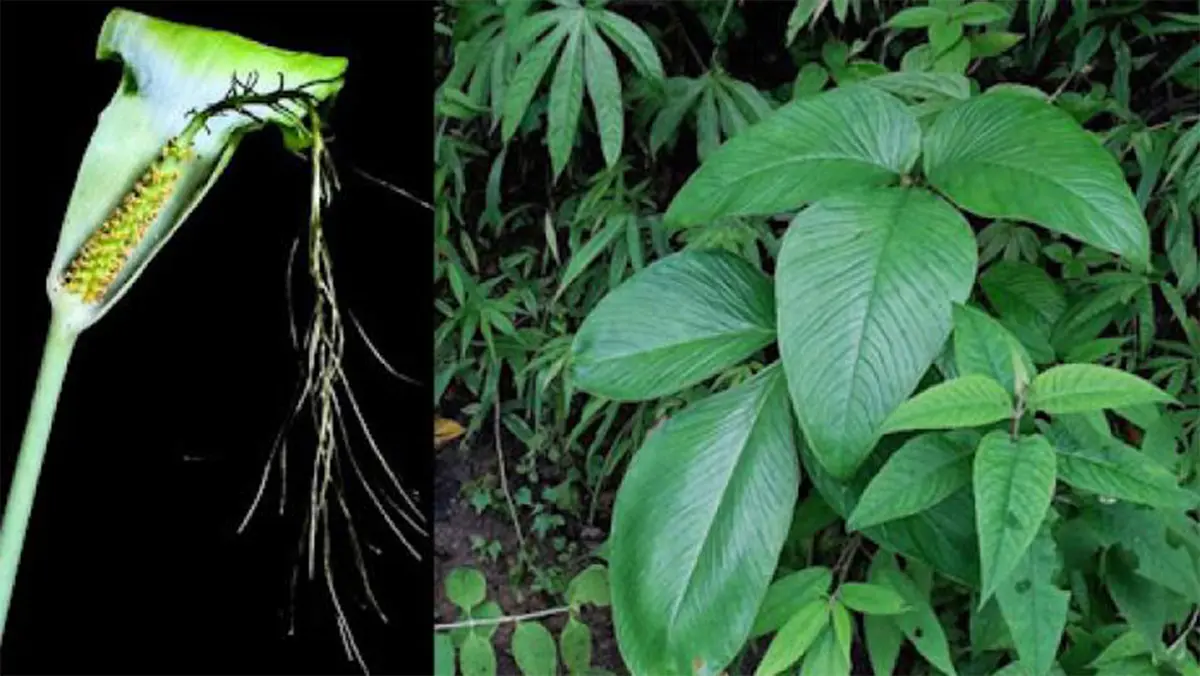
Why in news?
Botanists from the Botanical Survey of India have discovered a new species of cobra lily, Arisaema siahaense, in the remote Siaha District of Mizoram. Announced on 21 February 2026, the plant is notable for its whip‑like spadix appendix and adds to the rich flora of the Indo‑Burma biodiversity hotspot.
Background
The genus Arisaema, commonly called cobra lilies, comprises herbaceous plants with a hooded flower structure that resembles a cobra’s hood. These plants usually grow in moist, shaded areas of the Himalayas and Northeast India. During botanical expeditions from 2023 to 2025, scientists found populations of a plant near Tlangpui peak that did not match any known species. Detailed study confirmed that it was a new species, now named Arisaema siahaense in honour of the district and its conservation‑minded local community.
Distinctive characteristics
- Towering herb: The plant is an evergreen herb that can grow up to about 1.08 metres tall—much taller than many related species.
- Unique spadix: Its most striking feature is a spadix appendix up to 21 cm long, covered with brownish‑green hair‑like bristles. This “tail” hangs from the flower and gives the plant its “whip‑tailed” nickname.
- Three‑part leaves: Unlike relatives that have a creeping rhizome and more leaf segments, A. siahaense grows from a rounded tuber and bears leaves divided into exactly three segments.
- Name and honour: The species name acknowledges the commitment of local communities—particularly the Kompa family—to preserving biodiversity in Siaha.
Conservation concerns
- Restricted range: The species is known only from one locality in Mizoram, making it highly vulnerable to habitat disturbance.
- Habitat threats: Road construction, grazing by goats and mithuns, and invasive weeds threaten its forest home. Researchers classify the plant as Data Deficient but caution that conservation action is needed.
- Biodiversity hotspot: The discovery underscores the need to protect Northeast India’s montane forests, which harbour many endemic species yet to be documented.
Source: Research Matters