
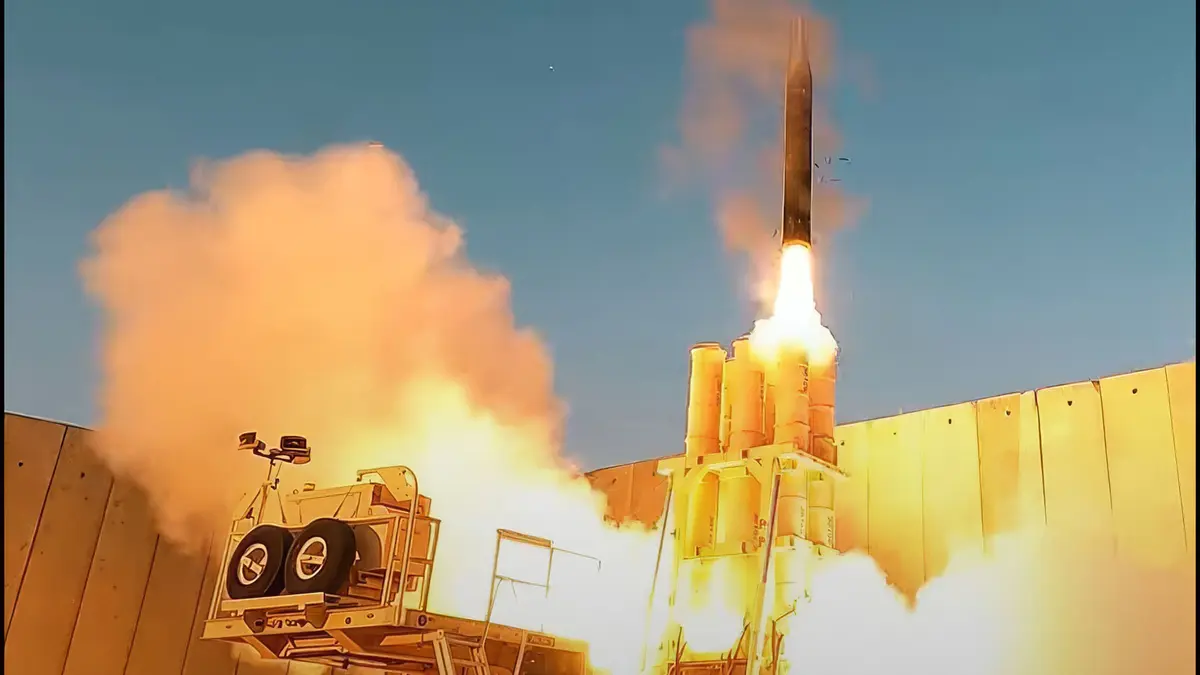
Why in news?
Germany announced in July 2026 that it would build a second Arrow‑3 missile defence site in Bavaria. The first battery near Berlin became operational in December 2025. Germany’s expansion is part of a larger €3 billion programme to protect European skies against ballistic threats. The news underscores growing interest in Israeli‑US missile defence technology.
Background
The Arrow programme began in the 1980s as a joint venture between Israel and the United States to counter regional missile threats. Arrow‑1 prototypes led to the operational Arrow‑2 in the late 1990s, which could intercept short‑ and medium‑range missiles within the atmosphere. Arrow‑3 is a two‑stage solid‑propelled interceptor with a “hit‑to‑kill” kinetic warhead designed to destroy ballistic missiles outside the Earth’s atmosphere. It achieved initial operational capability in 2017 and has been deployed by the Israel Defense Forces.
Features of Arrow‑3
- Exo‑atmospheric intercept: The missile can engage threats in outer space, destroying enemy warheads before they re‑enter the atmosphere.
- Kinetic kill: Instead of carrying an explosive payload, Arrow‑3 relies on the energy of impact to neutralise targets. This reduces the risk of detonation over populated areas.
- Two stages: Solid propellant boosters provide high speed and range, enabling interception of longer‑range ballistic missiles.
- Integrated system: Arrow‑3 works with long‑range radars and the battle management centre to detect, track and engage threats.
Recent developments
- German adoption: Germany is the first European country to purchase Arrow‑3 systems. The expansion reflects concerns over missile proliferation and the need for joint defence within NATO.
- International collaboration: The system is developed by Israel Aerospace Industries and Boeing with support from the US government. Germany’s contract will help finance additional units and training.
- Future prospects: Success of Arrow‑3 may encourage other countries to adopt similar exo‑atmospheric defences as part of layered missile shields.
Conclusion
The Arrow‑3 missile defence system represents a significant advance in intercepting ballistic missiles far from the Earth’s surface. Germany’s decision to expand its deployment shows the growing demand for such defences in an uncertain geopolitical environment. As missile threats evolve, technologies like Arrow‑3 will play a central role in national and regional security.