

Why in news?
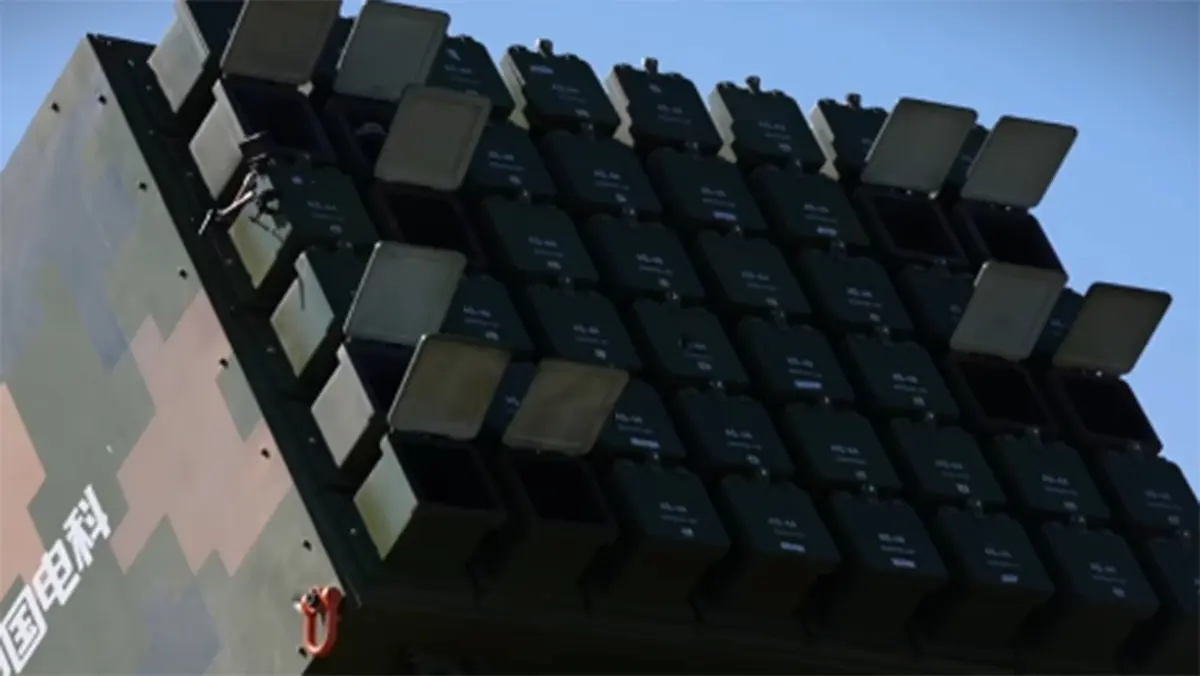
China’s People’s Liberation Army (PLA) has unveiled an Atlas drone swarm system capable of launching up to 96 small drones in rapid succession from a single vehicle. Analysts say the technology could transform battlefield reconnaissance and attack strategies.
Background
The Atlas system is produced by the state‑owned China Electronics Technology Group Corporation (CETC). It integrates a launch truck known as Swarm‑2, a command vehicle and a support vehicle. A single operator can release nearly a hundred drones at intervals of just a few seconds, creating a coordinated swarm that can communicate and adjust autonomously. Such systems are part of broader global efforts to use artificial intelligence and swarming tactics in future warfare.
How does the Atlas system work?
- Mass launch capability: The Swarm‑2 truck carries 48 launch tubes on each side, allowing 96 drones to be fired in under five minutes. This fast deployment overwhelms enemy defences and allows simultaneous surveillance and attack.
- Collective intelligence: Once airborne, the drones share data and adjust flight paths collectively. This swarm behaviour helps the drones avoid obstacles and maintain formation without constant human input.
- Modular design: The system comprises a launch vehicle, a command vehicle for controlling the swarm and a support vehicle carrying spare drones and maintenance equipment.
- Roles: The small rotary‑wing drones can perform reconnaissance, jamming or precision strikes depending on payload. They are designed to be expendable in high‑risk environments.
Implications
- Drone swarms could saturate air defences and provide continuous situational awareness. The PLA’s demonstration signals its intent to deploy such technology across theatres.
- Swarms reduce the risk to human pilots and can be produced at lower cost than manned aircraft.
- Countries around the world are developing similar systems. China’s Atlas shows a high degree of integration and rapid launch capability, potentially giving it an edge.
Source: The Indian Express