
Why in news?
New developments under the AUKUS partnership have kept it in the news. The three partner nations – Australia, the United Kingdom and the United States – issued progress updates on both the nuclear‑powered submarine programme (Pillar 1) and the advanced capabilities workstreams (Pillar 2) in early 2026. Understanding the structure of AUKUS helps explain why these announcements matter.
Background
AUKUS (Australia–UK–US) is a trilateral security partnership announced on 15 September 2021. Its stated aim is to support a free and open Indo‑Pacific by enhancing the partners’ defence cooperation and technological integration. The agreement is organised into two pillars.
Pillar 1 – Nuclear‑Powered Submarines
Pillar 1 focuses on helping Australia acquire a fleet of conventionally armed, nuclear‑powered attack submarines. In a joint statement on 13 March 2023 the leaders of Australia, the UK and the US outlined an “optimal pathway”:
- Training and port visits: From 2023 Australian sailors and engineers began embedding with the US Navy and UK Royal Navy to gain experience with nuclear submarines. American submarines increased visits to Australian ports in 2023, and British submarines are expected to do so from 2026.
- Submarine Rotational Force‑West: By 2027 the UK and US plan to station a rotational force of up to five submarines at HMAS Stirling near Perth. This will allow Australian crews to train and maintain the vessels without creating permanent foreign bases.
- Virginia‑class sales: Beginning in the early 2030s, the US intends to sell Australia three Virginia‑class submarines, with an option for two more. These deals were authorised by US legislation passed in December 2023.
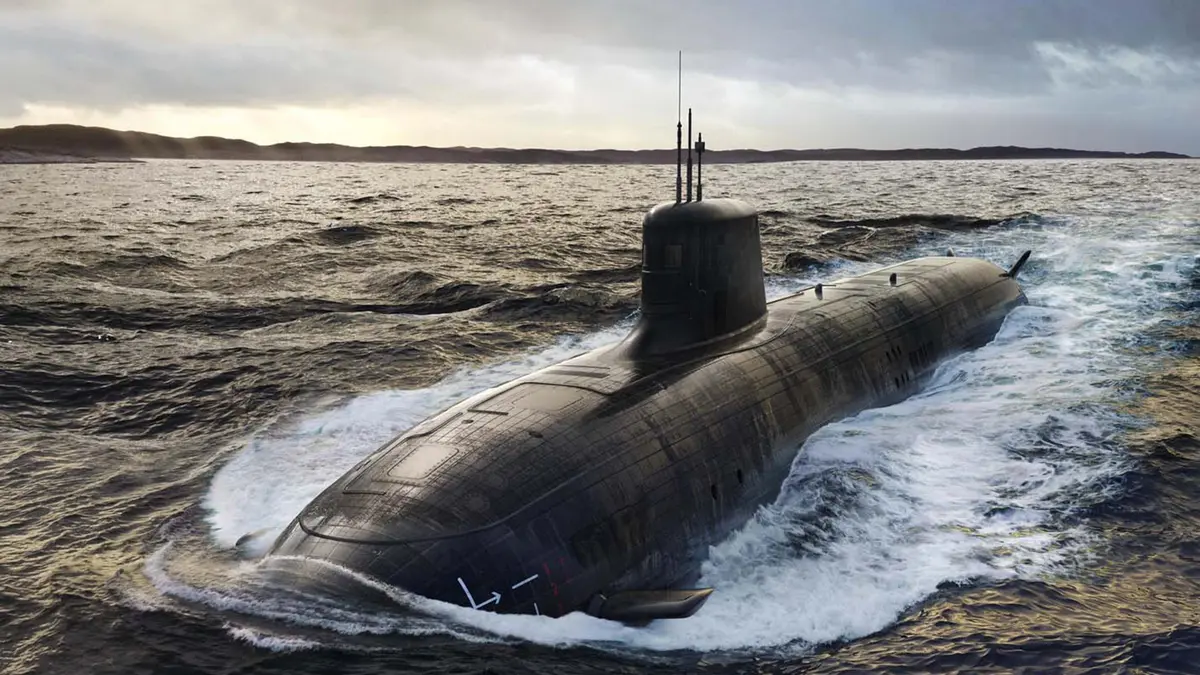
- SSN‑AUKUS construction: Australia and the UK will jointly build a new class of submarines, called SSN‑AUKUS, based on a British design with US technology. Construction is expected to start by the end of the 2020s, with the UK receiving its first vessel in the late 2030s and Australia in the early 2040s. The submarines will be conventionally armed and subject to stringent nuclear non‑proliferation safeguards.
Pillar 2 – Advanced Capabilities
Pillar 2 seeks to enhance interoperability and technological edge through shared research and development. According to a 2024 UK House of Commons briefing, workstreams include:
- Cyber capabilities: Strengthening defences of communication and control systems.
- Artificial intelligence and autonomy: Developing autonomous vehicles and AI‑enabled decision‑support tools. A joint trial of AI and autonomy was held in April 2023.
- Quantum technologies: The AUKUS Quantum Arrangement aims to accelerate quantum sensing and navigation applications.
- Undersea robotics: The AUKUS Undersea Robotics Autonomous Systems (AURAS) project focuses on unmanned underwater vehicles for mine countermeasures and surveillance.
- Hypersonic and counter‑hypersonic capabilities: Accelerating the development of high‑speed missiles and their countermeasures.
- Electronic warfare and information sharing: Improving tools for contested electromagnetic environments and establishing mechanisms to share sensitive defence information.
- Deep‑space radar: In December 2023 AUKUS partners announced plans to build a deep‑space radar network, with the first site in Western Australia expected to be operational by 2026.
Significance and concerns
- Regional stability: AUKUS supporters argue that strengthening undersea and advanced capabilities will deter coercion in the Indo‑Pacific. Critics worry that it may provoke an arms race or undermine existing non‑proliferation norms.
- Non‑proliferation safeguards: Australia remains a non‑nuclear‑weapon state under the Nuclear Non‑Proliferation Treaty. The partnership emphasises that only nuclear propulsion technology—not nuclear weapons—is being shared and that strict International Atomic Energy Agency (IAEA) safeguards will apply.
- Industrial challenges: Building and sustaining nuclear‑powered submarines will require significant investment in shipyards and skilled labour in both the UK and Australia. The partners are aligning export control laws and intellectual property rules to enable technology transfer.
Conclusion
AUKUS represents a major shift in security cooperation among Western allies in the Indo‑Pacific. Pillar 1 focuses on building a long‑term fleet of nuclear‑powered submarines for Australia, while Pillar 2 seeks to advance cutting‑edge defence technologies. The partnership’s success will depend on balancing strategic benefits with regional sensitivities and non‑proliferation commitments.