

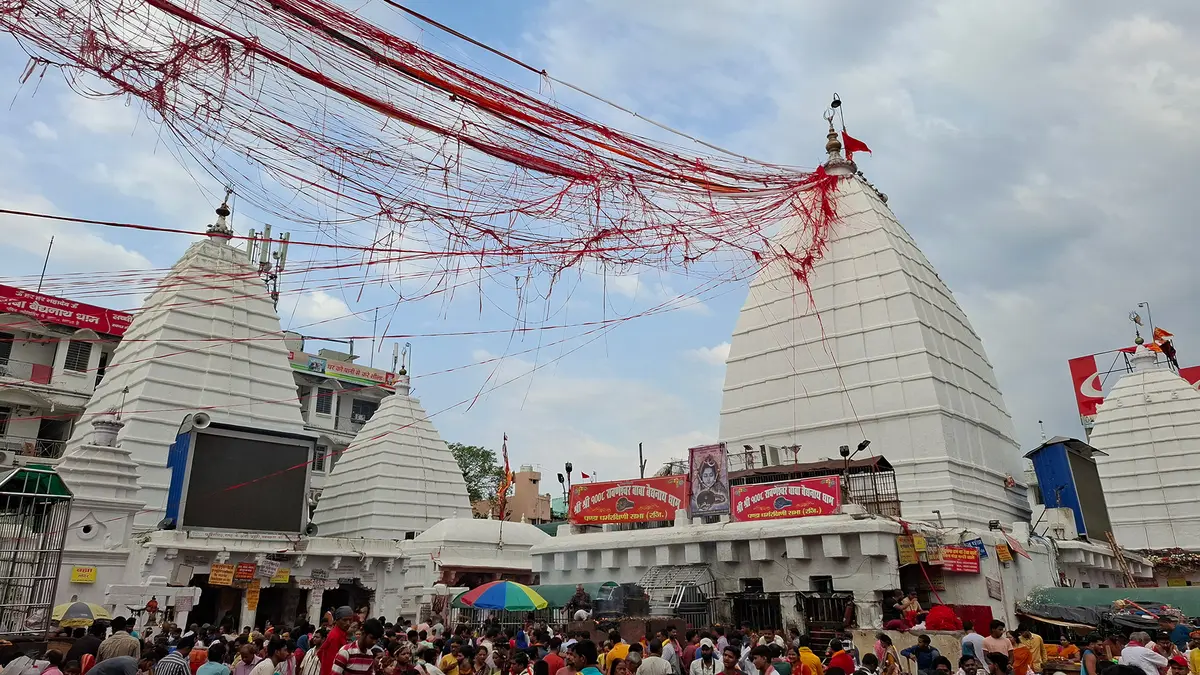
Why in news?
Large crowds gathered at Baba Baidyanath Dham during Shravan. The Deoghar shrine is sacred within the Shaiva tradition. Pilgrims carry Ganga water from Sultanganj to the temple. Authorities organised crowd, health and traffic arrangements for the pilgrimage.
Background
Baba Baidyanath Dham stands at Deoghar in Jharkhand's Santhal Pargana region. Devotees regard its central shrine as one of twelve Jyotirlingas with an important Shakti association.
A Jyotirlinga is a devotional form representing Shiva as an endless column of light. Lists of twelve major shrines developed through sacred literature and pilgrimage tradition. This religious status should not be confused with archaeological dating.
Shakti Peeth traditions link sacred places with parts of Sati's body. Baidyanath is associated with her heart in a widely followed account. Different textual and regional lists can vary in their details.
The Shravan pilgrimage
During Shravan, pilgrims collect Ganga water at Sultanganj in Bihar and carry it roughly 108 kilometres to Deoghar. Many wear saffron clothing and are known as Kanwariyas.
The interstate route requires coordinated drinking water, sanitation, medical and traffic services for the moving crowd. Heat, fatigue, infection and crowd pressure remain serious risks.
Reports before a major Monday expected around 2.3 lakh visitors, an operational estimate rather than verified attendance. Expected crowds and actual entries should remain clearly distinguished.
Architecture and documented history
The Deoghar district administration describes the main temple as a plain stone structure. Its tower is pyramidal and about 72 feet high. Three gold vessels sit near the top, alongside the distinctive Panchsula arrangement.
The original founder and construction date remain uncertain. Official district history attributes part of the front structure, built in 1596, to Puran Mal of Gidhaur.
This limited historical statement differs from sweeping claims about the entire temple. Renovation, rebuilding and patronage often occur across centuries. One dated addition cannot establish the origin of every part.
Sacred narratives and evidence
A well-known tradition says Ravana worshipped Shiva and offered his heads in devotion. Shiva healed him like a physician, giving the name Baidyanath. Another account explains how the sacred emblem remained at Deoghar.
These narratives express religious meaning and should be presented as sacred tradition, not verified construction history. Archaeology, inscriptions and administrative records answer different questions.
Claims that a particular ruler built the complete present temple require reliable evidence. Popular retellings sometimes attach Raja Man Singh or ancient dynasties without documentation. The official district account is more cautious.
Managing a living heritage site
The shrine remains an active place of worship, requiring crowd safety to coexist with ritual practice. Queue design, emergency exits and transparent capacity rules reduce dangerous surges.
Heavy pilgrim movement can generate plastic waste and wastewater along the route. Temporary facilities need daily maintenance, not only ceremonial opening. Local residents also need access to roads and hospitals during peak periods.
Digital registration and surveillance can help manage flows, but they should not exclude visitors lacking smartphones. Public announcements require several languages and accessible formats. Reliable attendance data can improve future planning.
Conclusion
Baidyanath Dham combines living faith, regional economy and layered history. Careful explanation should respect tradition while separating it from uncertain architectural claims.