

Why in news?
Chester Zoo announced the birth of a female babirusa named Rana. Conservationists linked the event to serious disease concerns in Indonesia.
What is known about the birth
Down To Earth reported the zoo’s account on 12 August. Rana was the fifth offspring of the female Matano.
The zoo described the birth as valuable for coordinated captive management. Such populations preserve genetic options, but cannot replace secure wild habitat.
Taxonomy and island geography
Babirusas are unusual wild pigs in the genus Babyrousa. Their natural range is restricted to several Indonesian islands.
The Sulawesi babirusa, Babyrousa celebensis, occurs on Sulawesi. The Togian babirusa, B. togeanensis, is confined to the Togian Islands.
The hairy babirusa, B. babyrussa, occurs on Buru and parts of the Sula group. These ranges should not be merged.
Sulawesi lies between Borneo and the Maluku Islands. Its long isolation helped produce exceptional endemism across its peninsulas and uplands.
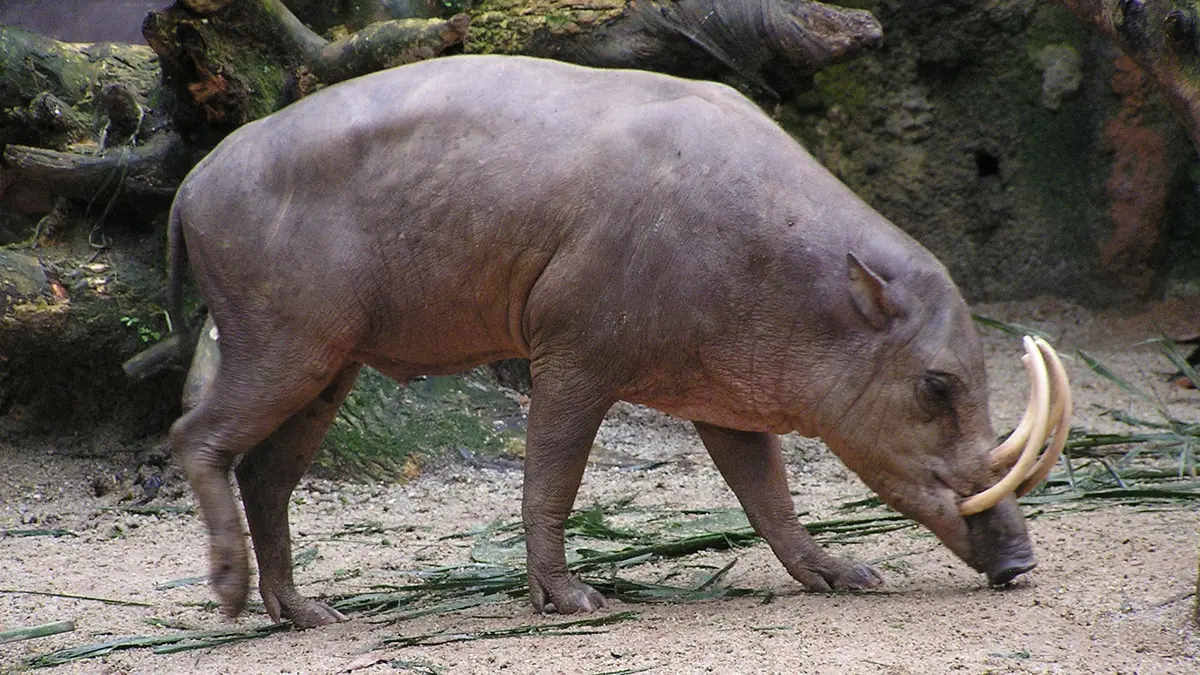
Male babirusas have enlarged upper canine teeth that grow through the snout. Their curved form created the familiar “pig-deer” description.
Status is under reassessment
International Union for Conservation of Nature (IUCN) material still labels the Sulawesi babirusa Vulnerable. A reported uplisting is not yet formal.
African swine fever changes the risk
African swine fever is a severe viral disease of domestic and wild pigs. It does not infect people.
An Action Indonesia survey found very few babirusa detections in Faruhumpenai Nature Reserve. The researchers could not calculate occupancy from those records.
They expressed concern about African swine fever, but did not prove it caused the low detections. Hunting and forest loss remain established pressures.
Island populations face special danger because they are small and separated. A disease outbreak may remove local genetic diversity quickly.
Biosecurity must restrict contaminated pork, equipment and vehicle movement. Surveillance should combine carcass testing, camera traps and community reporting.
Captive breeding needs verified pedigrees and correct species identification. Mixing island taxa can undermine conservation goals.
A birth is support, not recovery
Rana’s arrival helps managed conservation. Wild recovery still depends on disease control, habitat protection and reduced hunting.
Conclusion
The babirusa story links taxonomy, island geography and animal health. Conservation decisions must keep those three dimensions together.