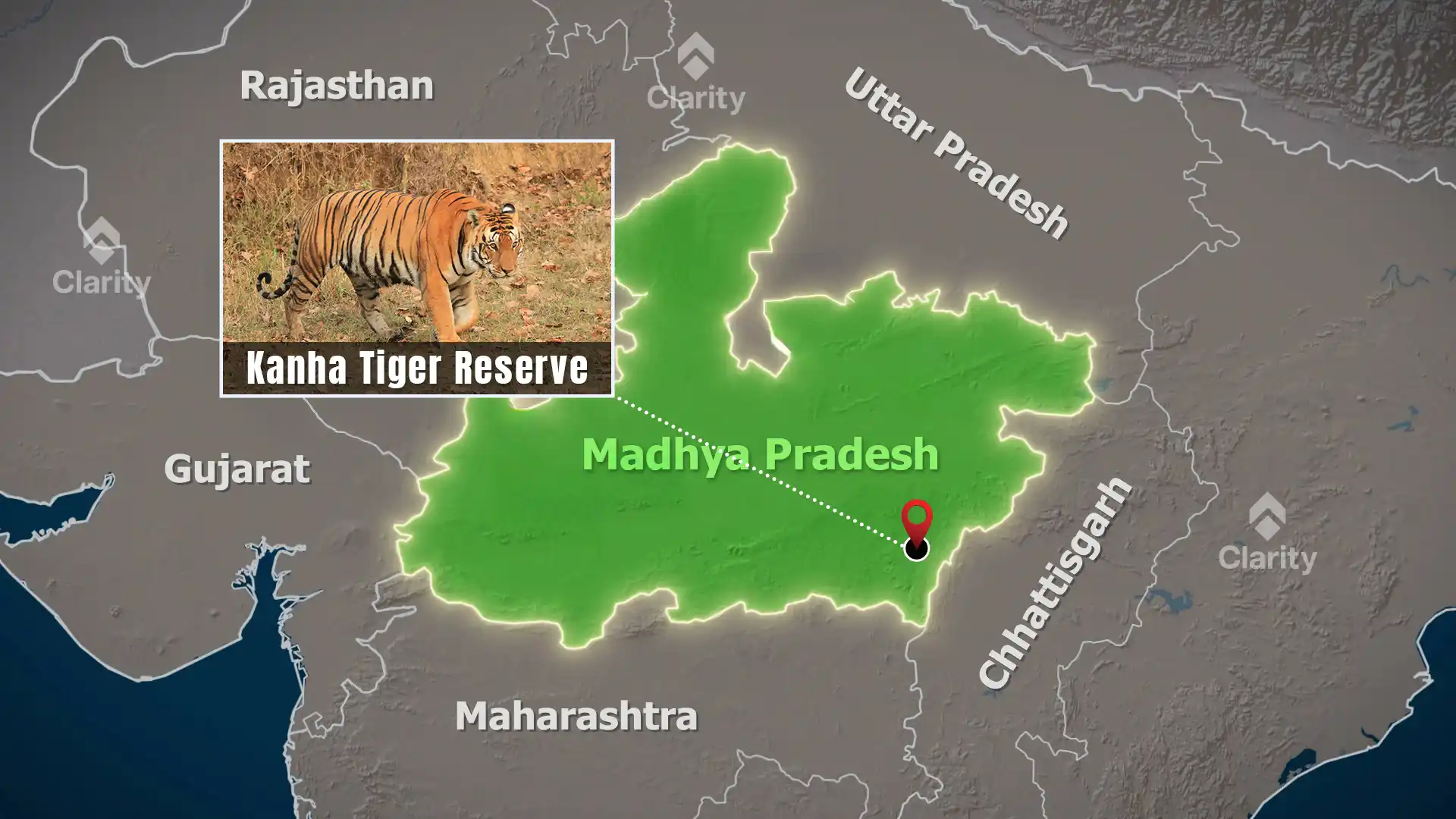
Why in news?
Two tiger cubs from the same litter died within days inside Kanha Tiger Reserve in Madhya Pradesh. The unusual deaths have sparked questions about monitoring protocols in one of India’s premier protected areas.
Background
Kanha Tiger Reserve (KTR) lies in the Maikal range of the Satpura–Maikal landscape in central India. It spans more than 940 sq km of sal and mixed deciduous forest interspersed with meadows. KTR is connected to the Pench Tiger Reserve via wildlife corridors and to Achanakmar in neighbouring Chhattisgarh. The Gond and Baiga tribes inhabit nearby villages. The reserve introduced India’s first official mascot for a protected area — “Bhoorsingh the Barasingha” — to raise awareness about the swamp deer.
Recent incidents
- Cub deaths: A sub‑adult cub estimated at 12–18 months was found dead in the Sargi range on 25 April 2026. Another cub from the same litter had died three days earlier. The tigress originally had four cubs; two remain.
- Monitoring concerns: KTR is known for intensive surveillance using camera traps and field patrols. Standard protocols require daily monitoring of breeding tigresses and early response to distress signals. The back‑to‑back deaths have prompted authorities to review the frequency and quality of monitoring.
- Post‑mortem and investigation: Officials have conducted autopsies to determine causes of death and are awaiting reports. Necropsies typically involve securing the site, collecting tissue samples and checking for poisoning or disease.
Significance
While cub mortality is common in the wild, multiple deaths in a protected core area raise alarm. Effective monitoring helps detect injuries, disease or conflict early, enabling intervention to prevent further losses. The incident highlights the need for continuous training of field staff, proper maintenance of camera traps and prompt sharing of information among stakeholders.
Conclusion
Kanha Tiger Reserve remains a flagship tiger conservation landscape in India. Investigating recent cub deaths and strengthening monitoring systems will help ensure that its tiger population continues to thrive.
Source: The Indian Express