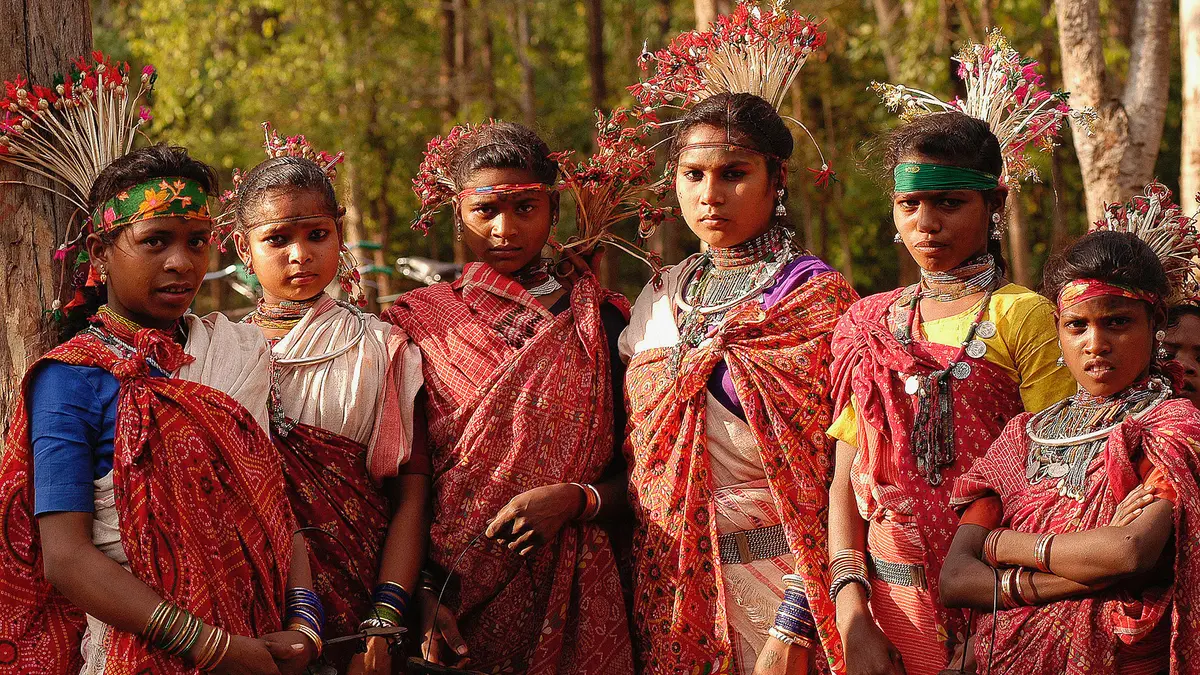
Why in news?
The Madhya Pradesh government recently recognised habitat rights for 19 Baiga villages covering more than 6,400 people. These rights, granted under the Scheduled Tribes and Other Traditional Forest Dwellers (Recognition of Forest Rights) Act, protect the community’s customary territory and cultural practices.
Background
The Baiga are an Adivasi (indigenous) community living in the central Indian states of Madhya Pradesh, Chhattisgarh and Jharkhand. They are categorised as a Particularly Vulnerable Tribal Group (PVTG) because of low literacy, poor health indicators and dependence on forests. Traditionally they practice shifting cultivation known locally as bewar or benwar, clearing small patches of forest to grow mixed crops.
Key points
- The Forest Rights Act allows habitat rights to be granted to PVTGs. These rights recognise a community’s relationship with a landscape rather than just individual land plots. They help protect cultural traditions, sacred sites and customary use of forests.
- Baiga culture emphasises harmony with nature. Farmers avoid ploughing and believe the soil is their mother. Instead they slash and burn small patches of forest, sowing a mix of millets, legumes and vegetables that mature at different times.
- The community possesses deep knowledge of medicinal plants and relies on the forest for food, fuel and housing. Their simplistic lifestyle and strong oral traditions have helped preserve indigenous wisdom.
- Recognising habitat rights strengthens community control over resources and helps resist displacement due to mining, plantations or wildlife reserves. It also encourages participatory forest management and sustainable livelihoods.