

Why in news?
India shipped 10 sets of Bailey bridge components to Sri Lanka to help restore road connectivity after Cyclone Ditwah. These modular bridges will replace structures destroyed by the storm.
Background
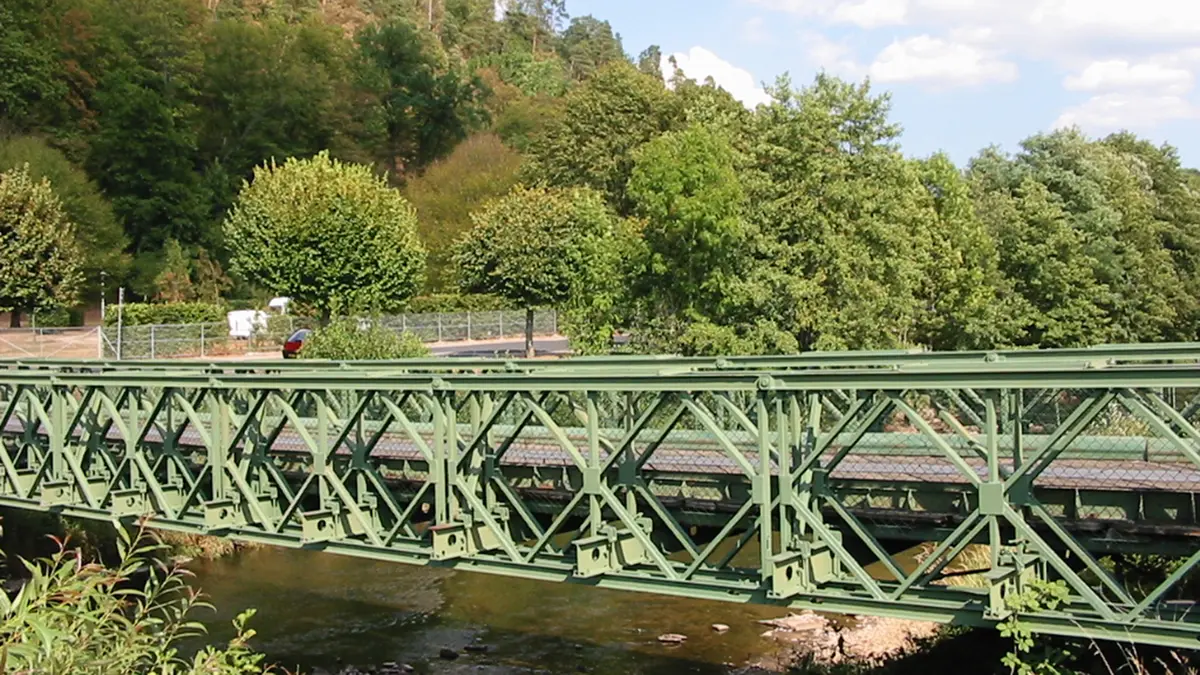
The Bailey bridge is a pre‑fabricated truss bridge designed by British civil engineer Donald C. Bailey during World War II. The need for portable bridges arose because retreating armies destroyed existing crossings, hindering the Allied advance. Bailey’s design used lightweight steel panels that could be carried by trucks and assembled quickly without heavy equipment. The bridges were strong enough to carry tanks and heavy vehicles, making them instrumental in the Allied victory.
Design and construction
- Modular panels: Standardised steel panels, transoms and stringers form the bridge. The components can be configured to span different lengths and support varying loads.
- Easy assembly: Sections are pinned and bolted together, allowing soldiers or engineers to build a bridge by hand using simple tools like hammers and jacks.
- Launch method: The bridge is assembled on one bank and pushed across the gap on rollers. A lighter “launching nose” goes first, and completed sections follow until the far bank is reached.
- Variants: Bailey bridges can be configured as suspension or pontoon bridges and can include footways for pedestrians.
Modern uses
- Disaster response: Quickly restore connectivity after floods, earthquakes or cyclones. The recent shipment to Sri Lanka will help communities reconnect when permanent bridges are rebuilt.
- Military and remote areas: Armies still use Bailey bridges to cross rivers or ravines in difficult terrain. Civil administrations deploy them in remote regions where permanent bridges are impractical.
- Advantages: Because the bridges are portable and modular, they can be deployed in areas lacking heavy equipment. They support heavy loads such as military vehicles while requiring a small construction footprint.
Source: News On AIR