
Why in news?
On 22 May 2026 more than 500 villagers from the Banni region of Kachchh, Gujarat staged a protest against a proposed solar park near the Chhari‑Dhand wetland. Locals fear that large‑scale solar installations could harm migratory birds, pasture lands and the pastoralist economy of Asia’s second‑largest semi‑arid grassland.
About Banni grassland
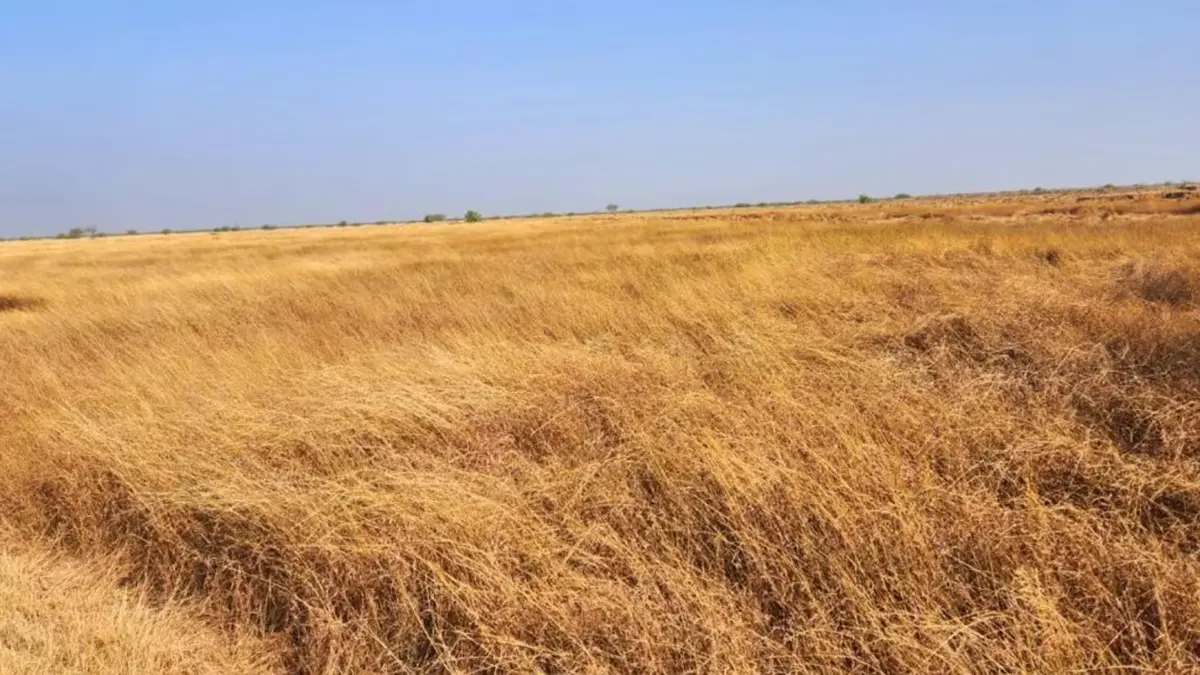
The Banni grassland spans about 2,617 km² at the northern edge of Bhuj taluka in Kachchh district, Gujarat. It is thought to have formed from sediments deposited by the Indus River and is locally called “Banni hui” or “made up” land. Once considered Asia’s finest grassland, it accounts for around 45 % of the state’s permanent pasture and 10 % of its grazing lands. Banni hosts about 48 villages inhabited by thirteen communities known collectively as Maldharis. With agriculture unviable due to salinity and arid climate, the residents rely on livestock rearing, particularly the Banni buffalo—a drought‑ tolerant breed recognised as a distinct genetic resource. The region’s freshwater wetlands, such as Chhari‑Dhand, support more than 270 bird species and serve as wintering grounds for tens of thousands of cranes and other waterfowl.
Ecological importance
- Biodiversity hotspot: Banni supports grasses adapted to drought and salinity and is home to blue bull, chinkara, blackbuck, jackal, fox, hyena and many birds. Chhari‑Dhand and other seasonal wetlands attract cranes, pelicans and other migratory species.
- Cultural heritage: The Maldhari communities have developed knowledge of animal breeding, embroidery, music and water harvesting. Their pastoral way of life depends on free access to grazing and open water bodies.
- Protected status: Around 2,700 km² of Banni was declared a protected forest in 1955, though ownership remains with the Revenue Department. Several areas are designated as key biodiversity areas. Yet the grassland faces pressures from invasive Prosopis juliflora, overgrazing, salinisation and climate change.
Concerns over solar projects
Villagers worry that installing vast solar arrays near wetlands will fragment habitats, alter micro‑climates and create a “lake effect” where birds collide with reflective panels. The project could also reduce grazing land and threaten livelihoods. Protesters demand ecological assessments and recognition of community forest rights under the Forest Rights Act. They argue that renewable energy projects should be designed to protect fragile ecosystems and cultural landscapes.
Conclusion
Banni grassland is a unique ecological and cultural landscape. Any development must balance renewable energy goals with conservation and pastoralist rights. Community engagement, careful site selection and management of invasive species are essential to safeguarding this semi‑arid treasure.