
Why in news?
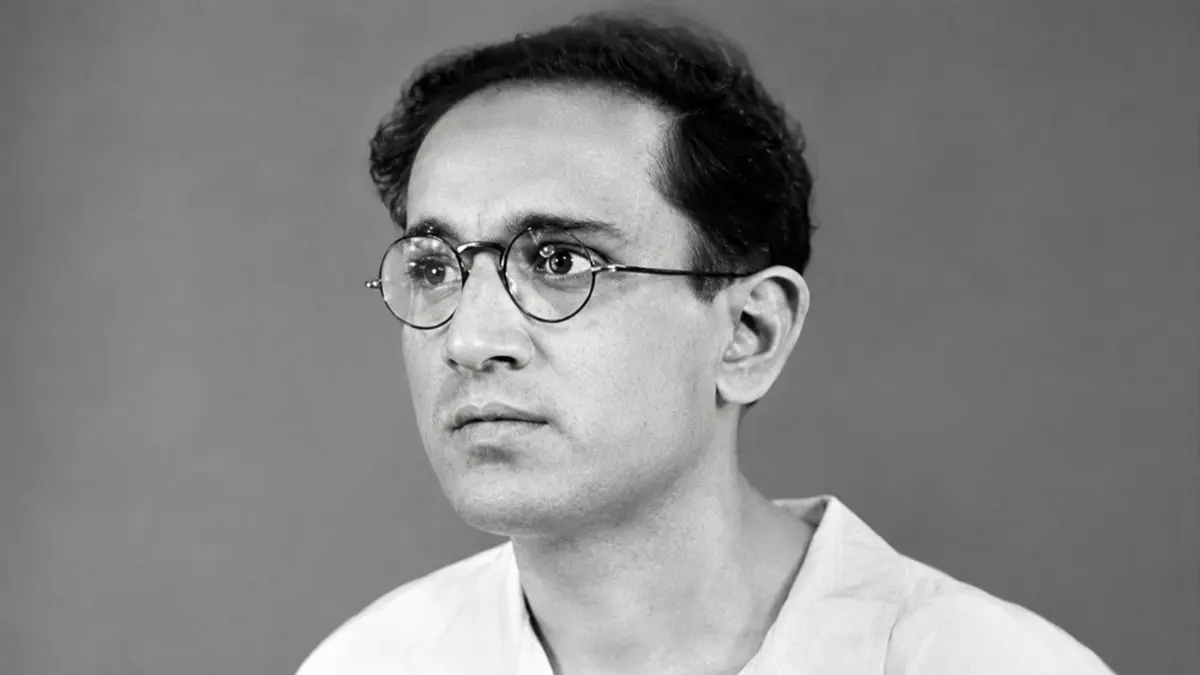
National leaders remembered revolutionary Batukeshwar Dutt on his death anniversary. He died on 20 July 1965. He is best known for the 1929 Central Legislative Assembly bombing.
Background
Batukeshwar Dutt was born on 18 November 1910 in Bengal’s Burdwan region.
Also called Batukeshwar Dutta or B. K. Dutt, he later studied in Kanpur.
There he met Bhagat Singh during 1924 and entered his revolutionary circle.
From the republican association to the socialist association
Revolutionaries founded the Hindustan Republican Association during 1924 to organise struggle against colonial rule.
Members reorganised it during 1928 and added “Socialist” to its name.
It then became the Hindustan Socialist Republican Association, commonly called the HSRA.
Dutt worked with this organisation and learned the technical preparation of explosives.
Why did the Assembly bombing occur?
The colonial government was advancing two disputed laws during 1929.
- The Public Safety Bill sought stronger controls against selected political activists.
- The Trade Disputes Bill restricted labour action and strengthened state intervention.
The HSRA planned a dramatic protest inside the Central Legislative Assembly.
The Assembly then met in the building now called the old Parliament House.
What happened on 8 April 1929?
Bhagat Singh and Batukeshwar Dutt threw two low-intensity bombs inside the chamber.
The explosions caused injuries, although the planned action focused upon publicity.
They scattered political leaflets and raised “Inquilab Zindabad”, meaning “Long Live the Revolution”.
Both men stayed at the scene and surrendered instead of escaping.
They intended to use the trial for explaining their political ideas.
Do not confuse the cases: Dutt faced the Assembly Bomb Case. Bhagat Singh separately faced the Lahore Conspiracy Case.
Trial and sentence
Nationalist lawyer Asaf Ali defended them, but the court convicted both men of offences including attempted murder.
It sentenced them during June 1929 to transportation for life, meaning long imprisonment far from home.
Dutt was eventually sent to the Cellular Jail in the Andaman Islands.
The prison hunger strike
Colonial prisons treated Indian political prisoners differently from many European prisoners.
Complaints included poor food, degrading labour, unhygienic conditions and restricted reading material.
Dutt and Bhagat Singh began a hunger strike for equal and humane treatment.
Jawaharlal Nehru publicly discussed their strike on 5 July 1929.
He noted that their demands concerned the treatment of all political prisoners.
The campaign attracted national attention to conditions inside colonial jails.
Later years in the freedom struggle
- Dutt spent years across the Cellular Jail and several mainland prisons.
- Authorities released him during 1938, but he joined the Quit India Movement during 1942.
- Colonial authorities arrested him again and imposed further imprisonment.
- After independence, he lived mainly in Patna with his family.
Dutt died after prolonged illness at New Delhi’s All India Institute of Medical Sciences.
His cremation took place at Hussainiwala, which also commemorates Bhagat Singh, Rajguru and Sukhdev.
Why is his contribution important?
Dutt’s life shows that revolutionary politics included ideas, organisation and prison resistance.
His continuing imprisonment separated his path from Bhagat Singh and broadens history beyond more famous companions.
Conclusion
Batukeshwar Dutt turned imprisonment into resistance, linking revolutionary action with demands for dignity inside colonial prisons.