

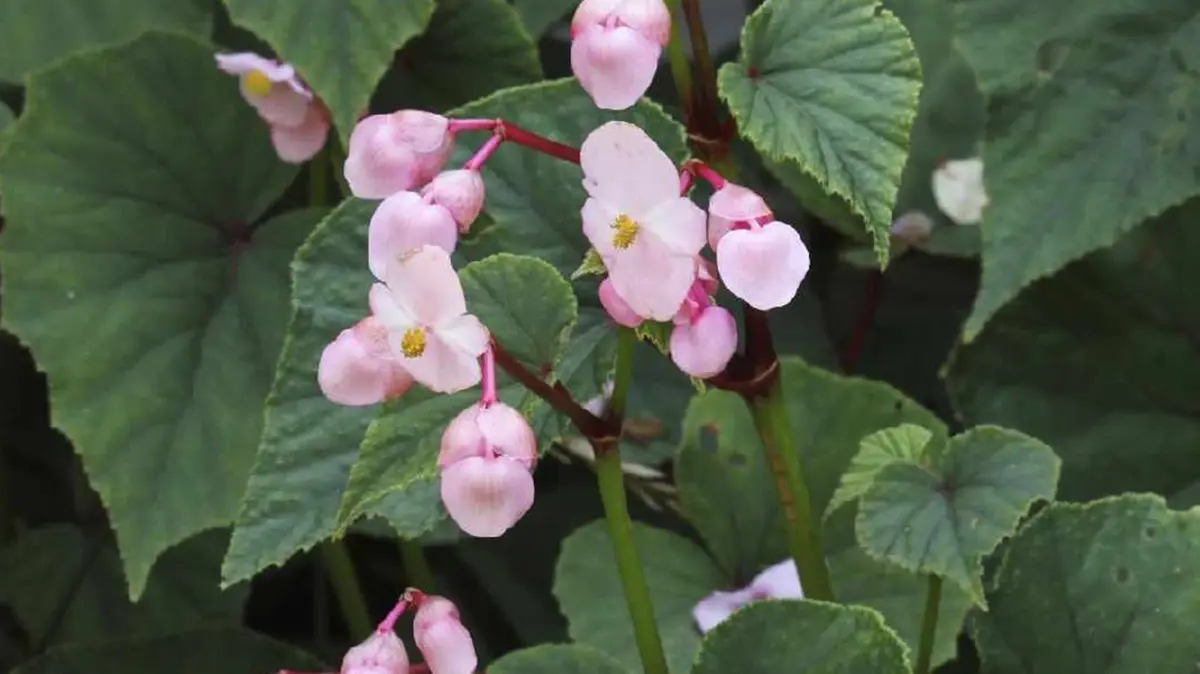
Why in news?
A peer-reviewed paper published online on 5 August 2026 described Begonia neelamorum as new to science. Researchers found it beside the Keyi River; the site lies in Arunachal Pradesh’s Keyi Panyor district. The plant grows on moist rock walls.
Its name honours the Nyishi community’s Neelam clan. Local knowledge and support contributed to the fieldwork.
How a species is established scientifically
Calling a plant “new” does not mean it has only just appeared; local people may already have known it. Instead, botanists have demonstrated that it is distinct from described plants. They then publish a formal description under botanical naming rules.
Dipankar Borah, Madhusudhan Khanal, Momang Taram and Neelam Gap collected the type material. Collection took place on 24 May 2026.
The site was roughly 1,000 metres above sea level; the team deposited a designated type specimen.
They described the plant’s diagnostic features and compared its closest known relative. These steps allow other botanists to check the result; the authors place the species in Begonia section Monophyllon. It is a small, tuberous and monoecious herb.
The plant grows about 10–20 centimetres high; it has one sessile, light-green, ovate leaf and white flowers.
“Monoecious” means male and female flowers occur on the same plant; the term describes flower arrangement, not self-fertilisation.
The paper compares the plant with Begonia prolifera. Differences involve leaf margins, hairiness, inflorescences and floral structures; the combination of features is decisive in taxonomy. An unusual photograph alone cannot establish a species.
A careful reading of its conservation status
The plant is presently known to science only from the type locality; that does not prove it occurs nowhere else. The authors observed four populations in a small surveyed area; they reported no immediate threat at the site.
However, nearby suitable habitats have not been surveyed exhaustively; the full distribution therefore remains uncertain.
The authors proposed a preliminary Data Deficient assessment; they applied the guidelines of the International Union for Conservation of Nature.
This is a recommendation within the taxonomic paper; it is not a completed global Red List assessment.
Two claims to avoid
Calling the plant “endemic to Arunachal Pradesh” is premature; its complete distribution is not yet known. It is also inaccurate to call it an officially listed Data Deficient species. No formal global assessment has been completed.
The supported wording is narrower. The species is known from its type locality, and its authors recommend Data Deficient pending wider surveys.
Why the discovery matters
Arunachal Pradesh forms a rich biological transition between the Himalaya and Indo-Burma regions. Its terrain contains steep slopes and river valleys. Small changes in altitude and moisture can isolate plant populations; this can produce high local diversity.
The paper raises the north-eastern Indian Begonia count from 53 to 54. It raises section Monophyllon from five species to six.
These counts come from the authors’ literature review. Future taxonomic work may revise them.
The discovery’s policy value extends beyond a new number; it improves evidence for land and river-valley decisions. A wet-rock plant can be harmed even when broad forest maps look unchanged. Road cutting and quarrying can disturb its habitat.
Altered drainage, collection, landslides and humidity changes create further risks; each pressure needs site-level assessment.
Georeferenced surveys can test whether the range is truly narrow; seasonal population counts and local monitoring can identify emerging threats.
Seed or tissue conservation may provide additional insurance; such action should follow sound collection and community protocols. The name also reflects an ethical change in biodiversity research. Field discoveries often depend on residents’ knowledge.
They know access routes, seasons and local names. Researchers should record this contribution and obtain proper permissions.
Returning useful information makes research fairer and more accurate; recognition should lead to continued collaboration, not only a ceremonial name.
Conclusion
Begonia neelamorum is a well-documented new taxon. Knowledge of its ecology and distribution remains limited; the known habitat needs protection, while comparable sites need surveys. Conclusions must remain proportionate to the evidence.
The discovery is both scientific and collaborative. Community knowledge and patient field taxonomy remain essential to understanding India’s biodiversity.