

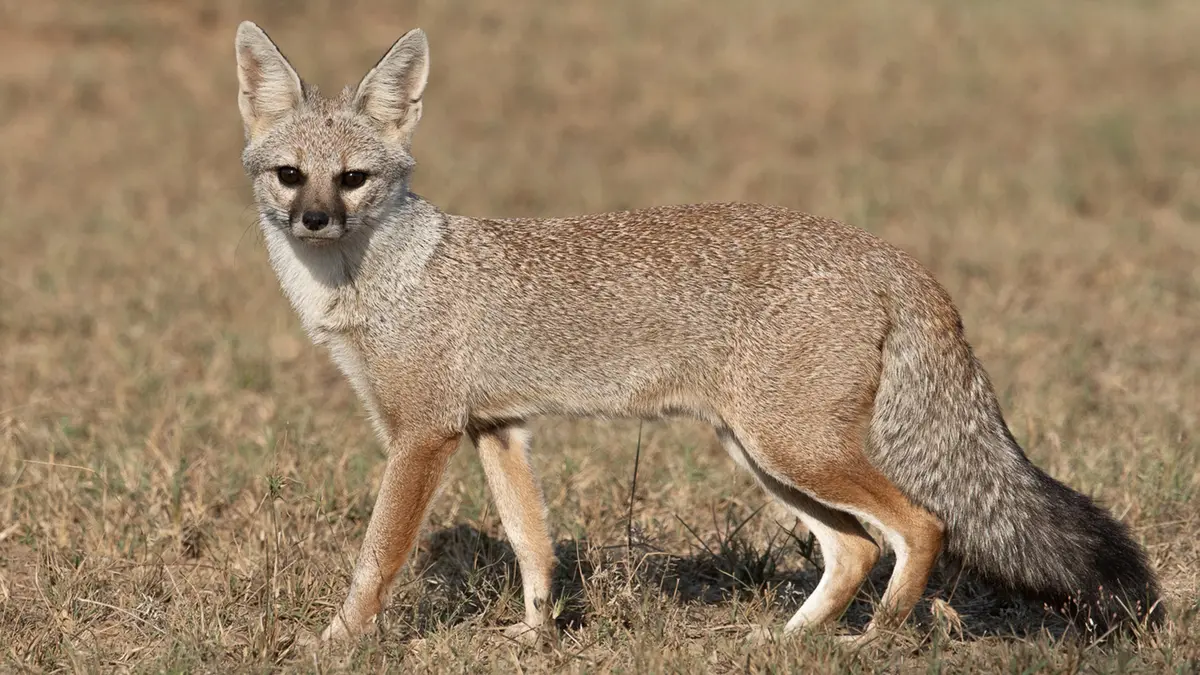
Why in news?
Wildlife groups have drawn attention to the Bengal fox’s declining habitat and the need for grassland conservation. The species is often overlooked in conservation plans despite being an important carnivore in semi‑arid ecosystems. New awareness campaigns aim to highlight its ecology and threats.
Background
The Bengal fox (Vulpes bengalensis) is endemic to the Indian subcontinent. It occurs from the Himalayan foothills in the north to the southern tip of India, though it is largely absent from the Western and Eastern Ghats. Densities are highest in dry grasslands and scrublands; a study in Kutch, Gujarat recorded about 0.25 to 0.4 pairs per square kilometre. The species forms monogamous pairs and uses dens for rearing pups.
Ecology and behaviour
- Habitat: Bengal foxes inhabit open grassy plains, scrublands, agricultural fields and rocky outcrops. They avoid dense forests and high hills.
- Diet: They are opportunistic feeders and eat rodents, reptiles, insects, fruits, birds and eggs. Their diet varies with seasons and local availability.
- Activity patterns: The foxes are mainly crepuscular, becoming active at dawn and dusk. They adapt their activity to avoid extreme heat or human disturbance.
- Reproduction: Breeding occurs in winter. Females give birth to two to four pups in underground dens. Parents share parental care.
- Status: The IUCN Red List assesses the species as Least Concern. Populations may be declining due to habitat loss, roadkills, persecution and diseases like rabies and canine distemper, but declines are not rapid enough to warrant a higher threat category.
Conclusion
The Bengal fox is a key predator in India’s open ecosystems. Its survival depends on the conservation of short grasslands and scrublands, which face conversion to agriculture and industry. Protecting these habitats, reducing persecution and monitoring disease outbreaks will help maintain stable fox populations.