

Why in News?
Wildlife enthusiasts reported in February 2026 a rare sighting of a black panther and a regular leopard drinking together at a waterhole inside Karnataka’s Bhadra Tiger Reserve. The image went viral, showcasing the reserve’s rich biodiversity.
Background
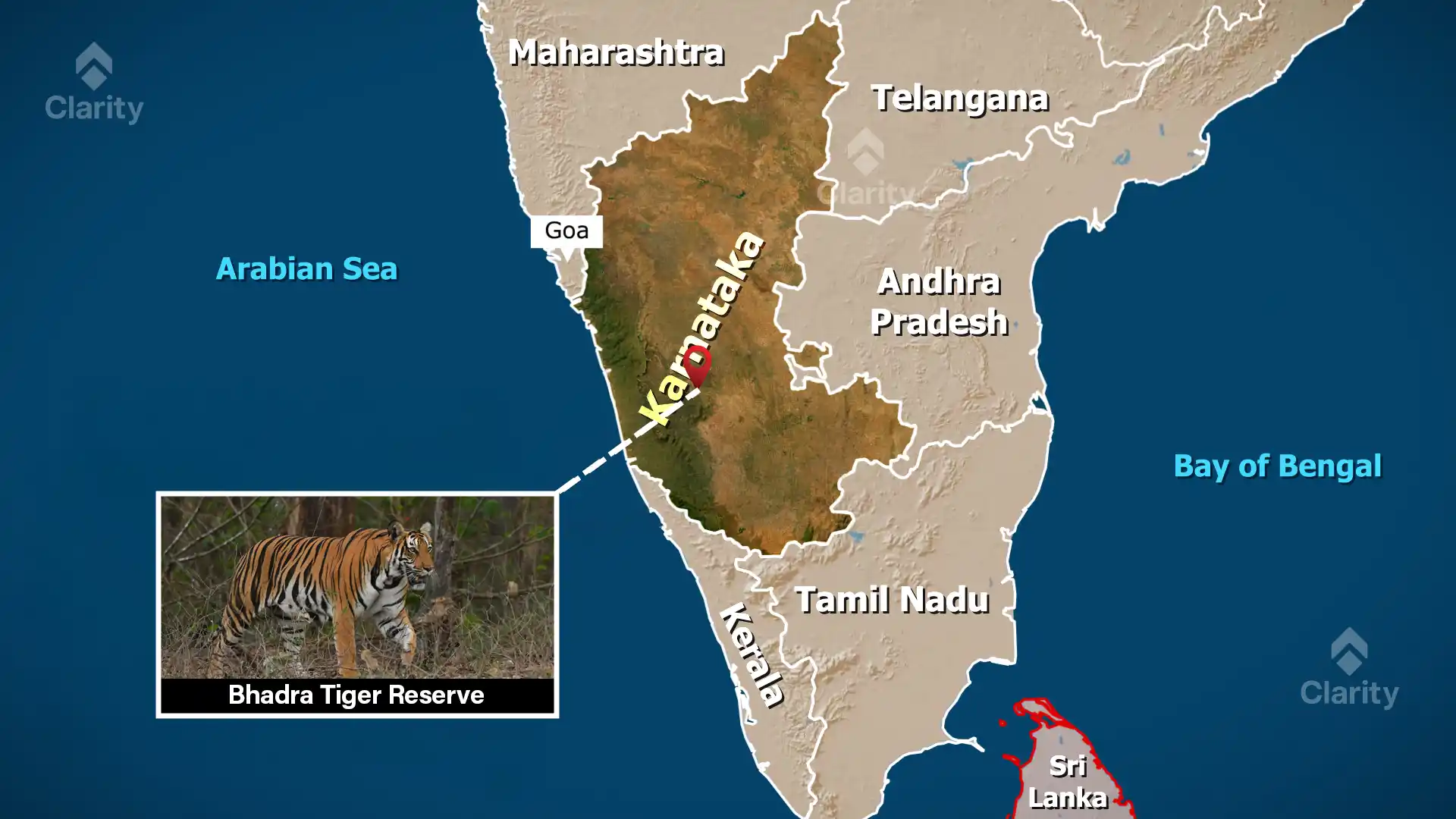
Bhadra Tiger Reserve is located in the Western Ghats of Karnataka, straddling Chikkamagaluru and Shivamogga districts. It was designated India’s 25th Project Tiger reserve in 1998.
- History and Area: Originally a game sanctuary established in 1951, the area was expanded in 1974 to form Bhadra Wildlife Sanctuary (492 km²) and declared a tiger reserve under Project Tiger in 1998. The buffer zone (572 km²) includes many relocated villages. The reserve’s name comes from the Bhadra River.
- Terrain: The reserve is shaped like a saucer with undulating hills and valleys. Four hill ranges—Hebbegiri, Gangegiri, Mullayanagiri and Bababudangiri—form a natural barrier. The highest point is Kalluhattagiri at 1,875 m. The area receives 1,500–1,700 mm of rainfall from both the southwest and northeast monsoons.
- Vegetation: Forest types include southern moist mixed deciduous forests, southern dry mixed deciduous forests and shola (montane) forests. Trees such as teak, Terminalia species, Pterocarpus, Dalbergia and bamboo dominate.
- Fauna: Bhadra supports more than 40 mammal species. Top predators include tigers, leopards and wild dogs (dholes). Herbivores such as gaur, sambar and barking deer are abundant. The reserve is also recognised as an Important Bird Area with around 250 bird species.
- Unique Features: The reserve has been largely freed of human settlements following relocation efforts completed in 2002. Its contiguity with reserve forests linking to Kudremukh National Park allows wildlife to move across a larger landscape.