
Why in news?
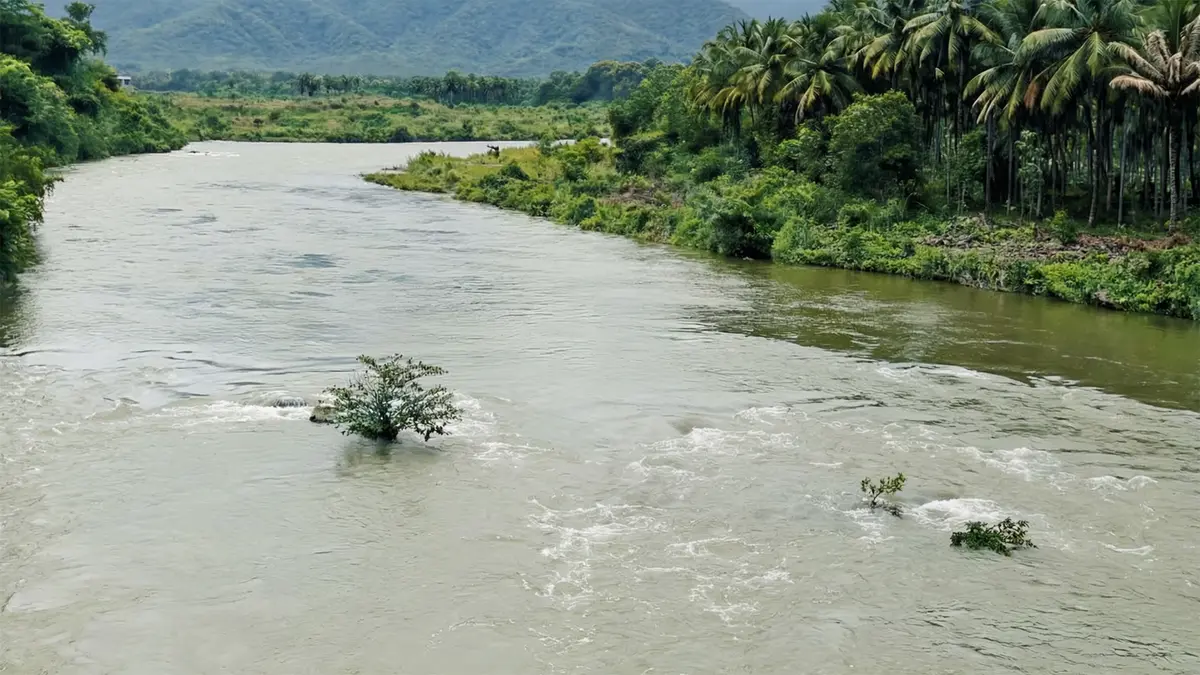
Dense water-hyacinth mats covered stretches of the Bhavani River near Kooduthurai. Farmers and residents requested immediate removal by Tamil Nadu authorities. The infestation appeared close to Bhavani’s confluence with the Cauvery. It renewed concern about invasive plants, nutrient pollution and river management.
Background
The Bhavani is a major right-bank tributary of the Cauvery River.
It rises in the Billimala range of the Nilgiri Hills within the Western Ghats.
The headwaters begin at an elevation of roughly 2,640 metres.
The river is perennial but receives most flood water during the southwest monsoon.
Course of the river
- Several headwater streams rise within the high Nilgiris of Tamil Nadu.
- The river initially flows westward into Kerala’s mountainous Attappadi region.
- It later turns eastward and re-enters western Tamil Nadu.
- Major tributaries drain the Nilgiris, Silent Valley and several adjoining uplands.
- The Bhavani finally joins the Cauvery at Kooduthurai within historic Bhavani town.
Published lengths differ with mapping methods, while a widely used basin study records 217 kilometres.
A widely used Cauvery sub-basin study maps approximately 6,200 square kilometres across three states.
Most of the basin lies in Tamil Nadu, with smaller portions in Kerala and Karnataka.
Some government studies use larger groundwater boundaries, producing different published area totals.
Important tributaries
The Moyar is a major northern tributary and joins near the Bhavanisagar reservoir.
The Siruvani drains western uplands and also supports Coimbatore’s drinking-water system.
Kundah, Kallar and several smaller mountain streams feed the upper basin.
A tributary and the main channel may cross different states within the same drainage basin.
Major water structures
| Structure | Location or role |
|---|---|
| Upper Bhavani Dam | Located in the high Nilgiri headwater region. |
| Bhavanisagar Dam | Stores water for the Lower Bhavani irrigation system. |
| Kodiveri Anicut | Diverts water into older irrigation channels. |
| Kalingarayan Anicut | Feeds the historic Kalingarayan canal near the lower river. |
The Lower Bhavani Project was among independent India’s earliest large irrigation projects.
Construction began in 1948, and the full command developed during the following decade.
Reservoir operations support irrigation, power, towns and ecological flows, creating competing seasonal demands.
Kooduthurai
Kooduthurai means a meeting place and marks the Bhavani–Cauvery confluence.
The nearby Sangameswarar Temple gives the site strong religious and cultural importance.
Floating weed at this location affects ecology, worship, scenery and local water use.
What is water hyacinth?
Water hyacinth is a free-floating aquatic plant native to tropical South America.
Its accepted scientific name is Pontederia crassipes.
Many older books use the former name Eichhornia crassipes.
Air-filled leaf stalks provide buoyancy, while hanging roots absorb dissolved nutrients.
The plant multiplies rapidly through daughter plants and also produces numerous seeds.
Why can it spread rapidly?
- Warm tropical temperatures allow vigorous growth through much of the year.
- Untreated sewage and fertiliser runoff supply abundant nitrogen and phosphorus nutrients.
- Slow-moving water lets connected plants form broad and persistent floating mats.
- Broken living fragments can move downstream and establish new colonies elsewhere.
- Long-lived seeds can remain viable and restart infestation after surface removal.
Ecological and economic effects
| Effect | How the dense mat causes it |
|---|---|
| Lower dissolved oxygen | Shading and decomposing biomass reduce oxygen available to aquatic life. |
| Altered biodiversity | Native plants and open-water habitats lose light and space. |
| Blocked infrastructure | Mats obstruct intakes, canals, fishing gear and boat movement. |
| Greater water loss | Dense vegetation can increase evapotranspiration from the surface. |
| Health concerns | Stagnant sheltered water can support mosquitoes and disease-carrying snails. |
How should authorities manage it?
Mechanical harvesting can clear priority sites quickly but rarely eliminates the entire infestation.
Careless cutting may scatter viable fragments and spread plants downstream.
Removed biomass must be contained, transported and safely composted or otherwise processed.
Biological control can use carefully tested host-specific insects under regulatory supervision.
Herbicides require great caution around drinking water, fisheries and sensitive habitats.
Long-term control must reduce sewage and nutrient runoff entering the river.
Why one-time removal fails
Hidden plants, seeds and upstream fragments can recolonise a cleared stretch quickly.
Untreated nutrient pollution continues creating favourable conditions for renewed growth.
Agencies must therefore coordinate across municipalities, irrigation channels and catchment pollution sources.
Conclusion
Restoring the Bhavani requires weed removal together with sustained action on pollution and catchment management.