

Why in news?
Environmental groups are campaigning for the restoration of the Bhima River in Maharashtra. They warn that unchecked pollution from cities and sugarcane mills, combined with over‑extraction of water and dam construction, is degrading the river’s health. Local authorities are considering measures to regulate effluent discharge and revive flows.
Background
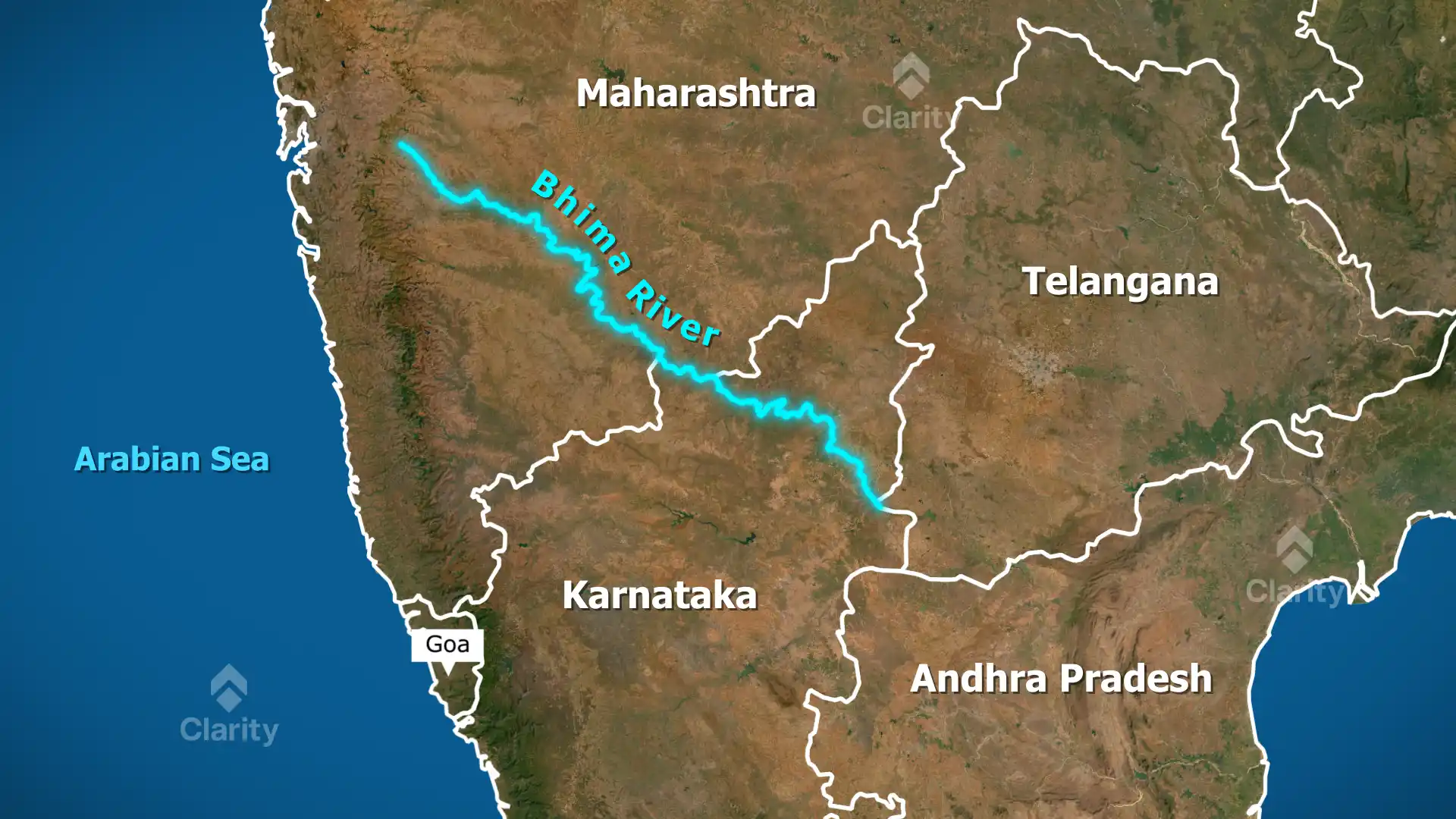
The Bhima River, also known as Chandrabhaga near Pandharpur, is the largest tributary of the Krishna River. It rises in the Bhimashankar hills of the Western Ghats in Pune district at an elevation of about 1 200 metres and flows southeast for roughly 861 kilometres through Maharashtra, Karnataka and Telangana before joining the Krishna near Raichur. The river basin covers around 48 899 square kilometres, making up nearly 70 percent of the Krishna Basin area in Maharashtra.
Geography and tributaries
- The upper basin receives heavy rainfall and includes the Mula, Mutha and Pavana rivers, which drain the Pune metropolitan area.
- Further downstream the Bhima is joined by the Ghod, Nira, Man, Sina and Bori rivers, which support extensive irrigation networks.
- Major dams on the river and its tributaries include Ujjani (on the Bhima), Chas Kaman, Mulshi and Khadakwasla. These projects supply water for drinking, irrigation and hydropower but also alter natural flows.
Ecological and cultural significance
- Spiritual importance: The Bhimashankar Temple at the river’s source is one of the 12 Jyotirlingas of Lord Shiva. Near Pandharpur, the river bends into a crescent shape resembling a half‑moon (Chandrabhaga), and the Vitthal temple there attracts millions of devotees during the annual Wari pilgrimage.
- Biodiversity: The dense forests around Bhimashankar are home to the Indian giant squirrel, prompting the creation of the Bhimashankar Wildlife Sanctuary (about 130 square kilometres). Wetlands and floodplains support water birds and fish.
- Economy: The river irrigates fertile plains where sugarcane, wheat and pulses are grown. It supplies drinking water to major cities such as Pune and Solapur.
Challenges and restoration
- Untreated sewage from urban centres like Pune and Solapur, along with effluents from sugar and alcohol industries, pollute the river. High nutrient loads lead to eutrophication and fish kills.
- Over‑extraction of water for irrigation, coupled with numerous dams, reduces downstream flows, affecting aquatic life and farmers in tail‑end areas.
- Encroachment on floodplains and sand mining alter the river’s morphology and reduce its ability to recharge groundwater.
- Environmental groups advocate for enforcing effluent norms, upgrading sewage treatment plants, releasing environmental flows from dams and promoting organic farming in the basin.
Source: TOI