

Why in news?
Recent coverage has renewed attention to black carbon's role in the loss of Himalayan snow and ice. The Indian Express's 23 September explainer discusses a Climate Trends analysis released in May 2025, using data from 2000–2023. This is renewed coverage of an earlier analysis, not a newly published September 2026 study. Black carbon consists of light-absorbing particles produced by incomplete combustion. When carried into mountain environments, those particles can warm the air and darken snow, increasing absorbed sunlight. The issue matters for seasonal water supplies and communities far downstream. Reported associations between pollution, warming and snow changes do not, however, establish that black carbon alone caused every observed temperature or glacier change.
What black carbon is
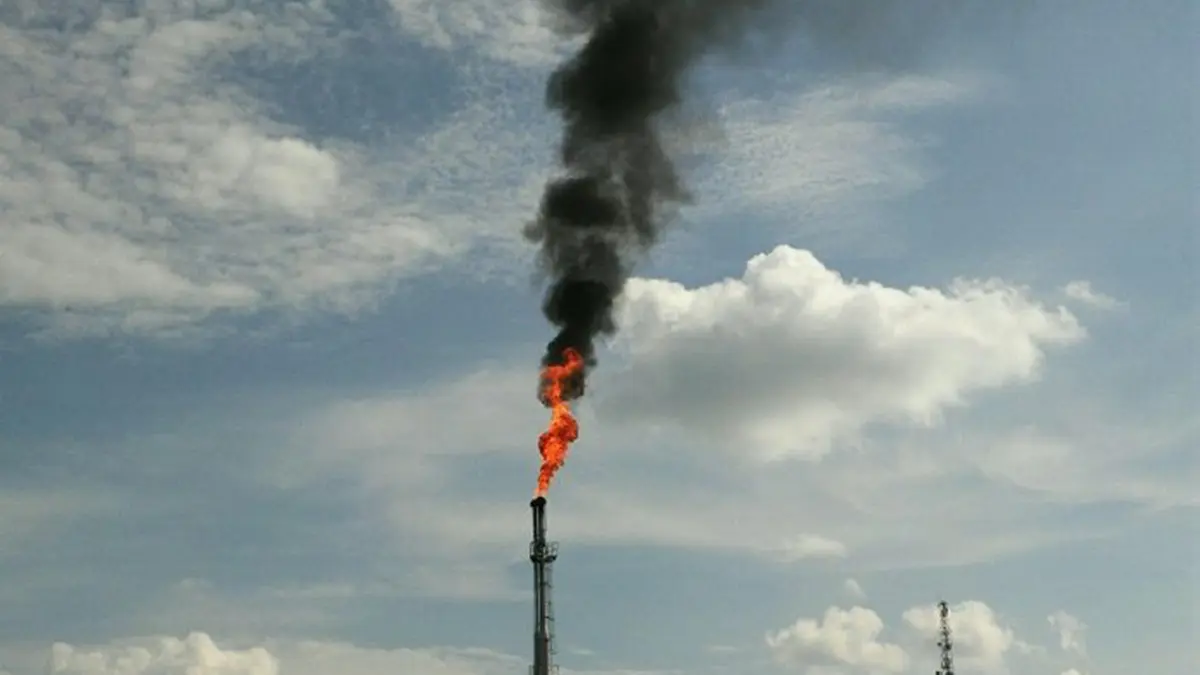
When fuels do not burn completely, combustion can release fine carbon-rich particles. Black carbon is the strongly light-absorbing component of that particulate pollution. Sources include diesel engines, some industrial processes, the burning of wood and other biomass, and open fires. The amount released depends on the fuel, equipment and operating conditions. Two activities using similar fuels need not emit the same quantity if combustion and pollution controls differ.
Black carbon is a particle, not a greenhouse gas. Carbon dioxide and black carbon both affect climate, but they do so through different physical processes and atmospheric lifetimes. Black carbon absorbs incoming sunlight directly and is removed from the atmosphere relatively quickly. Carbon dioxide contributes to long-lasting greenhouse warming. Reducing one is therefore not a substitute for reducing the other. Their different behaviour creates complementary opportunities for climate policy.
How pollution reaches remote snow and ice
Mountain glaciers can be affected by emissions released far from their slopes. Winds transport particles from source regions, while weather influences their movement and removal. Particles may settle onto snow or arrive with precipitation. Mountain valleys and regional circulation complicate that transport. Black carbon at a remote site need not have originated entirely in the nearest settlement. Nor can the entire deposit automatically be attributed to a single country's emissions.
Fresh snow reflects much of the sunlight reaching it. The fraction reflected is called albedo. Dark particles on the surface can lower that reflectivity, allowing more energy to be absorbed. That additional energy can promote melting when conditions permit. Particles suspended in the atmosphere can also absorb sunlight and affect heating. Atmospheric effects and surface darkening are connected, but they should not be collapsed into one identical mechanism.
What observations can establish
The 2025 Climate Trends analysis, as described in the newspaper's account, examined long-term patterns in black carbon and Himalayan conditions. It associated more polluted areas with warming and reduced snow depth. Such comparisons help identify where further investigation is needed. They do not isolate every contributing influence. Temperature, precipitation, cloud cover, terrain and the timing of snowfall can all affect the state of snow and ice.
Snow depth, glacier area and glacier mass are also different measurements. Seasonal snow may accumulate and disappear without describing the full condition of the underlying glacier. A glacier can thin while its end position changes little, or retreat while its flow speed changes differently. Mass balance compares accumulation with losses over a defined period. Evidence about one quantity should not automatically be presented as a measurement of all the others.
The World Bank's 2021 study provides a separate assessment of climate, black carbon and regional water systems. It combines emissions, atmospheric transport, glacier processes and hydrological modelling. Its focus includes the Himalaya, Karakoram and Hindu Kush and the Indus, Ganges and Brahmaputra basins. Modelling links processes that cannot be understood from a single photograph or monitoring station. Its projections nevertheless depend on assumptions about future emissions, weather and policy implementation.
Why the geography matters for water
The mountain system supplies water to several major transboundary river basins. The Indus lies towards the western part of this system, while the Ganges and Brahmaputra connect large areas farther east. Snow, glacier ice, rainfall and groundwater contribute in different proportions across these basins and seasons. It would therefore be misleading to imply that all downstream water comes directly from glaciers. Changes in mountain storage interact with rainfall and water use throughout each basin.
Ice stores water across seasons and years. Faster melting can temporarily add to river flow while reducing that stored reserve. Over longer periods, a smaller glacier may provide less meltwater, especially when demand is high and other supplies are limited. This is why increased runoff is not automatically a sign of improving water security. The timing and reliability of water can matter as much as the annual total.
Changes also affect hazards and infrastructure. Growing glacial lakes can create risks where their containing barriers fail, while altered runoff can complicate reservoir and hydropower management. Not every glacier develops such a lake, and black carbon cannot be assigned responsibility for each flood. Site-specific evidence remains necessary. The broader point is that changing mountain ice affects both the availability of water and the conditions under which it moves downstream.
What reducing emissions can achieve
The World Bank assessment identifies cleaner household fuels, improved brick-kiln technology and controls on diesel emissions as relevant interventions. These target activities that release black carbon before particles reach mountain surfaces. Their effectiveness depends on actual use and maintenance, not just equipment distribution. A cleaner stove cannot deliver its expected benefit if households lack an affordable continuing fuel supply. Industrial improvements similarly need operational follow-through.
Because black carbon is comparatively short-lived, sustained reductions can affect near-term atmospheric concentrations and deposition. Regional coordination matters where emissions and their impacts cross borders. These measures complement the longer-term task of reducing greenhouse gases. They also connect mountain protection with cleaner air where people live and work. No single intervention guarantees glacier recovery, but reducing avoidable combustion pollution addresses a source of additional pressure that governments can influence.
Conclusion
Black carbon links everyday combustion with distant mountain environments through atmospheric transport and light absorption. Reducing it can lessen an added source of warming and snow darkening, while supporting cleaner air. The September discussion should be understood as renewed attention to existing research. Protecting Himalayan water systems requires both pollution control and greenhouse-gas mitigation, alongside careful monitoring of the different processes affecting snow, glaciers and river flow.