
Why in news?
The Central Institute of Brackishwater Aquaculture (CIBA) and the Indian Council of Agricultural Research demonstrated a complete farming system for the blue swimmer crab in June 2026. A trial at Muttukadu in Tamil Nadu produced around 1,100 kilograms per hectare in 105 days, showing that hatchery‑reared seed and formulated feed can make crab farming commercially viable.
Background
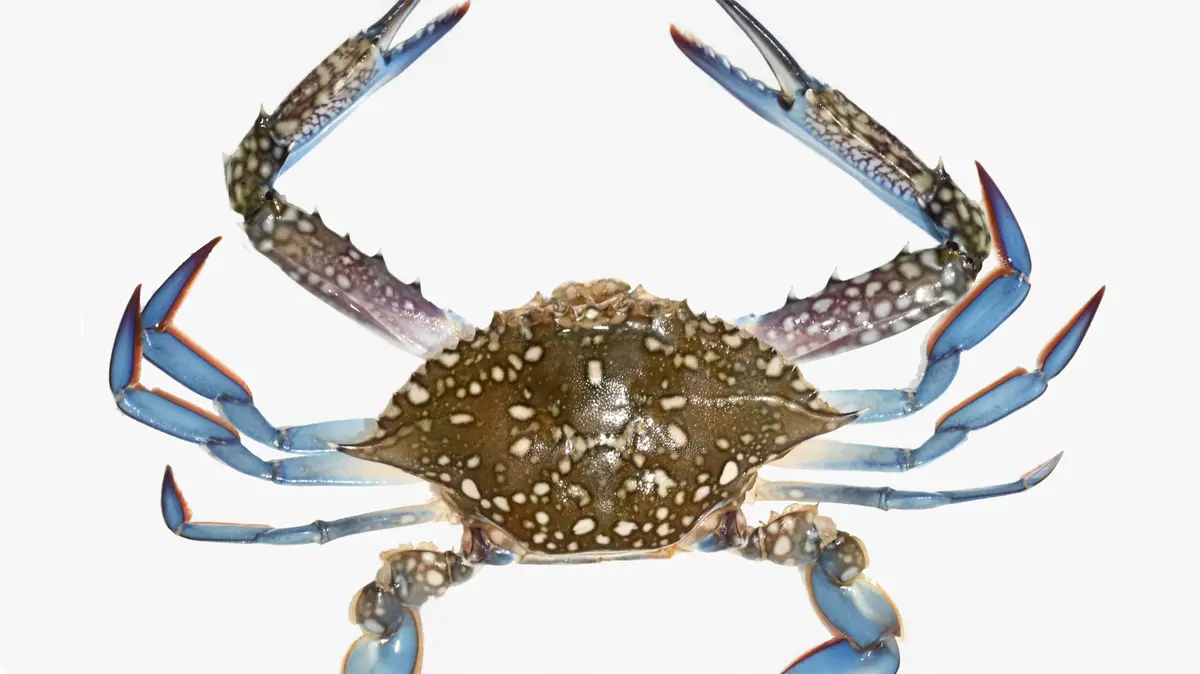
The blue swimmer crab (Portunus pelagicus) belongs to the swimming crab family (Portunidae). Its flat hind legs act as paddles, helping it swim. The crab has nine spines on each side of its carapace and can grow up to 25 centimetres across. It inhabits estuaries and coastal waters throughout the Indian and western Pacific oceans and goes through several larval stages before becoming an adult. Although the species is popular as a delicacy, farmers have been reluctant to culture it due to difficulties in producing seed and feed.
Key points
- Technology package: CIBA’s demonstration integrates hatchery seed production, nursery and grow‑out practices, special feeds and water‑quality management. This “end‑to‑end” approach provides farmers with all components needed to rear the crabs.
- High yield: The trial yielded about 1,100 kg/ha of marketable crabs within 105 days. Average individual weight reached 150 grams and crabs fetched around ₹500 per kilogram in local markets.
- Economic opportunities: Scientists noted that blue swimmer crab farming could offer an alternative income for coastal farmers and fisherfolk. It can also meet demand in domestic and export markets without over‑exploiting wild stocks.
- Scaling up: CIBA plans to share the technology with state fisheries departments and self‑help groups across India’s coastline. Training programmes will help interested farmers adopt best practices.
Conclusion
The successful demonstration shows that blue swimmer crabs can be farmed responsibly in India. With proper training and support, this species could diversify aquaculture, boost incomes and contribute to a sustainable blue economy.