

Why in news?
On 20 June 2026 President Rodrigo Paz of Bolivia declared a nationwide state of emergency after weeks of anti‑government protests. The decree enabled the deployment of security forces to remove roadblocks that had paralysed the country’s roads and caused shortages of food, fuel and medicines.
Background
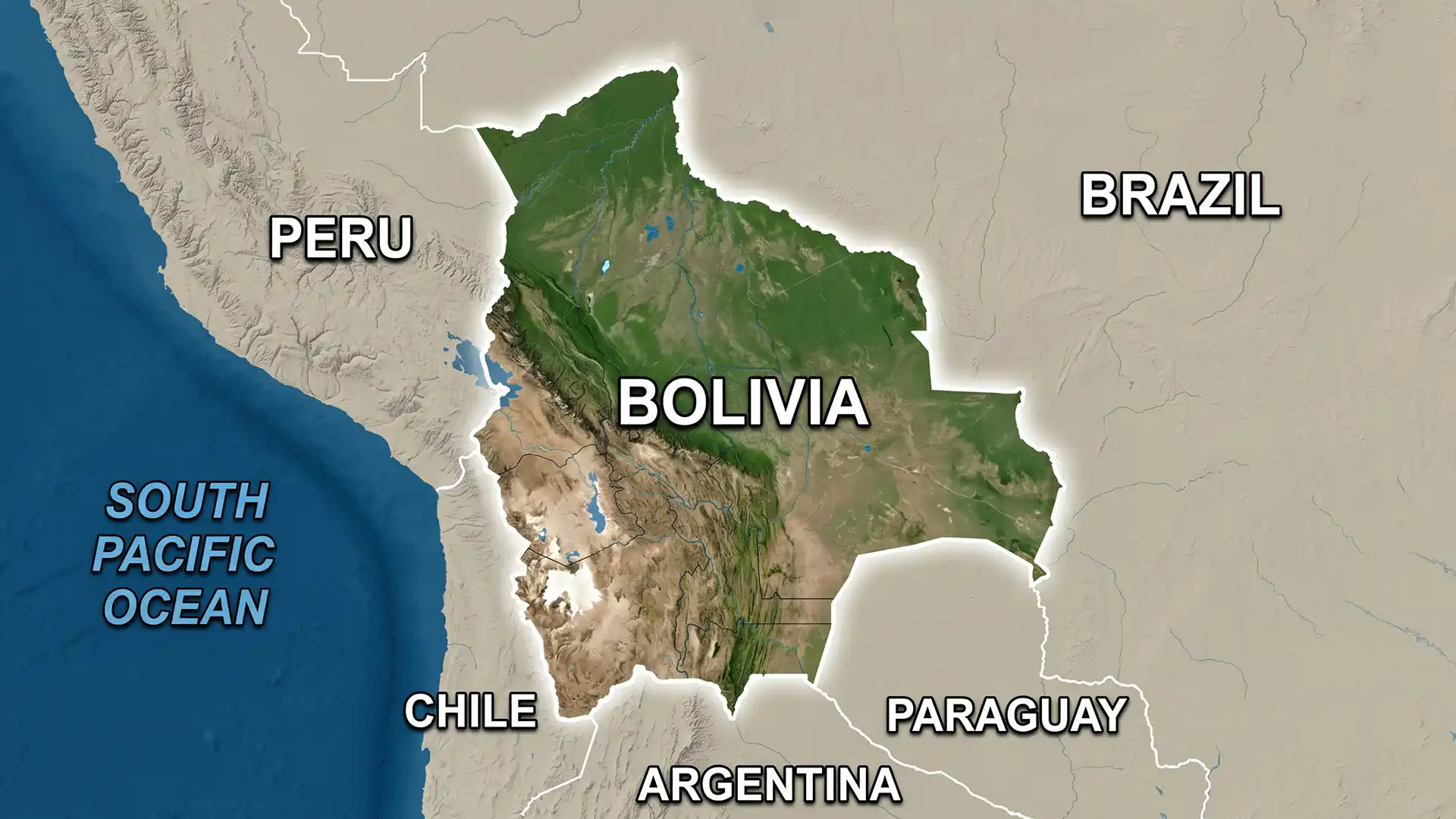
Bolivia is a landlocked country in the heart of South America. It extends about 1,500 km north–south and 1,300 km east–west and shares borders with Brazil, Paraguay, Argentina, Chile and Peru. The nation has a high proportion of Indigenous peoples and is rich in natural resources such as natural gas, tin, silver, zinc and lithium. The constitutional capital is Sucre, while La Paz houses the executive and legislature. In early 2026 the government, faced with a widening fiscal deficit and declining foreign reserves, reduced longstanding fuel subsidies. This sparked widespread protests led by groups allied to former president Evo Morales, who demanded wage increases, reversal of reforms and President Paz’s resignation.
Key points
- Protest impact: For about 50 days protesters blocked highways, stranding trucks and choking supplies to cities such as La Paz and El Alto. At least 14 people died during the unrest.
- Emergency powers: The decree allowed police and soldiers to clear roadblocks and threatened legal action against those continuing to obstruct roads. Congress approved the measure a day later. By 21 June, authorities reported that several major blockades had been lifted, though some remained.
- Air‑force tragedy: On 21 June an air force plane on an assistance flight crashed near Cochabamba, killing four military personnel and two civilians (the wife and young daughter of an air force captain).
- Underlying causes: The protests stem from economic hardship, including high fuel prices, shortages of dollars and demand for wage hikes. Although the government later restored some subsidies and negotiated with unions, opposition groups continued to resist.
- Political context: Rodrigo Paz took office seven months earlier after nearly two decades of rule by the Movement Toward Socialism (MAS). He has blamed Morales for instigating unrest, while Morales has called for early elections. International reactions, including from the United States, have supported the government’s efforts to restore order.
Conclusion
Bolivia’s emergency highlights the tension between fiscal reforms and social stability. Clearing roadblocks may restore supply chains in the short term, but long‑term peace requires dialogue and policies that address citizens’ economic grievances.