
Why in news?
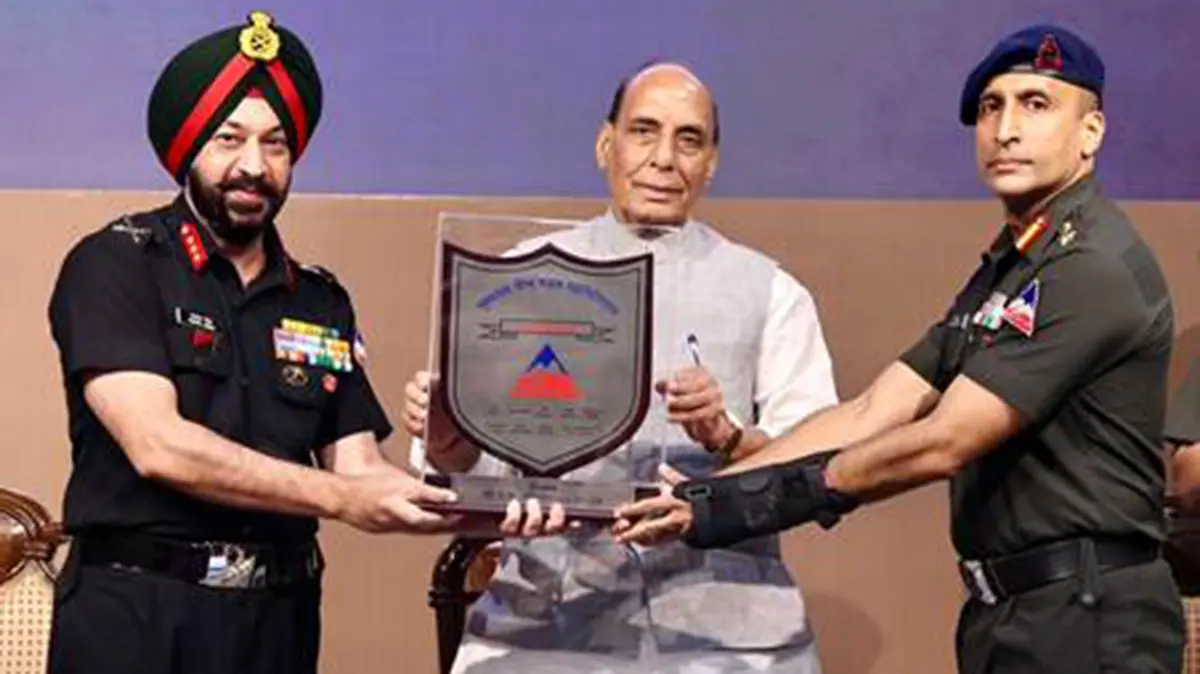
India held a Strategic Infrastructure Conclave in New Delhi. The Border Roads Organisation organised the two-day event. The Defence Minister stressed infrastructure’s continuing role in future warfare. He also launched digital platforms and released three publications.
Background
The Border Roads Organisation is India’s main agency for strategic border infrastructure.
Its common short form is BRO; it functions under the Ministry of Defence.
The government created BRO on 7 May 1960; India then needed rapid road construction near difficult frontiers.
The organisation began with Project Tusker and Project Beacon.
Project Tusker later became Project Vartak; it developed routes in the present Arunachal Pradesh region.
Project Beacon worked in Jammu and Kashmir; these early projects created the foundation for later expansion.
BRO’s motto is Shramena Sarvam Sadhyam; it means everything is achievable through hard work.
How is the organisation staffed?
The Director General Border Roads is the organisation’s executive head; the officer holds Lieutenant General rank.
The General Reserve Engineer Force provides the main uniformed workforce; its common short form is GREF.
Army officers and personnel also serve with BRO; engineers, administrators and local workers support individual projects.
This mixed structure connects engineering expertise with operational military requirements.
What does BRO build and maintain?
- BRO builds strategic roads near international borders.
- It constructs bridges across rivers and difficult valleys.
- It builds mountain tunnels for all-weather movement.
- It develops airfields and related operational infrastructure.
- It undertakes protective works, drainage and slope stabilisation.
- It builds infrastructure for selected friendly neighbouring countries.
BRO also clears snow and restores routes after landslides, floods or other disasters.
During military operations, it supports forward roads and airfields; during peace, the same links serve local communities.
Dual-use infrastructure: A border road can move troops and supplies; it can also connect residents with schools, markets and hospitals.
How large is its present reach?
BRO’s official website reports 18 active projects across 11 states, three Union Territories and Bhutan.
Different projects manage defined geographical areas; their names include Vartak, Beacon, Himank, Sampark and Swastik.
The organisation also works for several Union ministries and government agencies.
Which landmark works were discussed?
The Defence Minister highlighted Atal Tunnel, Umling La and Sela Tunnel.
- Atal Tunnel: This 9.02-kilometre tunnel runs under Rohtang Pass in Himachal Pradesh.
- Umling La road: It crosses a high pass in eastern Ladakh.
- Sela Tunnel: It provides all-weather access towards Tawang in Arunachal Pradesh.
Atal Tunnel opened on 3 October 2020; it reduced the Manali-Sarchu journey by about 46 kilometres.
The World Book of Records recognised it during 2022.
Its title is the world’s longest highway tunnel above 10,000 feet.
Guinness recognises Umling La as the world’s highest-altitude road.
It reaches 5,798.251 metres, or roughly 19,024 feet; the record was achieved on 9 November 2021.
Prelims records: Umling La holds the highest-altitude road record; Atal Tunnel holds a height-specific highway tunnel record.
What was the July 2026 conclave?
The Strategic Infrastructure Conclave took place on 15 and 16 July in New Delhi.
Its theme was “Enhancing Capability through Technology, Innovation and Execution Excellence”.
Participants included military leaders, policymakers, BRO officers, engineers, researchers and technology companies.
Sessions covered planning, design, execution, monitoring, maintenance and future construction methods.
What message did the Defence Minister give?
Rajnath Singh said modern weapons cannot replace basic military infrastructure.
Ports, airfields, roads and tunnels enable forces to reach and sustain the battlefield.
He also linked border connectivity with civilian development; remote communities should not remain separated from national opportunities.
The Vibrant Villages Programme reflects this approach; it calls border settlements the country’s first villages.
Which technologies are becoming important?
- Digital planning can compare routes, costs and terrain risks.
- Artificial intelligence can support forecasting, inspection and project monitoring.
- Mechanisation reduces dangerous manual work and improves speed.
- Modern tunnelling creates all-weather routes through mountain barriers.
- Remote monitoring can identify slope movement or structural damage earlier.
- Sustainable methods can lower waste and protect fragile mountain environments.
Technology must match local geology and climate; a useful method in one region may fail elsewhere.
What was launched or released?
The Defence Minister launched two digital platforms.
One supports project management, while the other supports recruitment; the official release did not provide their names.
He also released three BRO publications:
- The three titles are Path Pradarshak, Oonchi Sadken and Path Vikas.
The publications record achievements, innovations, working practices and future plans.
A new BRO anthem was also unveiled; awards recognised well-performing projects.
Accuracy note: The release names the platforms’ purposes, but not their titles; unverified platform names should not be added.
Why does strategic infrastructure matter?
- Roads allow faster movement of troops and heavy equipment.
- Tunnels keep vital routes open during snow and bad weather.
- Airfields support surveillance, transport and emergency evacuation.
- Bridges help forces cross rivers without long diversions.
- Reliable logistics sustain operations after the first deployment.
- Civilian connectivity strengthens the economy and border population stability.
What difficulties does BRO face?
Mountain construction involves unstable slopes, snow, floods, earthquakes and short working seasons.
Projects must also address forests, wildlife, water flow and local land rights.
Speed remains important, but rushed construction can create future safety and maintenance problems.
Better design, independent checks and local consultation therefore remain essential.
Conclusion
BRO supports security and regional development together; technology can improve its work, but sound engineering must remain central.