
Why in news?
Indian researchers added borophene to castor oil for the first time. A very small amount sharply reduced friction between steel surfaces. The study suggests a possible bio-based lubricant for machines. Further testing is still necessary before commercial use.
Background
Moving machine parts create friction, which wastes energy and gradually damages their surfaces.
A lubricant separates those surfaces, reducing friction, heat generation and mechanical wear.
Mineral oils perform reliably but depend mainly upon petroleum for their production.
Vegetable oils offer a renewable alternative, while castor oil provides useful viscosity and surface attraction.
Vegetable oils may perform poorly under heavy loads, so researchers test safe performance-enhancing additives.
What is borophene?
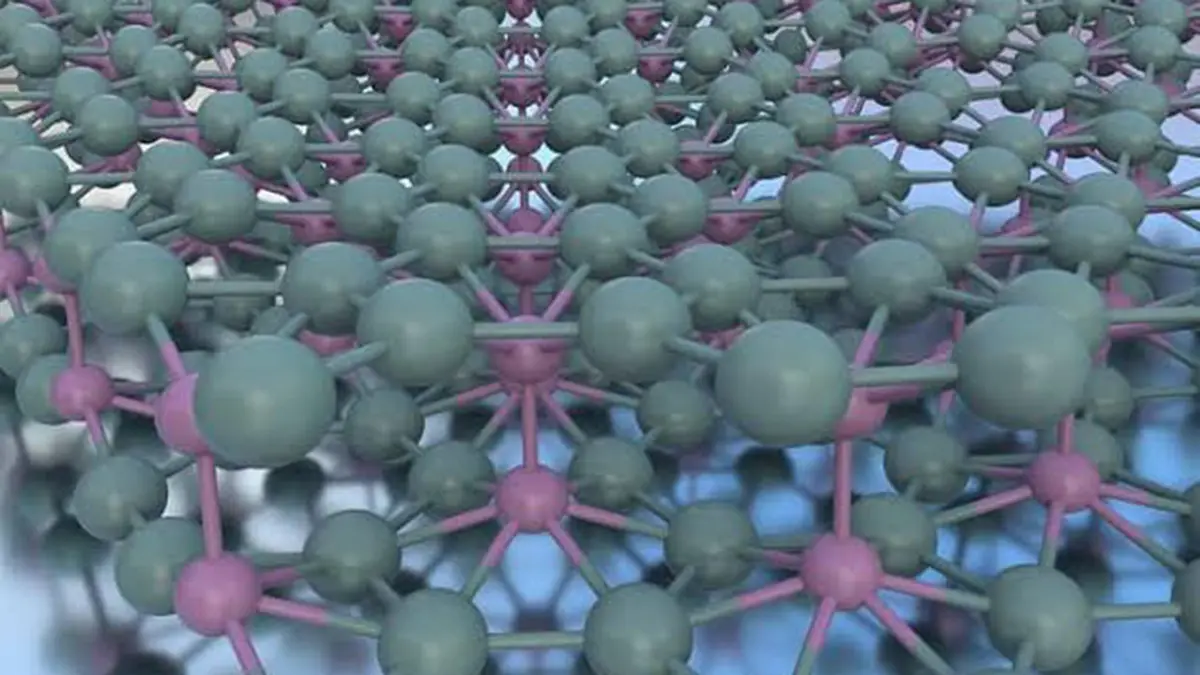
Borophene is an allotrope of boron that forms an extremely thin, two-dimensional sheet.
An allotrope is a different elemental structure, with diamond and graphite being familiar carbon examples.
Each borophene sheet is one atom thick, with boron atoms forming several stable patterns.
Scientists first produced borophene experimentally on a silver surface in 2015.
The material is metallic, light, flexible and strong, while its properties vary by direction and pattern.
Comparison: Graphene is a one-atom-thick carbon sheet, while borophene is its two-dimensional boron counterpart.
Who conducted the new study?
The work came from the Institute of Advanced Study in Science and Technology in Guwahati.
This autonomous institute functions under the Department of Science and Technology, and Professor Devasish Chowdhury led the team.
Researchers directly dispersed borophene nanosheets in castor oil without chemically modifying them.
What did the experiment find?
The best mixture contained only 0.1 per cent borophene by weight.
Its friction was about 42 per cent lower than pure castor oil. The measured friction coefficient fell from 0.059 to 0.034.
The mixture protected steel, lowering average surface roughness from 0.826 to 0.326 micrometres.
| Measured feature | Pure castor oil | Optimised mixture |
|---|---|---|
| Borophene content | None | 0.1 per cent by weight |
| Friction coefficient | 0.059 | 0.034 |
| Steel surface roughness | 0.826 micrometres | 0.326 micrometres |
A lower coefficient indicates easier sliding, while lower roughness indicates less serious surface damage.
How does borophene reduce friction?
- The oil carries dispersed borophene sheets into the moving contact zone.
- These sheets help separate the steel surfaces and bear part of the load.
- A protective tribofilm gradually forms through pressure, heat and surface reactions.
- This film contains iron oxides, carbon materials and boron-based compounds.
- The resulting layer reduces direct contact, shear stress and continuing wear.
A tribofilm is a protective layer created during rubbing, not simply the original liquid coating.
Why can this support energy conservation?
Machines waste energy overcoming friction, so small improvements can accumulate across large industrial systems.
Longer component life reduces replacements, while a castor-oil base may lower petroleum dependence.
What challenges remain?
- Borophene is reactive and can oxidise when exposed to ordinary conditions.
- Producing stable, high-quality sheets at industrial scale remains difficult.
- Long-duration tests must confirm performance across temperatures, loads and machine types.
- Researchers must assess cost, disposal safety and effects upon aquatic environments.
The published result is a promising laboratory advance, not yet a ready commercial lubricant.
Conclusion
Borophene could strengthen renewable lubricants, but industrial adoption needs durability, safety and scale-up evidence.