Why in news?
Reports from Ladakh suggest that an invasive moth species known as the buff‑tip has been damaging trees and crops in the region. The sudden appearance of large numbers of its caterpillars has worried farmers because they strip leaves from fruit trees and willows.
Background
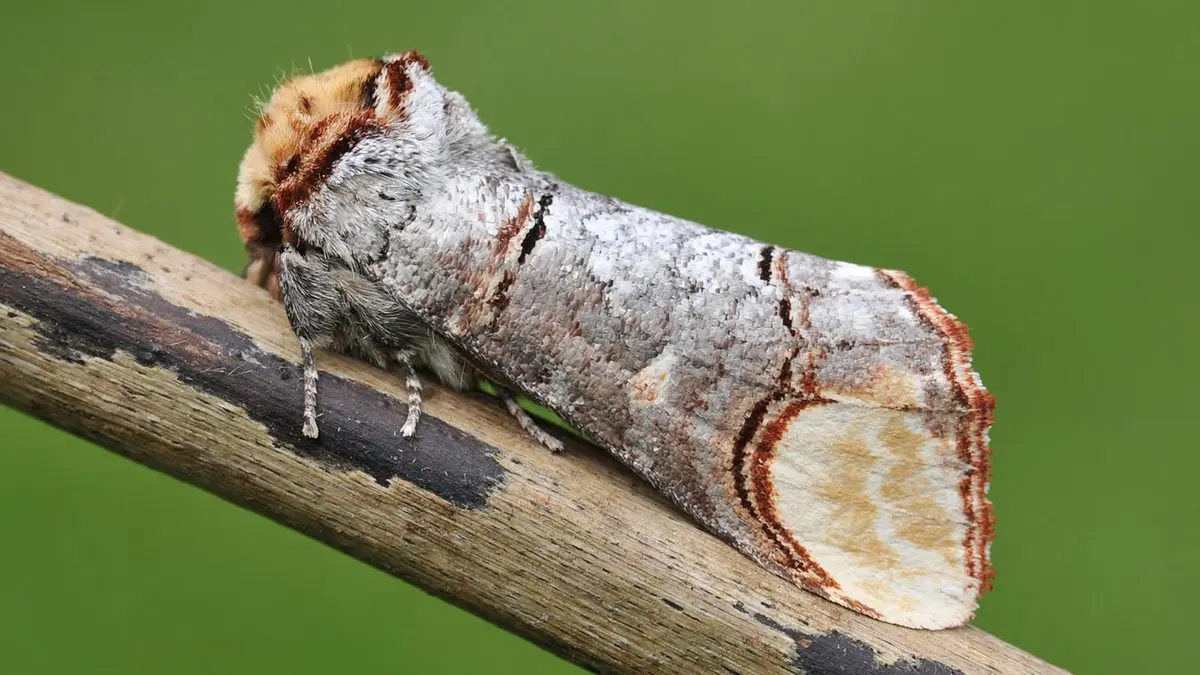
The buff‑tip (Phalera bucephala) is a moth native to Europe and parts of Asia. Adult moths resemble a broken birch twig when resting, thanks to grey and brown wing patterns and a buff‑coloured tip that looks like a piece of wood. They fly from May to July and lay eggs on deciduous trees.
Key points
- The caterpillars are yellow with bold black stripes and live in groups. They feed on the leaves of oak, birch, lime, cherry and other broad‑leaved trees. Large colonies can cause heavy defoliation.
- In gardens and forests, buff‑tip caterpillars rarely kill trees because new leaves grow back the following year. However, in areas where they are not native their impact can be severe.
- The recent infestation in Ladakh may be linked to warmer temperatures that allow the moth to survive at higher altitudes. Farmers are being advised to monitor trees and use safe biological controls rather than broad pesticides.
- This is a developing story and further scientific studies are needed to confirm the scale of the invasion and its effects on local ecosystems.