
Why in news?
Bulgaria has been in the headlines due to general elections and its adoption of the euro on 1 January 2026. The country’s transition to Europe’s common currency marks a milestone in its integration with the European Union, which it joined in 2007. Political campaigns have also attracted global attention as Bulgarians choose representatives amid concerns over inflation and corruption.
Background
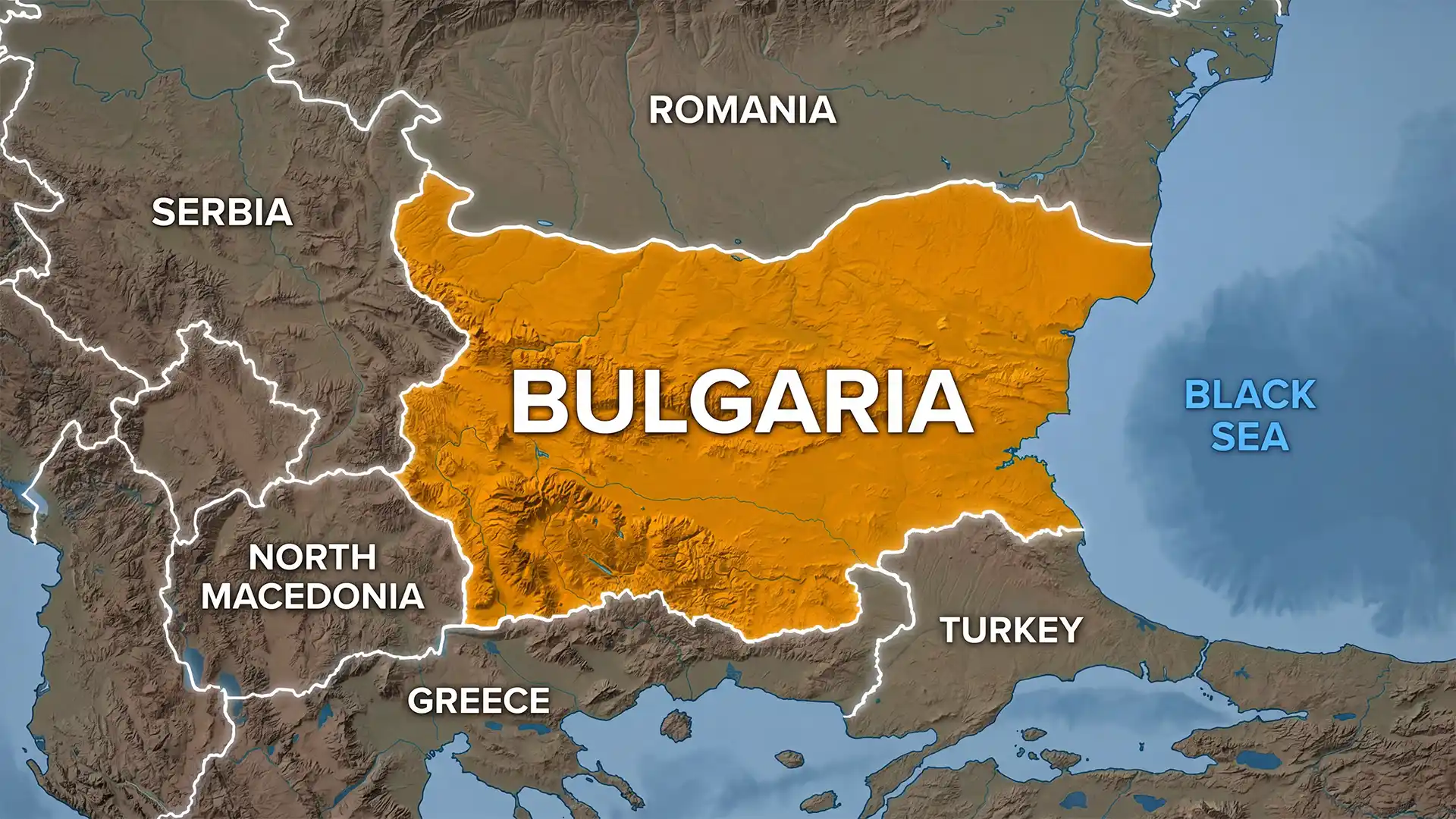
Located in southeastern Europe, the Republic of Bulgaria occupies the eastern portion of the Balkan Peninsula. Founded in the 7th century, it is one of Europe’s oldest states. The Danube River forms its northern boundary with Romania, while Greece and Turkey lie to the south, Serbia and North Macedonia to the west and the Black Sea to the east. The capital, Sofia, sits in a high plain near the centre of the country and is connected historically to the ancient Silk Road.
Geography and population
- Landscape: Bulgaria’s terrain is diverse, ranging from the Danubian plain in the north and the central Balkan Mountains to the Thracian lowlands and the Rhodope and Rila Mountains in the south and southwest. Musala Peak in the Rila range is the highest point on the Balkan Peninsula (2,925 metres).
- Rivers and coasts: Apart from the Danube, major rivers include the Maritsa and Struma, which flow south into the Aegean. The Black Sea coast features sandy beaches and important ports such as Varna and Burgas.
- People: Bulgaria’s population is about 6.4 million (2026 estimate). The majority are ethnic Bulgarians who speak Bulgarian, a South Slavic language written in the Cyrillic script. Significant minorities include Turks and Roma. Eastern Orthodoxy is recognised as a traditional religion, though the constitution provides for freedom of belief.
History and politics
- Early history: The region was home to Thracian tribes before being absorbed into the Roman and Byzantine empires. The First Bulgarian Empire (681–1018) adopted Christianity in the 9th century and reached its zenith under Tsar Simeon I. After a period of Byzantine rule, the Second Bulgarian Empire (1185–1396) re‑emerged.
- Ottoman rule: Bulgaria was conquered by the Ottoman Turks in the late 14th century and remained under Ottoman control for nearly five centuries, a period known as the “Turkish yoke”. A national revival in the 19th century led to uprisings and international pressure culminating in the Treaty of Berlin (1878), which created an autonomous Principality of Bulgaria under Ottoman suzerainty.
- Modern era: Bulgaria gained full independence in 1908. It sided with the Central Powers in World War I and with the Axis in World War II but avoided occupation by Nazi Germany. After the war it fell within the Soviet sphere and established a communist government. Democratic reforms began in 1989 and Bulgaria joined NATO in 2004 and the European Union in 2007.
Economy and current issues
- Currency change: On 1 January 2026 Bulgaria adopted the euro, replacing the lev. This is expected to lower transaction costs, attract investment and further integrate the Bulgarian economy with the eurozone. Until the transition, the lev was pegged to the euro.
- Economic profile: Bulgaria has a mixed economy with strengths in agriculture (grain, rose oil, wine), light manufacturing, information technology and tourism. It is known for its mineral springs and ski resorts.
- Governance challenges: Issues such as corruption, demographic decline and energy dependence on Russia continue to shape political debates. Recent elections have revolved around reforming institutions and stimulating growth.
Conclusion
Bulgaria bridges Europe and Asia through its geography, history and culture. By adopting the euro and holding competitive elections, it signals its commitment to European integration while confronting domestic challenges of governance and development.
Sources: The Hindu

