Why in news?
A bus carrying British tourists plunged into a ravine on the island of La Gomera in Spain’s Canary Islands, killing one person and injuring 27 others. The accident occurred when the vehicle lost control on a mountainous road near the town of San Sebastián de La Gomera. Authorities have launched an investigation to determine whether road conditions or human error contributed to the crash.
Background
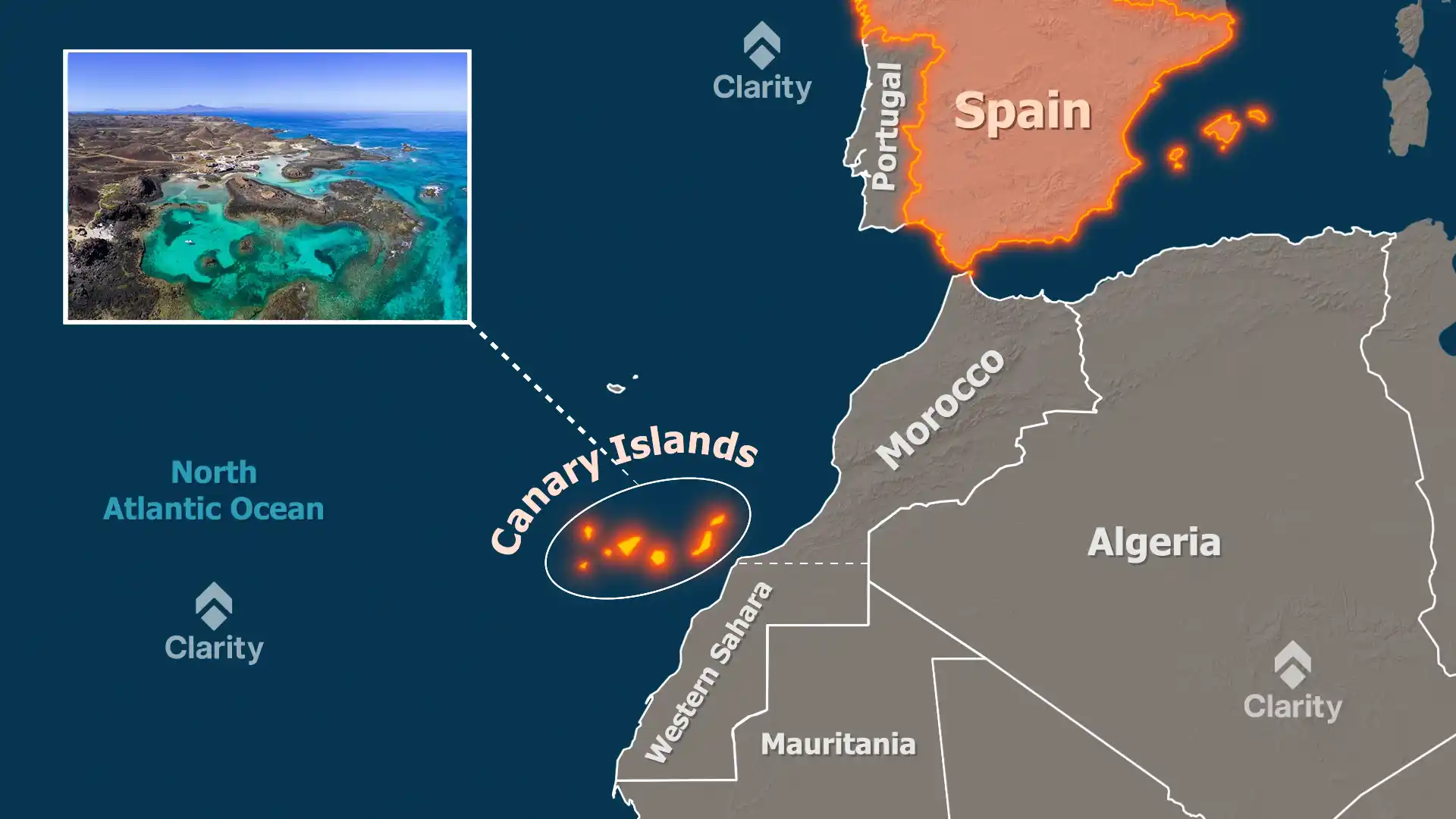
The Canary Islands are a Spanish archipelago located about 100 kilometres off the northwest coast of Africa in the North Atlantic Ocean. Although geographically part of Africa, they are politically an autonomous community of Spain and the European Union’s outermost region. The archipelago consists of seven main islands and several smaller islets spread across two provinces: Santa Cruz de Tenerife and Las Palmas.
Geography and climate
- Volcanic origin: The islands were formed by volcanic eruptions millions of years ago. Mount Teide on Tenerife, rising to 3,718 metres, is Spain’s highest peak and an active volcano.
- Major islands: The western group includes Tenerife, Gran Canaria, La Palma, La Gomera and El Hierro. The eastern group comprises Fuerteventura, Lanzarote and the Chinijo Archipelago. Tenerife is the largest and most populous island.
- Black‑sand beaches: Many beaches have distinctive black sand composed of volcanic minerals, while some sheltered coves have golden sand transported by currents from the Sahara.
- Desertic–tropical climate: Trade winds and the surrounding ocean moderate temperatures, creating a subtropical climate with mild winters and warm summers. Microclimates vary from arid landscapes on Lanzarote to mist‑shrouded laurel forests on La Gomera.
Economy and culture
- Tourism: Visitors are drawn to the islands’ beaches, volcanic landscapes and year‑round sunshine. Tourism is the mainstay of the economy, supplemented by agriculture (bananas, citrus fruits) and services.
- Population and capitals: Over two million people live in the archipelago. Santa Cruz de Tenerife and Las Palmas de Gran Canaria serve as co‑capitals.
- Natural parks: Several national parks and UNESCO biosphere reserves protect unique flora and fauna, including Teide National Park and Garajonay National Park.
Conclusion
The tragic accident on La Gomera is a reminder that even well‑developed tourist destinations have challenging terrain and require vigilant safety measures. As investigations proceed, authorities must address road safety while preserving the natural beauty that makes the Canary Islands a popular holiday destination.
Source: TOI