

Why in news?
Recent news reports drew attention to the Caspian cobra after herpetologists confirmed its presence in parts of northern India. The species is known for having one of the most potent neurotoxic venoms among cobras. Understanding its distribution and behaviour helps authorities develop plans to mitigate human–snake conflict.
Background
The Caspian cobra (Naja oxiana) is a venomous snake native to Central Asia. It was first described in 1831 and was once considered a subspecies of the Indian cobra. The species occupies arid and semi‑arid foothills from Turkmenistan through Uzbekistan, Kyrgyzstan and Tajikistan, across Afghanistan and Iran, into Pakistan and as far east as Himachal Pradesh in India.
Physical features and behaviour
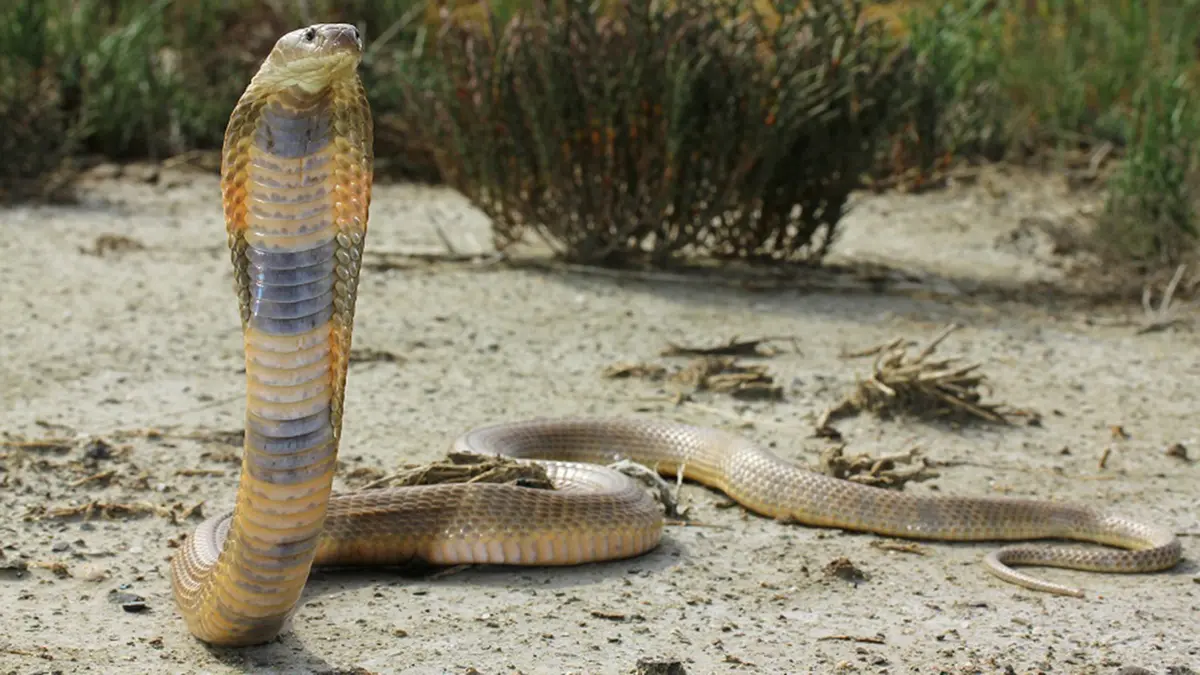
- Size and appearance: Caspian cobras are medium‑sized snakes. Juveniles are pale with cross‑bands, while adults are brown to yellowish without the spectacle mark seen on Indian cobras.
- Habitat preference: They prefer rocky foothills and scrubland. These snakes shelter in burrows or under rocks and are most active at dusk and dawn.
- Diet and behaviour: Caspian cobras prey on rodents, frogs and other small vertebrates. They are terrestrial and quick‑moving, often reacting aggressively when threatened.
- Conservation status: The International Union for Conservation of Nature lists the species as Near Threatened. Habitat loss and persecution pose potential threats.
Importance and precautions
- Public health: Bites from the Caspian cobra can be fatal due to its potent neurotoxic venom. Regions where the species occurs should ensure availability of antivenom and educate local residents on snakebite first aid.
- Biodiversity value: The species helps control rodent populations and is part of fragile dryland ecosystems. Its conservation aids ecological balance.
- Research needs: More studies are needed on population numbers, habitat preferences and genetic diversity so that conservation measures can be targeted effectively.
Conclusion
The Caspian cobra is one of the world’s most venomous cobras yet remains poorly studied. Recognising its range in India and other Asian countries is vital for public safety and biodiversity conservation. Awareness programmes and research will help protect both people and snakes.