
Why in news?
United Nations Environment Programme (UNEP) reports released in June 2026 warn that the Caspian Sea’s water level is falling rapidly because of climate change and human activities. Scientists predict that levels could drop dramatically over the next fifty years, endangering ecosystems and economies.
Background
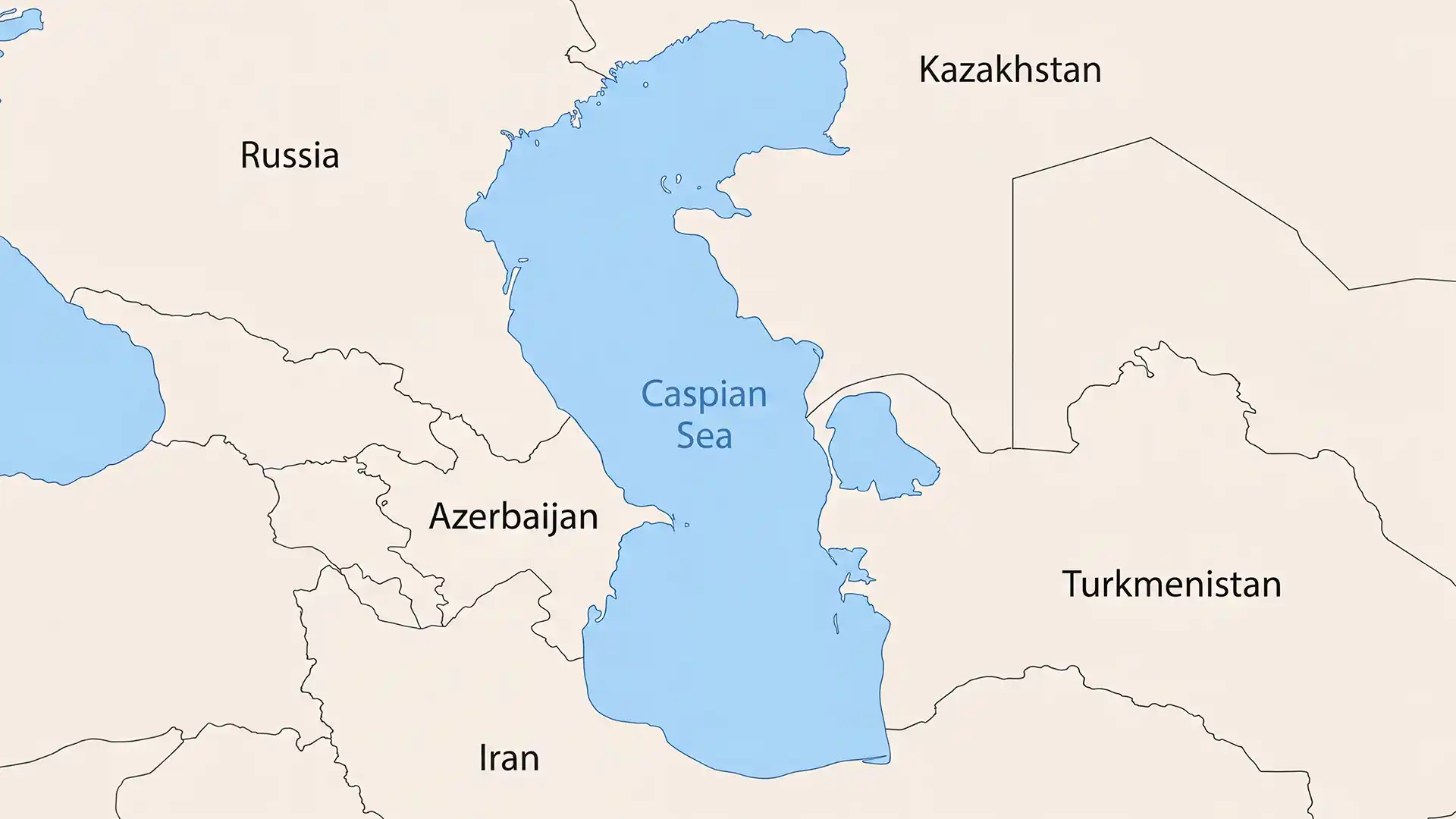
The Caspian Sea is the world’s largest inland body of water, covering about 371 thousand square kilometres. It lies between Europe and Asia and is bordered by Russia, Kazakhstan, Turkmenistan, Iran and Azerbaijan. Despite its name, it is a brackish lake with no outlet. The basin holds huge reserves of oil and gas and supports fisheries that supply caviar from sturgeon. The Tehran Convention signed in 2003 provides a legal framework for protecting its environment, but cooperation among the five littoral states is often difficult.
Key concerns
- Water level decline: Since the mid‑1990s the Caspian has been shrinking. Studies project a drop of 8 to 30 metres by 2100 if global temperatures continue to rise. Higher evaporation due to warming is the main driver.
- Human impact: Rivers feeding the Caspian are diverted for irrigation and industry, reducing inflow. Water extraction could lower levels by another 7 metres.
- Ecological risks: Ninety percent of the world’s remaining sturgeon live in the Caspian. Falling water levels could destroy spawning grounds and collapse fisheries. Salt marshes and wetlands that support migratory birds may also dry up.
- Socioeconomic effects: Ports, oil rigs and coastal cities may be stranded. Traditional livelihoods like fishing and reed harvesting will suffer, affecting millions of people across the five states.
- Need for cooperation: The Tehran Convention and regional agreements urge joint action. Countries must balance resource extraction with conservation to prevent an environmental catastrophe.
Conclusion
The shrinking of the Caspian Sea is a global warning about the combined effects of climate change and unsustainable water use. Only regional cooperation and mitigation measures can preserve this unique ecosystem for future generations.