

Why in news?
An artisanal gold mine collapsed in western Central African Republic on 18 August. At least 30 miners died, while others remained trapped.
What happened
The collapse occurred in the Abba area of Nana-Mambéré prefecture. The site used low-technology, artisanal mining methods.
Residents and rescuers recovered 30 bodies over several hours. Injured miners received treatment, and rescue work continued for missing workers.
The immediate cause was not publicly established. A proper inquiry must examine ground stability, drainage, pit design and site supervision.
A death toll can change
Rescue operations were continuing when the first account appeared. The confirmed minimum should not be treated as a final total.
Geographic setting
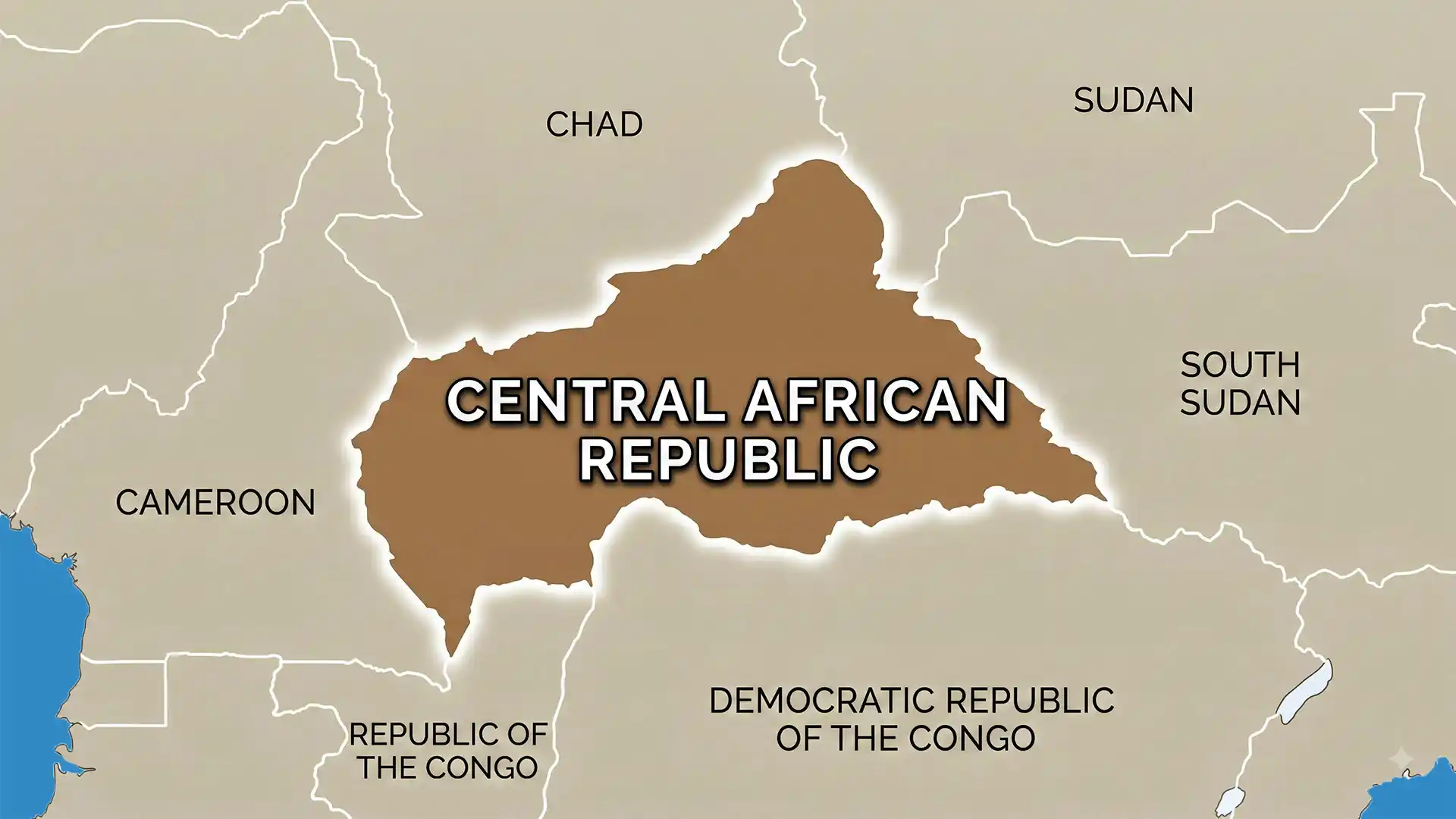
The Central African Republic is a landlocked state in the centre of Africa. It covers roughly 623,000 square kilometres.
Chad lies north, while Sudan and South Sudan lie east. The two Congos border the south, and Cameroon borders the west.
The country forms a broad plateau between major drainage systems. Southern rivers feed the Ubangi and Congo basins.
Northern waters drain towards the Chari basin and Lake Chad. Forest is concentrated southward, while savanna covers much of the interior.
Nana-Mambéré lies in the west near Cameroon. Western and central areas contain many alluvial gold and diamond sites.
Why artisanal mining is widespread
Artisanal mining uses simple tools and relies heavily on manual labour. It provides income where formal jobs and public services are scarce.
The country has substantial gold and diamond resources. Yet insecurity, weak infrastructure and limited oversight constrain safe industrial development.
Many sites are remote from roads, hospitals and government inspectors. Informal trade can also weaken traceability and public revenue collection.
Small operations may dig steep, unsupported pits. Rain, groundwater and loose material can then trigger sudden wall failure.
What safer mining requires
Formalisation should not simply punish poor miners or close their livelihoods. It should provide registered sites, training and affordable safety equipment.
Authorities need geological checks before deep excavation. Sites also need drainage, controlled slopes, emergency access and reliable worker counts.
Mining cooperatives can share pumps and rescue tools. Buyers should demand legal origin and safe production practices across their supply chains.
Emergency planning matters because remote rescue takes time. Local clinics require trauma supplies, transport links and communication systems.
Mineral wealth must not rest on hidden danger
Artisanal mining supports many families. Formal support should make that livelihood safer, traceable and more beneficial to local communities.
Conclusion
The Abba collapse is a human disaster, not merely a mining statistic. Rescue and family support are the immediate priorities.
The longer response must reduce avoidable risk without removing livelihoods. Safer pits, stronger oversight and fairer markets must advance together.