

Why in news?
The Cessna 172 returned to discussion amid renewed scrutiny of flying training at Baramati airfield. No new official investigation report was available during this edition’s verification.
Understanding the aircraft
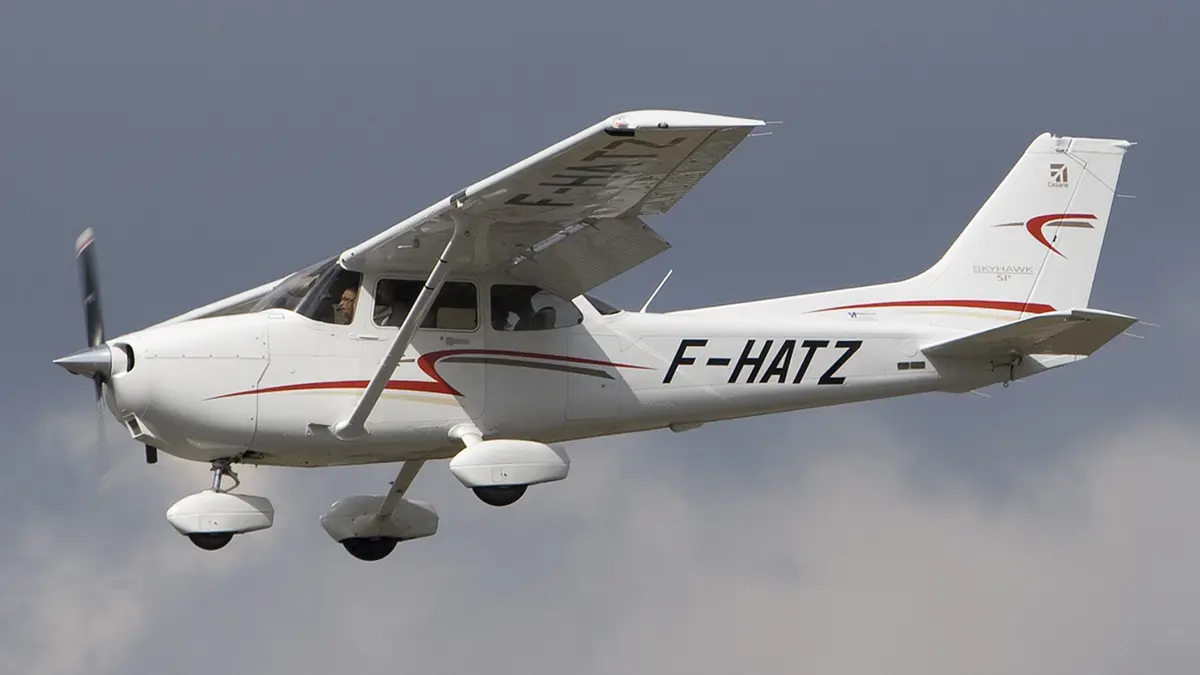
The Cessna 172 Skyhawk is a four-seat, single-engine aircraft with a high wing and fixed landing gear. Textron Aviation currently manufactures the type.
Its predictable handling, simple systems and wide availability have made it a common training aircraft. These qualities do not remove operational risk.
Student pilots must still manage wind, speed, runway alignment and braking. Instructors must judge when conditions exceed a trainee’s ability.
A high wing can improve downward visibility during some manoeuvres. Fixed gear also reduces mechanical complexity compared with retractable designs.
Aircraft type is not an accident cause
An occurrence involving a Cessna 172 does not establish a design defect. Investigators examine crew actions, weather, maintenance, runway conditions and organisational supervision before assigning causes.
Lessons from Baramati
Baramati lies in Pune district, within the drier eastern part of western Maharashtra. Its airfield hosts flying training organisations and has a documented incident history.
It is an uncontrolled aerodrome without conventional air traffic control. Pilots instead rely on published procedures, radio calls and visual separation.
An uncontrolled aerodrome is not automatically unsafe. Strong local operating discipline can manage routine circuit traffic.
Risk rises when markings, weather information or navigation support are weak. Mixed experience levels can also complicate circuit operations.
The Aircraft Accident Investigation Bureau examined a 2013 Cessna 172 runway excursion at Baramati. Its report identified a training flight during the landing phase.
That earlier case should not be used to explain any later event. It remains useful for understanding how runway excursions receive formal examination.
Why runway excursions happen
A runway excursion occurs when an aircraft leaves the runway surface during take-off or landing. It may involve overrunning the end or veering sideways.
Contributing factors can include crosswinds, unstable approaches, excessive speed, poor braking and delayed decisions. Surface contamination and weak directional control can worsen outcomes.
Training operations add another human factor. A student needs enough freedom to learn, while an instructor must intervene before recovery margins disappear.
Regulatory implications
Safety oversight must examine the training system, not only individual mistakes. Important questions include instructor workload, aircraft serviceability and recurrent checks. Reliable occurrence reporting is equally important. Early rumours can wrongly assign blame before investigators secure records and interview participants.
India’s Directorate General of Civil Aviation oversees flying training organisations. Serious accidents are investigated independently by the Aircraft Accident Investigation Bureau.
Conclusion
The Cessna 172 remains useful because it is manageable and well understood. Safe training still depends on disciplined supervision, capable airfields and evidence-led investigation.