

Why in news?
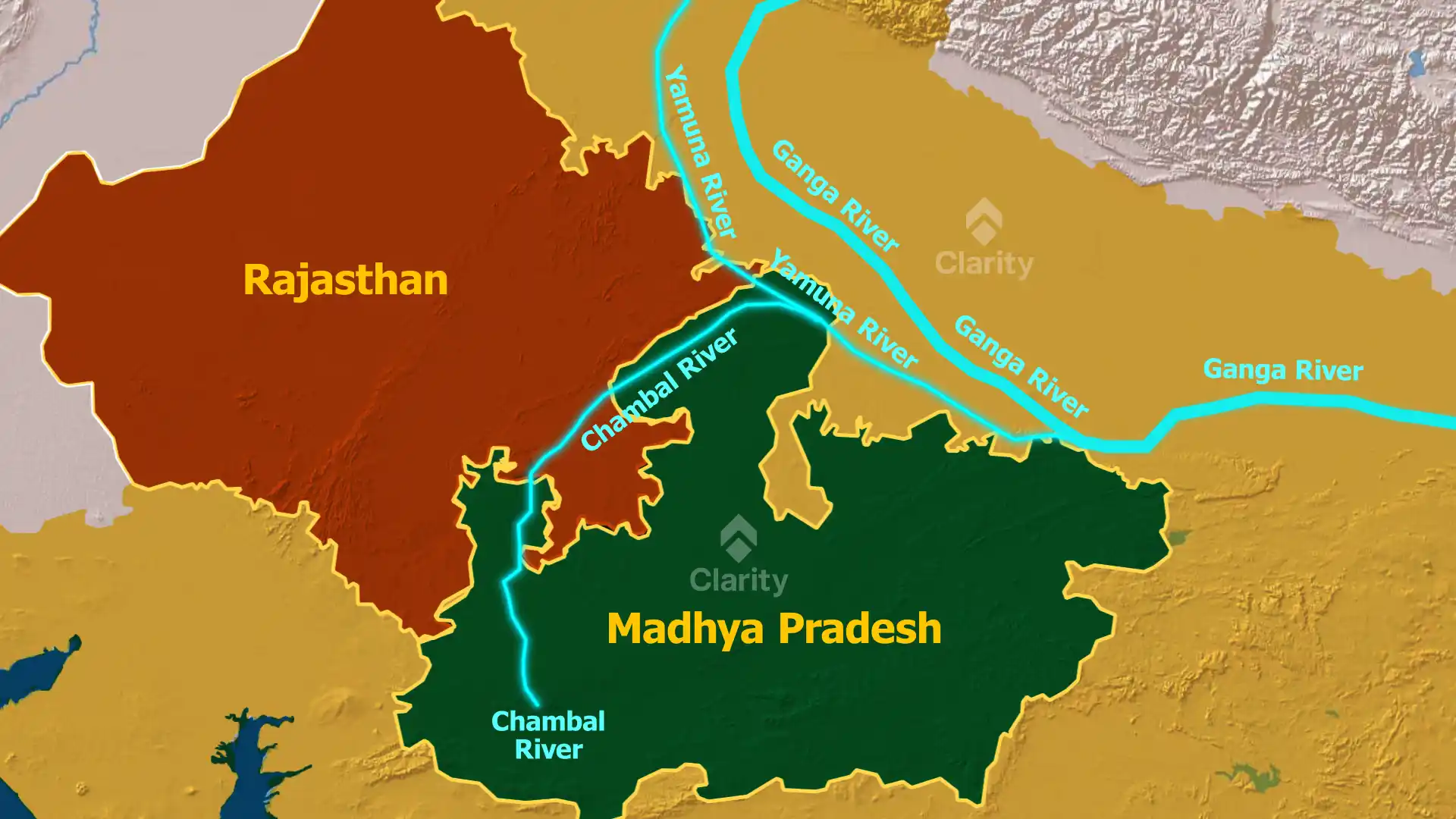
The Chambal River and its wildlife sanctuary were in the spotlight as environmentalists called for stricter protection of one of India’s cleanest rivers. The river’s pristine waters, dramatic ravines and unique biodiversity make it both a natural wonder and an ecological challenge.
Background
The Chambal River originates in the Vindhya Range near Mhow in Madhya Pradesh. It flows north‑east for about 900 kilometres, carving deep ravines as it winds through Madhya Pradesh and Rajasthan before forming the border with Uttar Pradesh and joining the Yamuna near Etawah. Major tributaries include the Banas, Kali Sindh, Sipra and Parbati rivers.
Ancient legends link the river to the Mahabharata, claiming it was cursed after King Duryodhana’s army sinned during the game of dice. The resulting fear of pollution may have helped keep the river relatively pristine. Its steep ravines – some plunging 50–60 metres – have deterred agriculture and industry, preserving water quality.
National Chambal Sanctuary
To protect the river’s unique fauna, India established the National Chambal Sanctuary in 1978–79 under a tri‑state agreement among Madhya Pradesh, Rajasthan and Uttar Pradesh. The sanctuary covers a 425‑kilometre stretch of the river and its banks, with widths ranging from 2 to 6 kilometres. It is India’s largest riverine protected area.
Wildlife highlights
- Gharial: The critically endangered Gavialis gangeticus finds refuge here. The sanctuary hosts one of the world’s largest populations of this fish‑eating crocodile, thanks to conservation projects launched in the 1970s.
- Gangetic dolphin: This endangered freshwater dolphin thrives in the clear waters. About 90 individuals have been recorded, making the sanctuary an important breeding ground.
- Turtles: Eight species of riverine turtles, including the red‑crowned roofed turtle and three‑striped roof turtle, inhabit the river.
- Birds: More than 300 bird species, such as the Indian skimmer, black‑bellied tern and greater flamingo, are found here. The riverbanks are vital nesting sites for skimmers.
- Mammals: Golden jackals, wolves, smooth‑coated otters and striped hyenas roam the surrounding ravines.
Conservation challenges
- Sand mining and illegal fishing: Unregulated extraction of sand and fishing threaten nesting sites and disturb aquatic life.
- Water abstraction and dams: Upstream irrigation projects reduce water flow, affecting habitat quality. Maintaining environmental flows is critical.
- Pollution and invasive species: Although relatively clean, the river faces pollution from pesticides, sewage and plastics. Invasive species like water hyacinth can choke sections of the river.
- Inter‑state coordination: Effective management requires cooperation among three state governments. Shared monitoring and enforcement are essential to curb illegal activities.
Conclusion
The Chambal River and its sanctuary illustrate how nature can thrive when human pressure is low. Protecting this landscape will require continued vigilance, sustainable development policies and public awareness. By safeguarding the river and its wildlife, India also preserves a vital water source and a living laboratory for conservation.
Source: DTE