

Why in news?
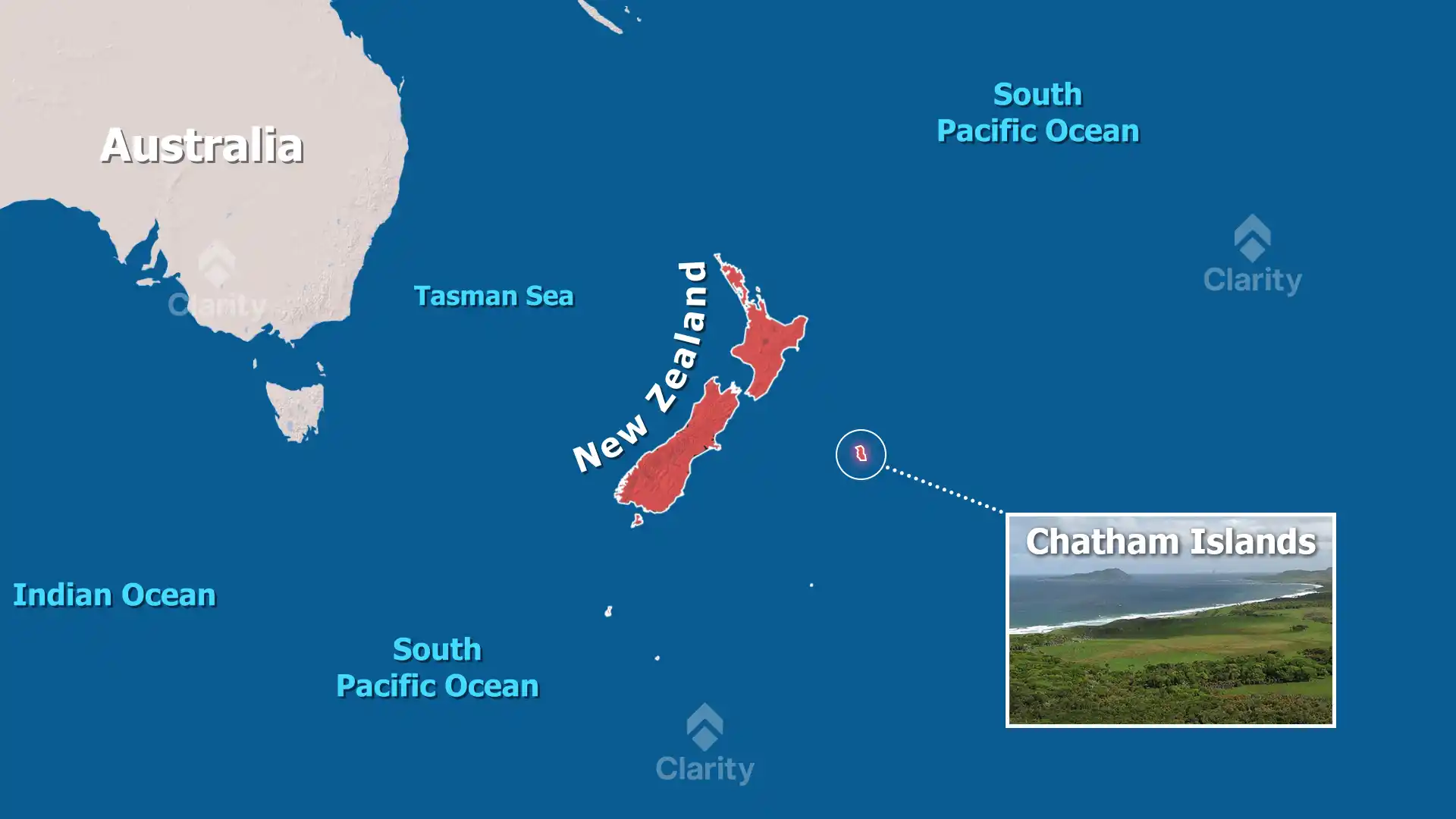
A vibrant swirl of blue‑green hues appeared in satellite images of the seas around the remote Chatham Islands, about 800 kilometres east of mainland New Zealand. NASA’s Earth Observatory reported that sensors aboard the NOAA‑20 satellite captured a large phytoplankton bloom on . The bloom highlights seasonal productivity on the Chatham Rise, an underwater plateau that supports rich fisheries and marine life.
Background
The Chatham Islands are a small archipelago made up of ten volcanic islands. Chatham Island and Pitt Island are the largest; the others are tiny and uninhabited. Located far into the South Pacific Ocean, the islands sit on the Chatham Rise – a broad, shallow submarine ridge extending eastward from New Zealand. The waters above this plateau are nutrient‑rich because cold, deep currents mix with warmer surface waters. This mixing fuels the growth of microscopic algae known as phytoplankton. When conditions are favourable, these algae multiply rapidly, causing the ocean surface to take on vivid turquoise and emerald colours.
Why the bloom matters
- Indicator of ocean health: Phytoplankton form the base of the marine food web. Large blooms provide food for zooplankton, fish and higher predators, including whales and seabirds.
- Role of currents: The Chatham Rise sits at the confluence of several ocean currents. The mixing of nutrient‑rich deep water with sunlit surface water triggers frequent blooms, especially during summer in the southern hemisphere.
- Fisheries link: The productive waters around the Chatham Islands support one of New Zealand’s most important fishing zones. Species such as hoki, orange roughy and blue cod thrive in these nutrient‑rich seas.
- Climate connection: Phytoplankton absorb carbon dioxide through photosynthesis. Large blooms play a role in regulating atmospheric carbon and global climate.
Conclusion
The recent bloom photographed by satellites is a natural seasonal event on the Chatham Rise. It reminds us of the delicate balance between ocean currents, nutrients and light that sustains life in the open sea. Monitoring these blooms helps scientists track changes in ocean productivity and assess the impacts of climate variability.
Sources: NASA Earth Observatory