

Why in news?
Conservationists have highlighted the declining numbers of the cheer pheasant after recent surveys in the Himalayas recorded sparse populations. This renewed attention underscores the need for habitat protection and community involvement to save this elusive bird.
Background
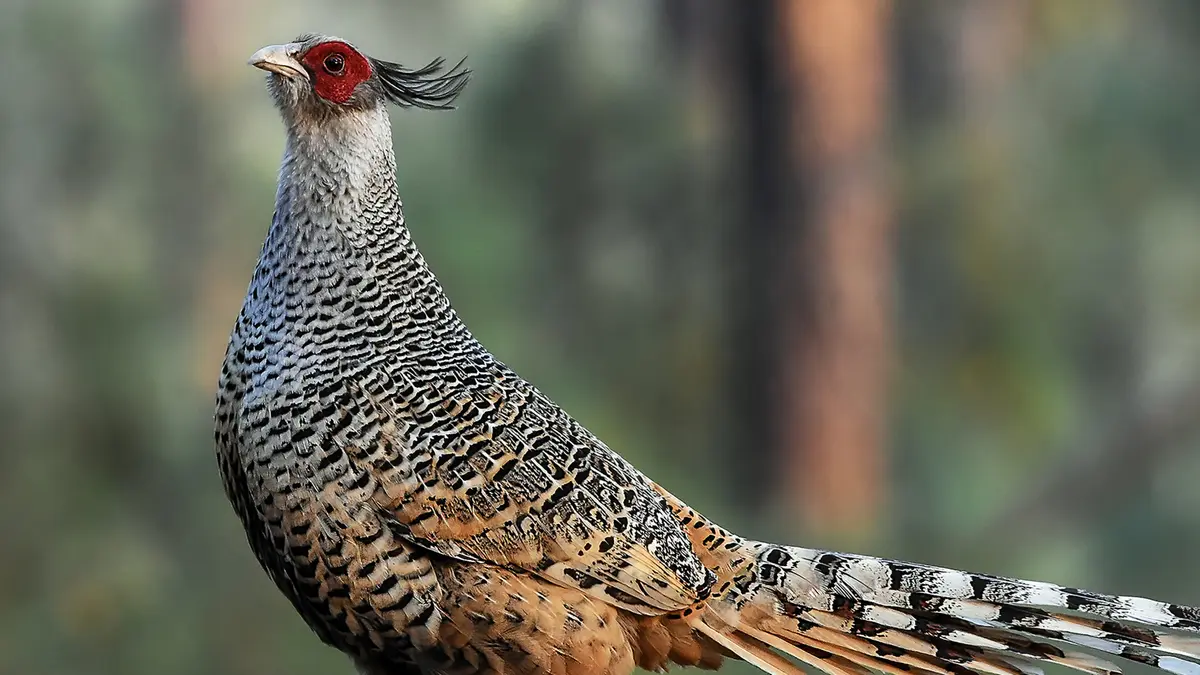
The cheer pheasant (Catreus wallichii) is a large, ground‑dwelling bird endemic to the steep slopes of the western Himalayas. It inhabits high‑altitude shrublands and grasslands in parts of Himachal Pradesh, Uttarakhand, Jammu & Kashmir, western Nepal and Pakistan. Adults measure about 90–118 cm including a long, grayish tail. The species has buffy‑brown plumage marked by pale bars and sports a conspicuous crest.
Habitat and ecology
- Altitude range: Cheer pheasants live between 1,800 and 3,000 metres, descending slightly in winter. They nest on grassy hillsides and feed on seeds, shoots and insects.
- Social behaviour: These birds occur in small groups called coveys and are known for their loud, whistling calls during the breeding season.
- Seasonal movements: They move up and down slopes according to seasonal changes but do not migrate long distances.
Threats and conservation status
- Habitat loss: Grazing, burning and conversion of scrubland to agriculture have reduced suitable breeding sites.
- Hunting pressure: The species has been hunted for meat and sport in parts of its range.
- Small population: Fewer than 10,000 adults remain. The IUCN lists the cheer pheasant as Vulnerable, and it is included in CITES Appendix I.
Conservation efforts
Protected areas such as the Great Himalayan National Park and the Nanda Devi Biosphere Reserve shelter remnant populations. Reintroduction programmes in Pakistan have had limited success, highlighting the need for habitat restoration, community participation and stringent control of grazing and fire. Raising awareness among local communities is essential to safeguard this emblematic Himalayan bird.