

Why in news?
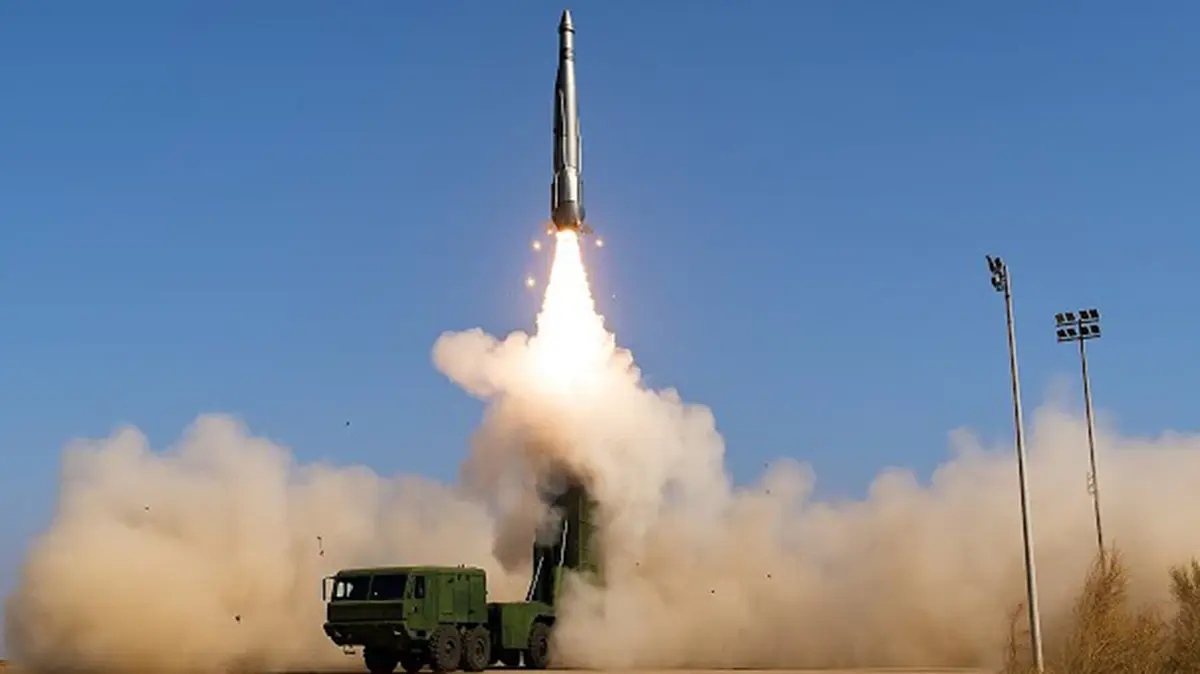
China showcased the CJ‑1000 hypersonic cruise missile during a military parade in Beijing. This road‑mobile weapon is reportedly the world’s first operational land‑based missile powered by a scramjet engine, signalling a significant leap in hypersonic technology.
Background
Hypersonic weapons travel at speeds exceeding Mach 5 (five times the speed of sound). Two main types exist: hypersonic glide vehicles (HGVs), which are launched into the upper atmosphere and then glide toward targets, and scramjet‑powered cruise missiles that maintain high speed using air‑breathing engines. Scramjets are more technically demanding but allow sustained high‑speed flight at lower altitudes. The CJ‑1000, nicknamed the “Long Sword,” was first seen at China’s Victory Day parade in 2025 and is thought to be operational.
Features of CJ‑1000
- Scramjet propulsion: The missile uses an air‑breathing scramjet engine to sustain speeds of roughly Mach 6 while cruising at altitudes of 20 – 30 km. Lower altitude flight makes detection and interception more difficult compared with HGVs that fly at 60 – 80 km.
- Mobility: It is mounted on a 10‑wheel diesel‑electric hybrid transporter‑erector‑launcher, allowing rapid deployment and concealment.
- Range and payload: Reports suggest the CJ‑1000 can strike targets at distances of at least 2,500 km while carrying a larger payload than air‑ or ship‑launched hypersonic missiles.
- Stealth and accuracy: Continuous propulsion through the cruise and terminal phases provides high manoeuvrability and accuracy. Low‑altitude flight coupled with high speed may render traditional air‑defence systems ineffective.
Why scramjets raise concerns
- Detection challenges: Radar systems struggle to track objects flying at lower altitudes and extreme speeds. The CJ‑1000’s sustained flight makes interception more complex than with glide vehicles, which rely on inertia during final approach.
- Strategic implications: A land‑based hypersonic missile increases China’s ability to threaten regional targets and complicates missile defence planning. Analysts note that the United States and other countries are racing to develop counter‑measures such as satellite‑based tracking and advanced interceptors.
Significance
- Technological milestone: The CJ‑1000 represents a breakthrough in scramjet propulsion and may inspire similar programmes worldwide.
- Arms‑race dynamics: Its deployment underscores intensifying competition in hypersonic weapons and highlights the need for global norms to manage such technologies.
- Regional security: The missile adds a new dimension to Asia’s strategic landscape, prompting neighbouring countries to enhance surveillance and defence capabilities.
Source: WION